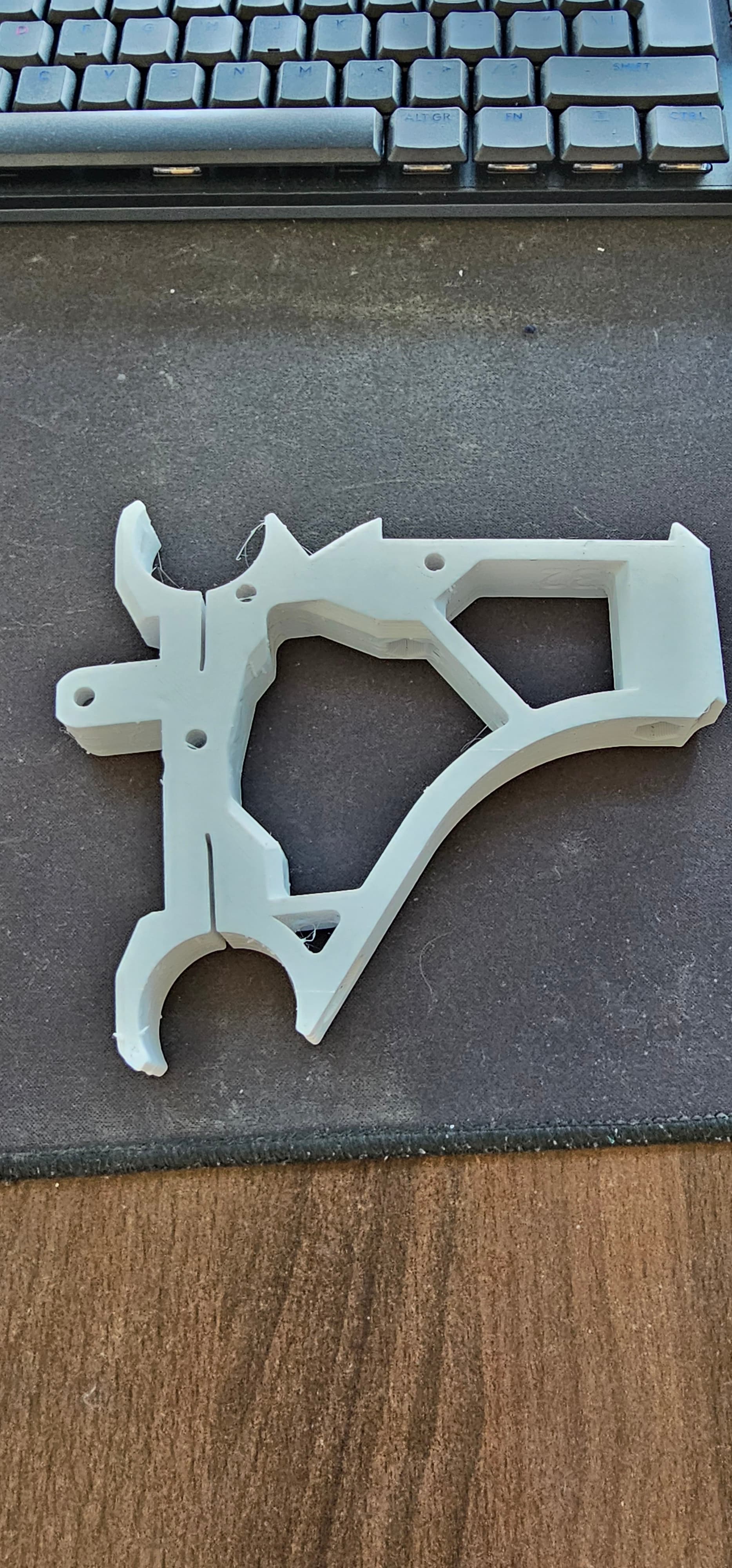
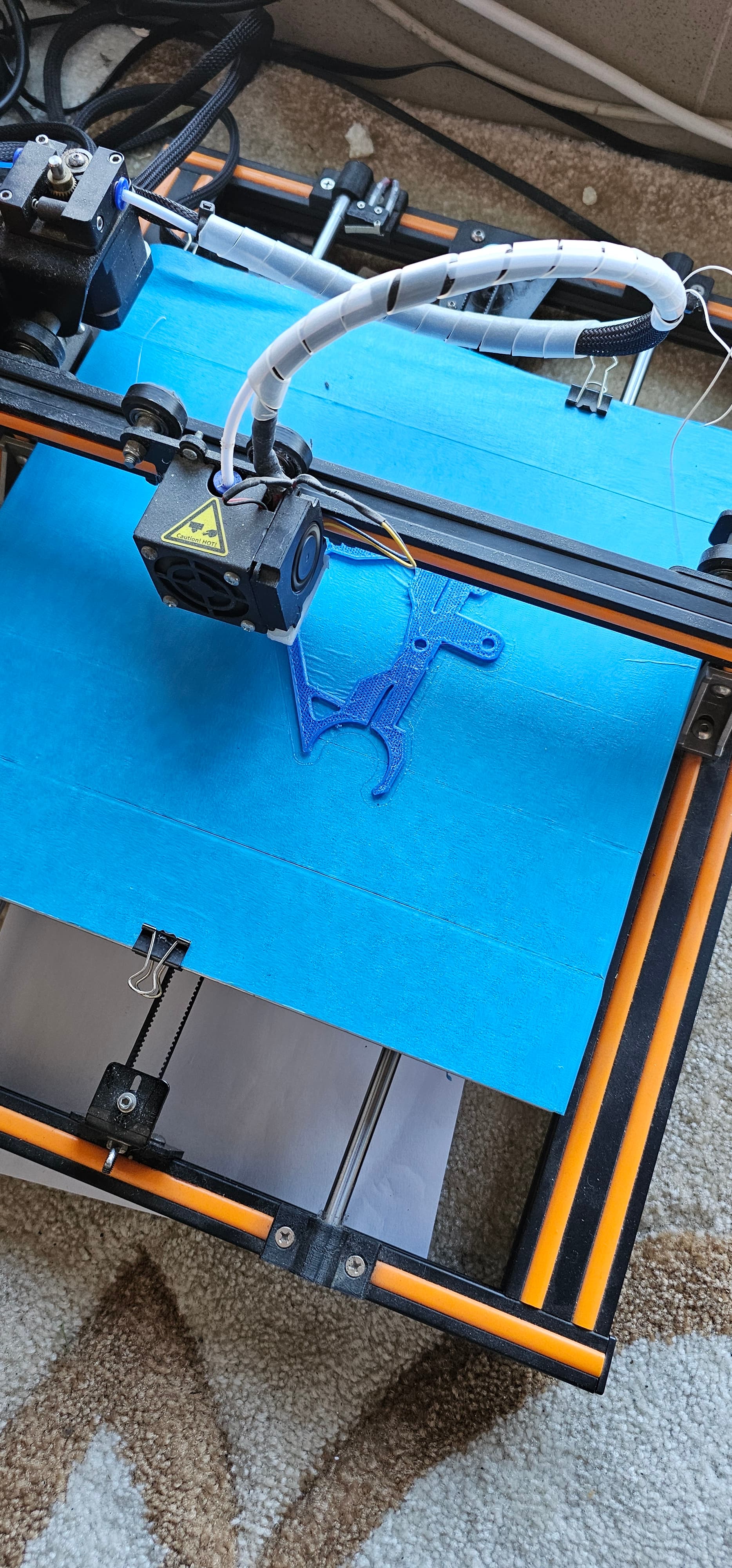
Another nice feature of the LR3 is how easily it can be modified, and how many people have made some very creative mods that can provide inspiration for you to do your own mods.
One example that may be of benefit to you and your plasma build is the ability to move the belts (and belt holder, tensioner, etc), to the side of the table, and away from sparks/flame/heat. Some of those parts could also be made from aluminum. If you do that, you can also omit the stepper motor cutout from the YZ plate(s), which can act as a bit of a shield for sparks and heat.
You can also enclose the belts within unistrut, and have the rollers and rails ride on the top of the unistrut for more heat/flame proofing.
Do a search for “side mounted belts” There’s a couple of ways to do it.
One way (the most common) is to create an offset stepper motor plate that attaches to the YZ plate. (Edit - @DougJoseph has a thread that discusses this method in depth -
Here is someone who did that, and made the side plate out of aluminum as well.
Another way is to print the stepper motor side mount(s). That’s the way I did mine
If you are really talented, you may also be able to make some parts from milled aluminum, rather than printed PLA. I seem to recall someone doing that with an LR3, but I could only find examples from an LR2.
I tend to use PETG because of the higher temperature tolerance and 60% infill on all the parts give me a peace of mind that is more resistant on all the fronts.
PETG is a worse chose because it is more flexible. PLA is the recommended material. More infill will not make it as good as PLA - especially the core which is already a high infill %.
It’s your machine so you can do whatever you want but be prepared for potentially being disappointed with your machines performance.
The outside air at my home goes above 100F in the summer and below -15 F in the winter. The garage isn’t heated. In two years I have yet to have PLA sag in the >120F indoor temp nor snap in the below 0F in winter.
I was worried about both.
Having said that, the main job of the braces is to properly locate the strut plates. Then a 2nd job is to transfer load from the beam rails into the strut plate.
PETG won’t ruin the machine, but it won’t be as capable.
If heat is a genuine concern then really you should follow Ryan’s recommendation of PET-CF as a high temp alternative. (NOT PETG nor PETG-CF! These are different materials)
Core is the place I would focus on first. Then YZ plates, only third on the braces.
In my country in the summer temperatures are 40°C. Inside a garage that is in the full sun there are maibe 50-55°C. Last summer i printed something for my car in PLA and at 12:00 it was 50-60% deformed after 1 day. Thats why i wanted to print PETG. It is “a little flexible” but doesnt deform.
I live in Canada, and have had ABS prints deform in the car in summer. The car becomes a greenhouse / solar oven in the sun. There’s a good reason why it is illegal to leave pets in the car.
I.do the vast majority of my printing with PETG, but my LR4 is PLA. Granted, it does not live in a room that will see temperatures of 40°C+. I would go with the PET-CF, though that makes a more difficult print, and needs a hardened nozzle, as well as the increased fillament cost.
All that said, it isnt like the difference between PLA and PETG is going to turn your machine into silly putty. It will have more.flex, which isn’t good, but you may still find it perfectly acceptable, particularly.if you aren’t milling aluminum or are willing to slow down with harder materials. Going slower will probably reduce the longevity of your cutting bits, but works.
An LR4 in PETG is probably still more rigid than the LR3 in PLA, if I had to guess.
Yeah. His was a LR2. At least at first. It looks like he started the build April 2021 and you joined June 2020. So you were here. You just probably weren’t in the lounge yet.
Or maybe you just missed it. But that seems unlikely. There were a lot of jokes you would have gotten in on there.