Also what do you mean by peck mill?? First time I heard about that. Hows that configured?
50 is very high, you do not have to hit calculated numbers, technically yes too low and it could get hotter but I do not run any cuts at 50mm/s, that is fast. The other part of that recipe is the spindle rpm, lower RPM slower moving.
Peck milling is the machine moving up and down a lot when drilling a straight hole. It allows the chips to be cleared and the endmill a moment to cool.
Thanks! Ill report back on how it went. Thanks a lot for the tips 
Ok so unfortunately again same happened. Now this is getting frustrating as I have no clue what might be happening
This time I had my Makita router at 2.5 (approx 15000 rpm).
Settings as
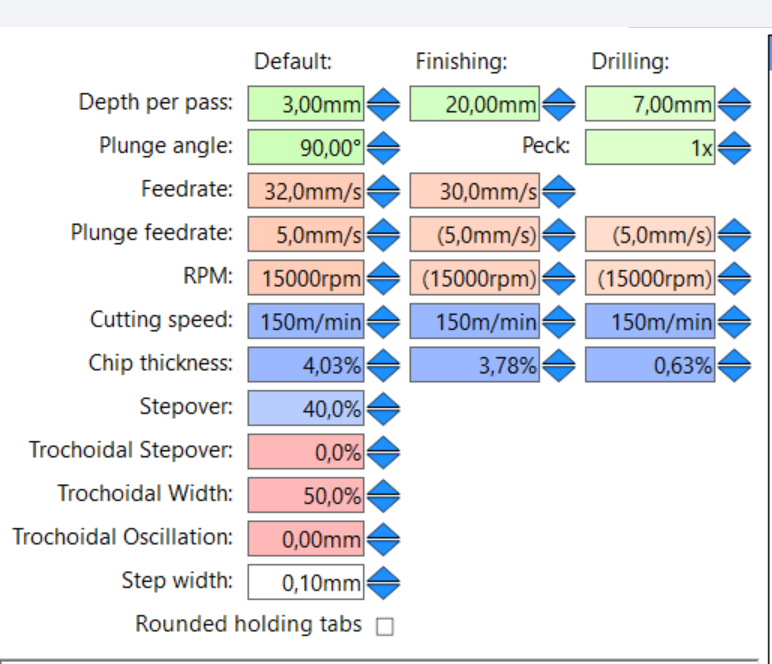
On top I was machining each piece of the sheet one by one to make sure the machine has enough rest and doesnt cut for long periods of time to keep things on the safe side.
The endmill was a new one and this time an upcut one.
I succesfully cut the first piece of the sheet, but in the second one that has a simpler shape (is just a rectangle) after the 4th pass over the contour the machine got stuck again in the X axis and so started to cut the piece short vertically.
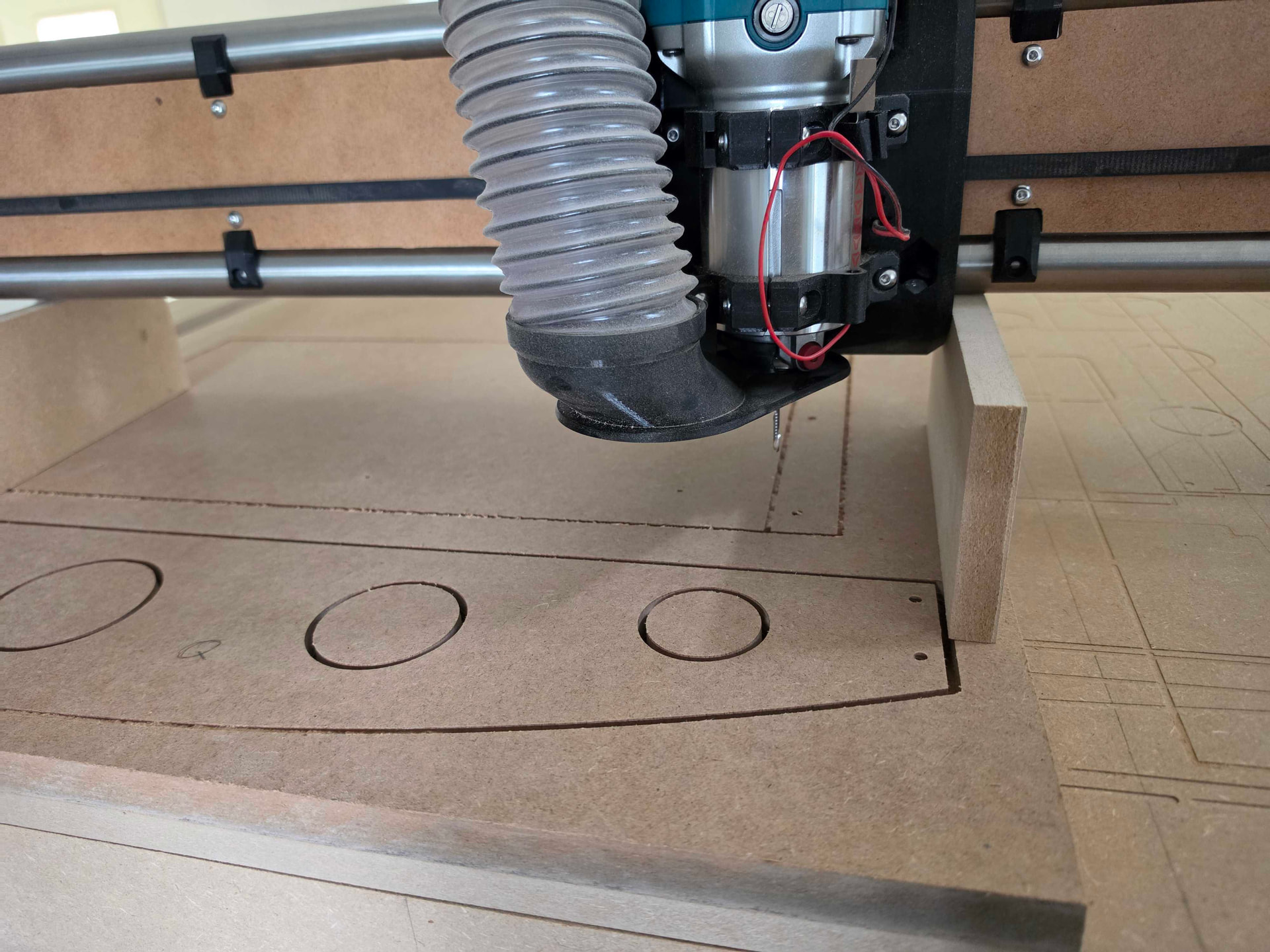
This ruins the piece and makes me lose so much material and money 
It happens randomly and normally very fast so I dont have time to try to check what the stepper in the core is doing or if something got stuck. Im also normally more worried to stop everything at that point to avoid any further damage.
Any ideas on what could I check?
It sounds like you have a bad X driver connection.
Are your X wires are connected, folded and taped as suggested in the instructions?
- if not, you have to do so.
- if they are take it apart and check all 8 crimps for a bad connection.
Another thing to check is that your stepper plugs into the jackpot board are secured and fully seated.
Is your vacuum hose grounded?
It is really helpful to have lots pictures of your build so we can look it over.
So the x wires are connected and folded. vacuum hose is not grounded (how does one do that? you mean grounded as for static?)
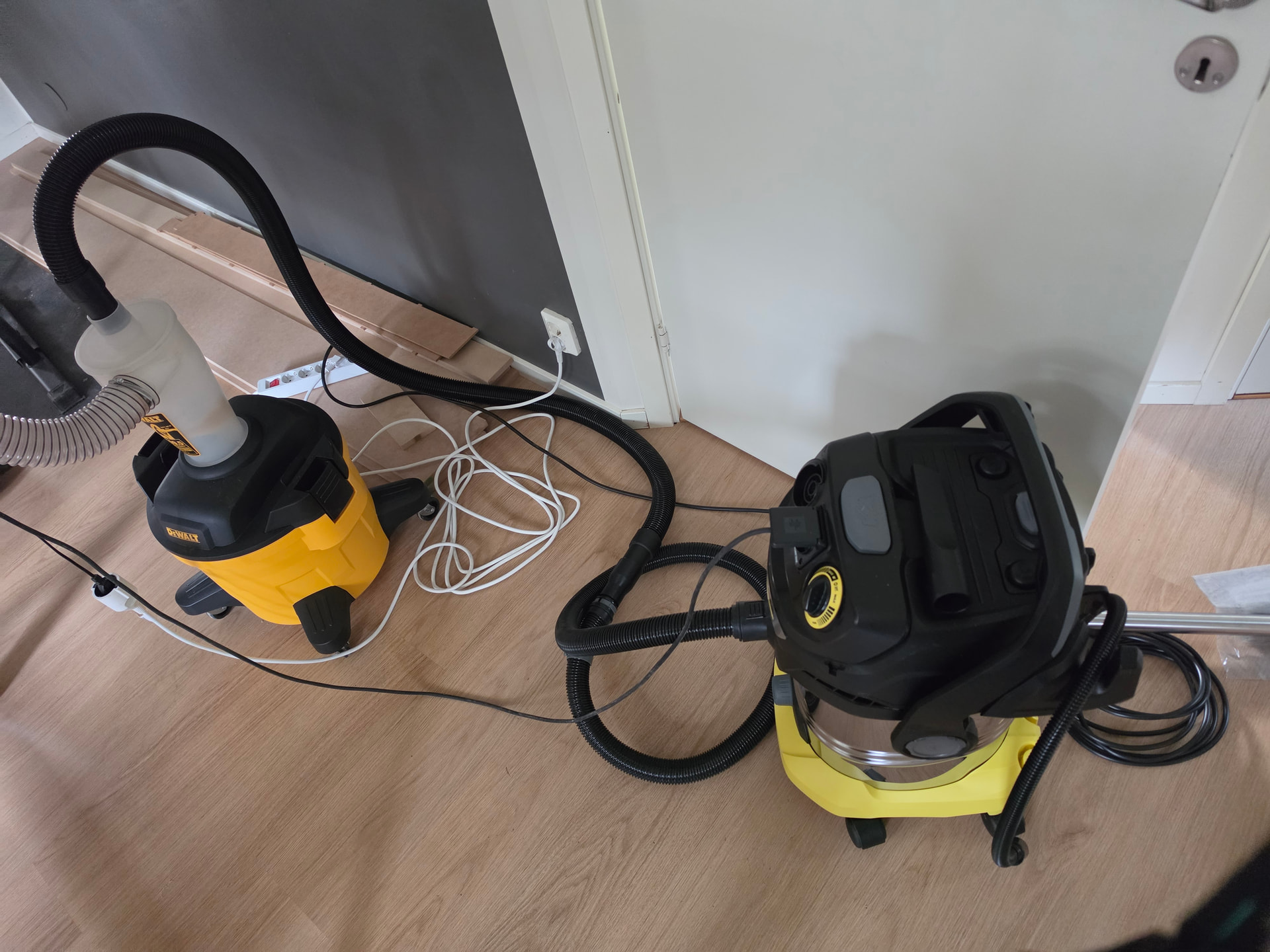
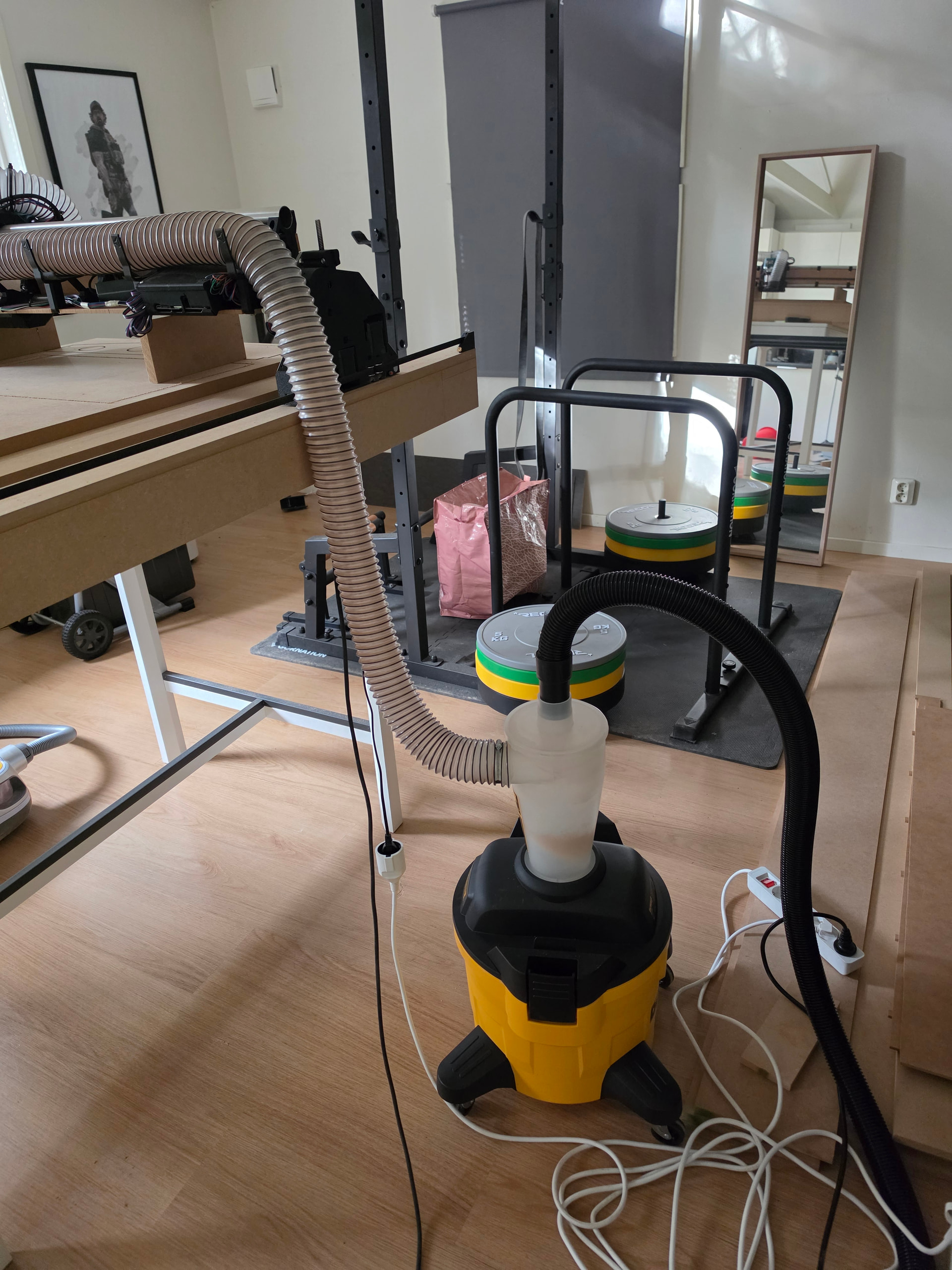
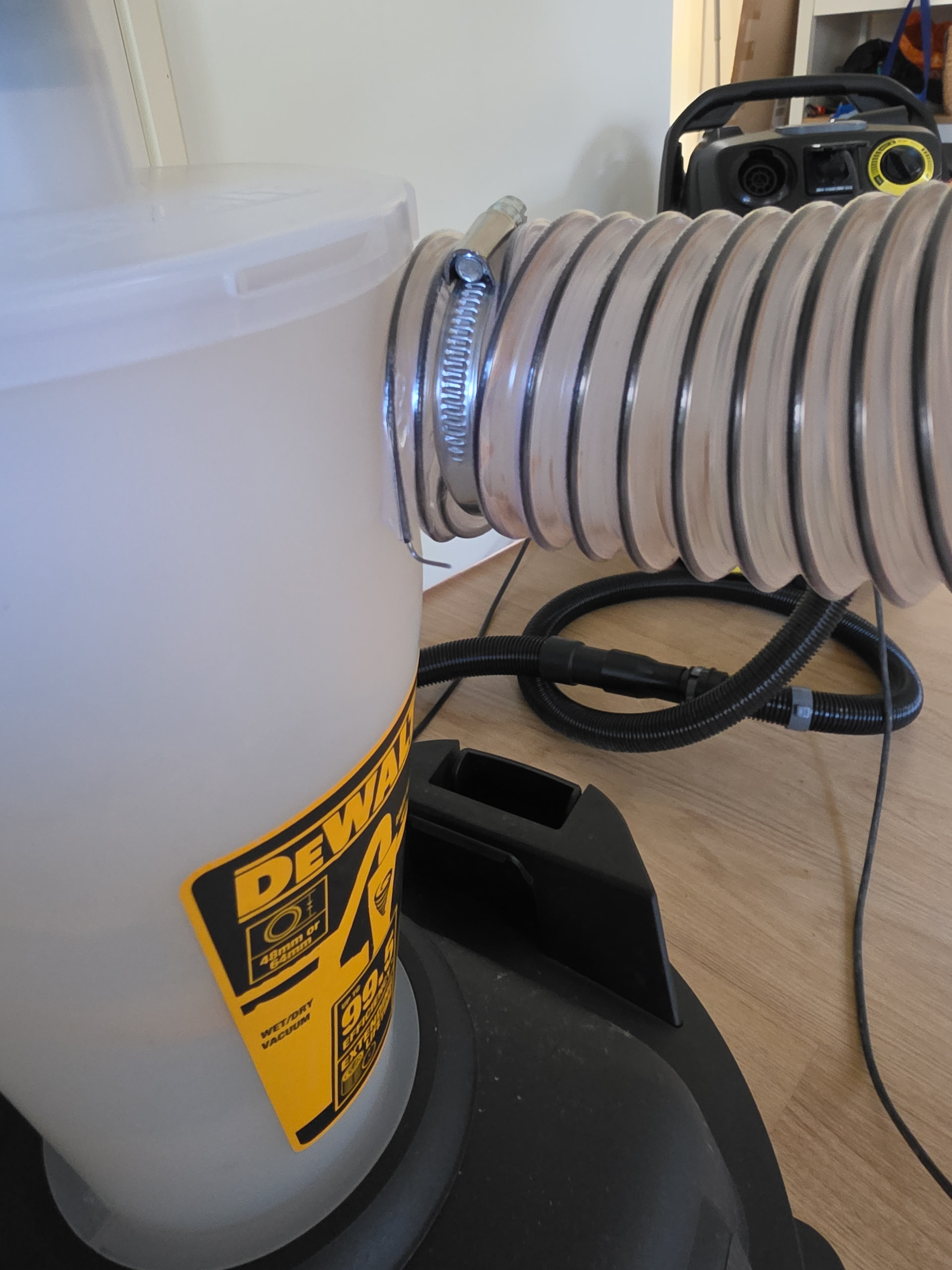
so i have the router connected to the outlet of the karcher wd6, so vacuum starts when router is on. The karcher is connected to the cnc hose through a cyclone dust collector to avoid clogging the vacuum filter so it starts to not vacuum properly.
Then the jackpot and karcher are connected to power through the white outlet with a switch. So if something goes wrong i can turn that switch off and everything stops.
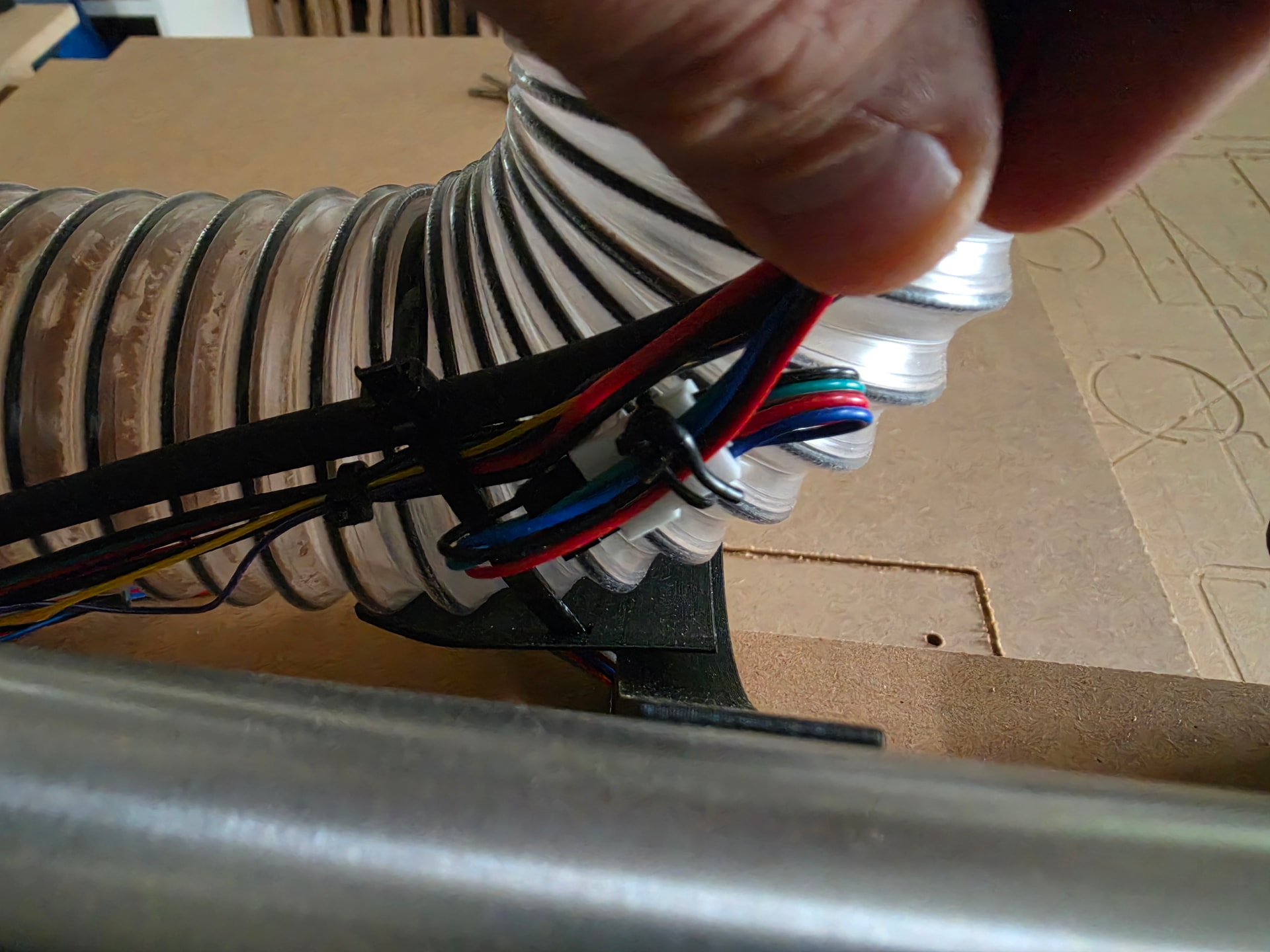
I attach also the photo that shows the x driver connection with the bend( its true that is not taped) this connection to be honest is a bit flimsy and is the only one that is anchored to a somewhat mobile part ( the middle of the pvc hose, exactly at the limit where it bends when the core is at x=0
Im not sure though cause when this happens i can see the router like almost trying to move but it cannot. I guess i could try to make the machine follow the path of a complex sheet without machining to try and see if it happens againvand i can capture it on video
If you bought the hose from the instructions the coils are actually metal, and you can ground it from there. If not you can suck a bare wire through the hose secure at the router side and ground at the cyclone side.
Is that folded and secured with a metal twist tie? It is also pin side closest to the vac hose providing a direct path for any static into the stepper / driver. I highly suggest using electrical tape and not pressing it directly into the vac hose.
Sounds sensible. Ill do these corrections and try again. In throry the hose coil is metallic. How you ground it?
Depends on where you live and how comfortable you are with electricity. The ground prong of an outlet is ideal in the US, you can make one or buy one. Amazon.com
You can pull/bend a short section of the coil wire at the end and strip it, then attach a wire to it (I used a wire nut) and run that wire back to a ground. These also work well, similar to Ryan’s link:
They have screw terminals inside so you can just connect your ground wire there and plug into a normal outlet. This works fine assuming the wiring in your home or shop is grounded properly….
if you are handy with a soldering iron i would just cut out the connection on x and solder the wires
bump the current to 0.9a and control the stepper temperature by touching with a hand.
that what helped me. but i’m self-sourced parts not got them from the shop
Ok so i changed to electrical tape. I dont know how to separate the bunch of cables from the hose. In the lr4 instructions you have them cable tied together as well?
Im also still unsure how to ground this . Stripped a little bit of the structural wire of the hose at the end. So in theory i should connect that to a cable and the cable to the ground of a plug i can put in an outlet?
Thanks
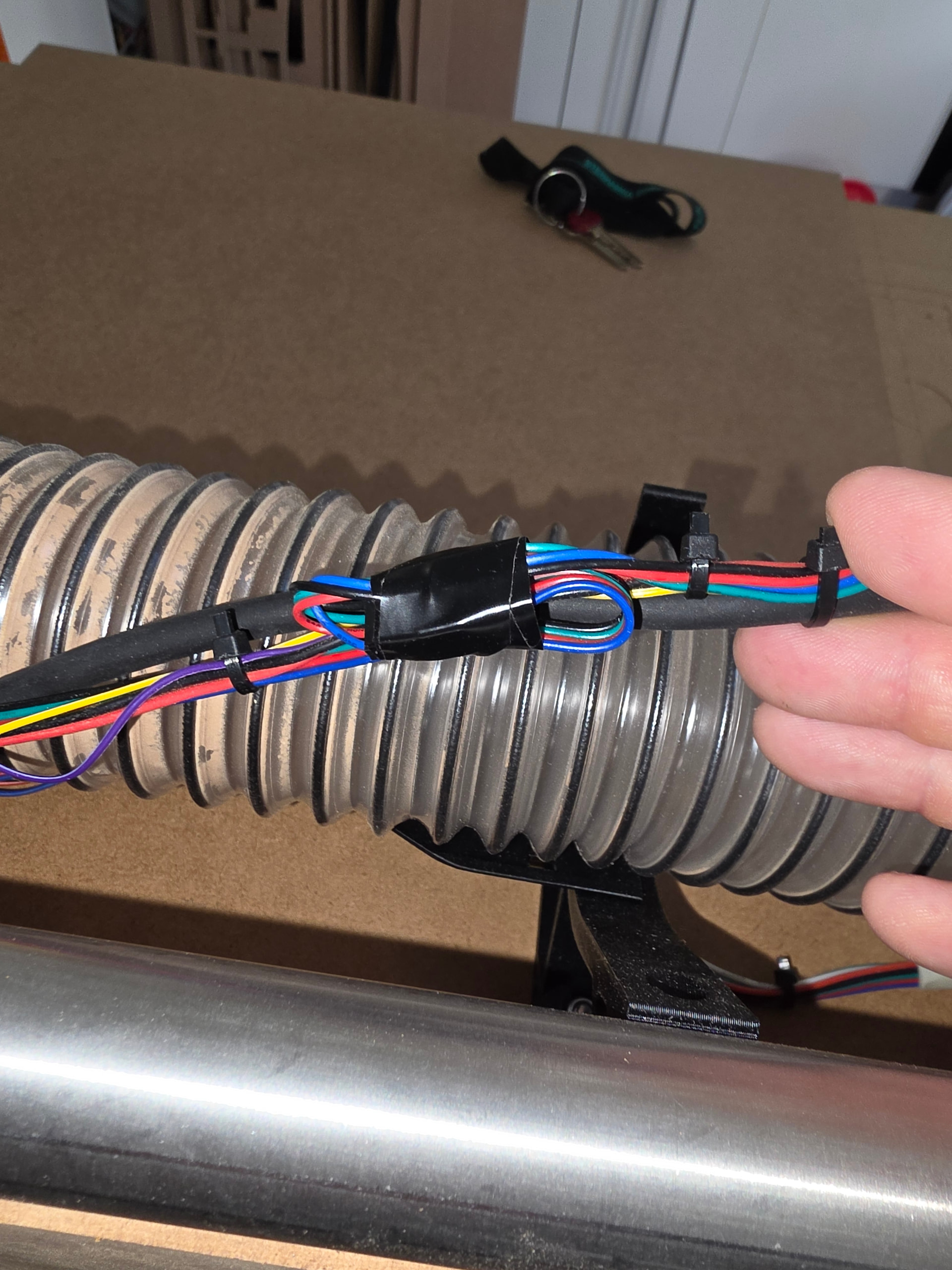
much better as is, just like that is fine.
Yes, but if you are nervous about it just buy the $7 plug so you do not get shocked or start a fire.
People keep saying this, but to put it bluntly: that’s not how the physics work!
The static build up in your dust collection is mostly coming from triboelectric charging of the surfaces where chips and air pass over. Because the surfaces are insulators , the hold that charge until it builds up and discharges in a giant zap.
when you ground the spiral wire in that hose, it does an ok job of dissipating charge a fee millimeters from the wire, but between the wires there’s still that spot in the middle where there’s significant charging. It works because that spiral wire dissipates a large area across the hose. It’s only partially effective.
everyone that says run a bare wire through the tube and it will be fine is at best relating a small benefit and at worst engaging in wishful thinking.
It is possible to get hose that is either coated or entirely made of dissipative materials but they are really expensive so not generally an option for a hobby priced machine.
Doesn’t that mean it will discharge into the nearest thing, which is hopefully the nearest bare wire connected directly to ground?
I don’t have as big of an issue here where I live, but there is a noticeable difference with and without the wire connected on the old router. I could feel when mine was disconnected after emptying the dust bucket and I would forget to connect it.
It has to be doing something, right? You would definitely know better than me.
A single, straight, bare wire is better than nothing. It will make a small improvement. That might be enough, it depends on your environment.
You don’t have to believe me, ask anyone who works in electronics manufacturing to let you play with a field strength meter and then you can do your own quantitative evaluation of how effective (or not) mitigation attempts are.
Unfortunately, what we’re trying to avoid is the nearest thing may end up being that jackpot controller we put right in the middle of the beam where the partially charged hose lives.