I must say Ive been cutting successfully with my cnc several sheets of MDF by now and Im amazed the amount of precision I can get with it. Its still dumbfounding to me!
Yesterday though was the first time the cnc did something strange and ruined some pieces and I have no idea what could have gone wrong.
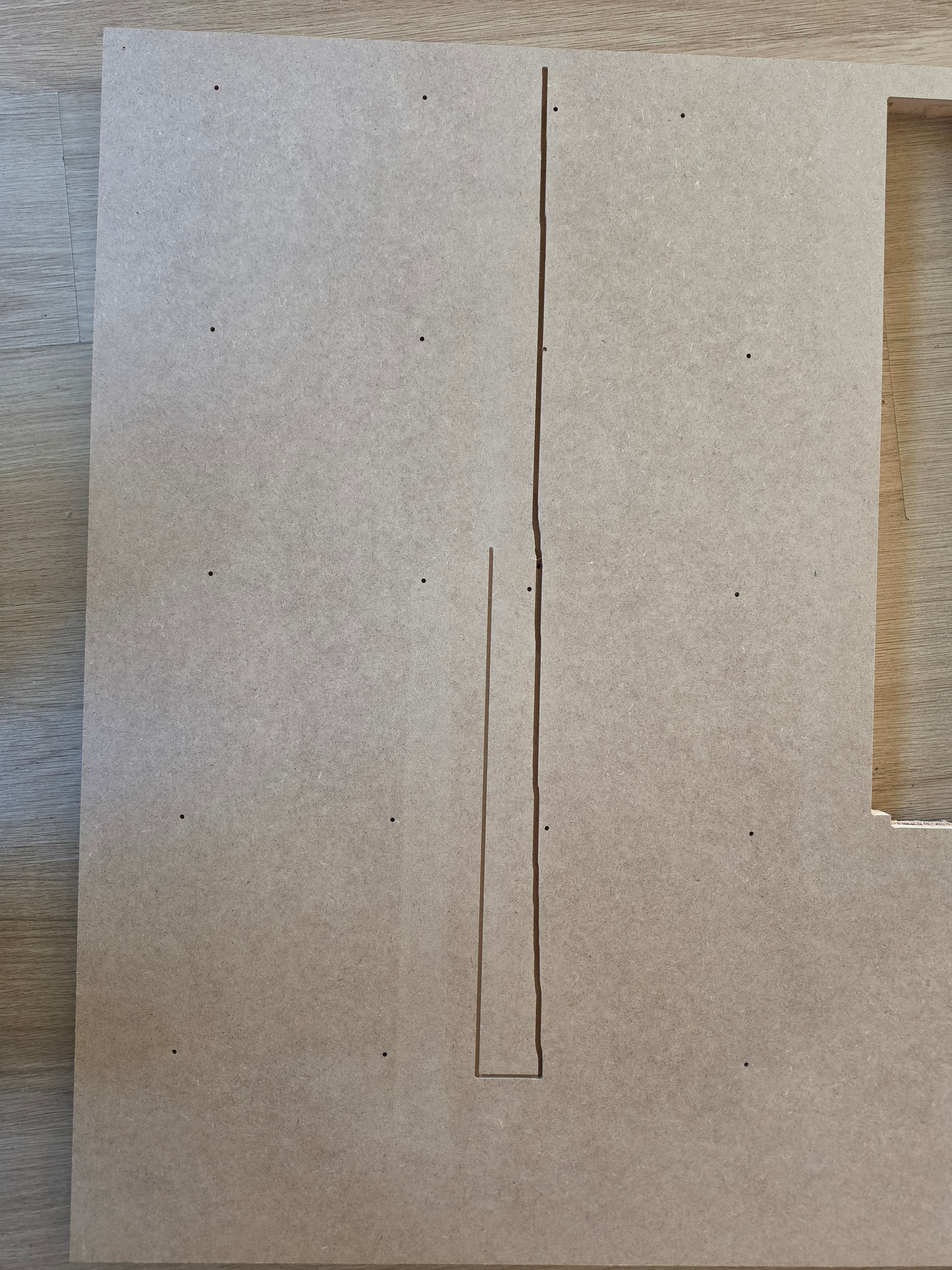
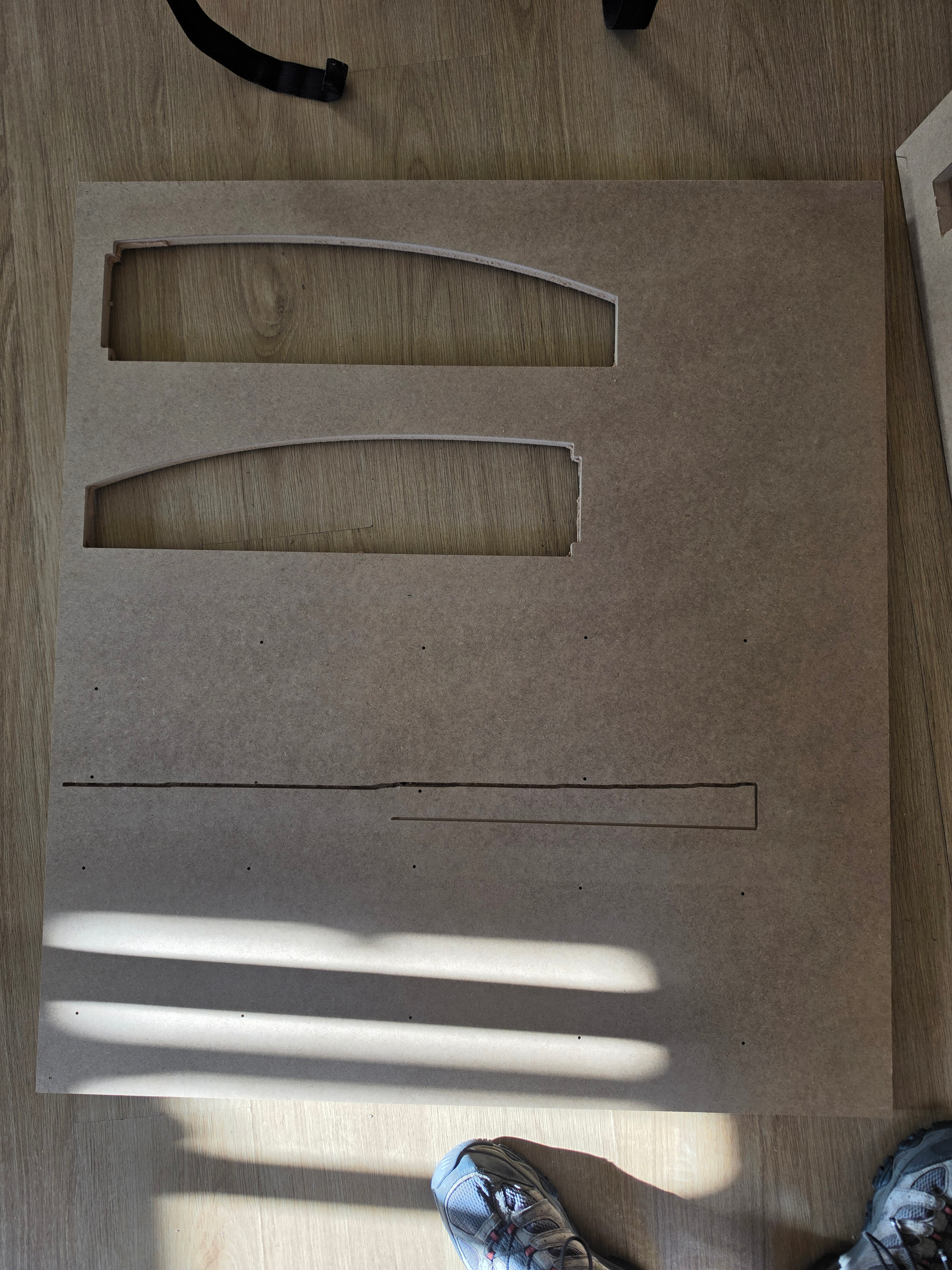
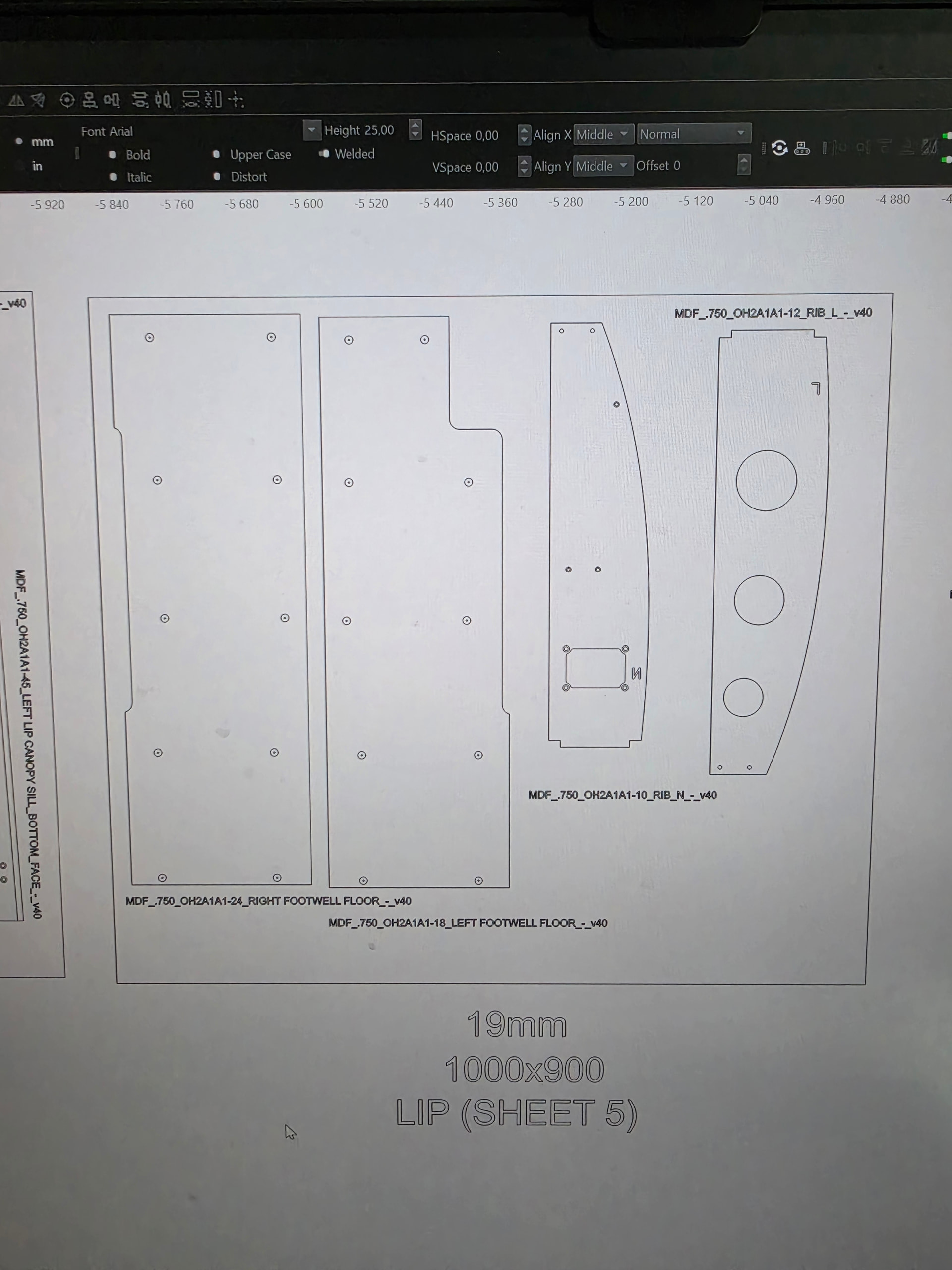
I was cutting the sheet I post , which actually is one if the simplest. The lr4 did all the holes right and cut the two rib pieces on the right correctly. But when it started with the big piece in the middle something happened. It didnt go the full width of the piece and all of a sudden is almost like movement in the X axis was non existing or it was struggling with it.
I turned off the machine and restarted it and jog it both in X and Y and seemed ok. So I dont understand what could have happened. Any ideas?
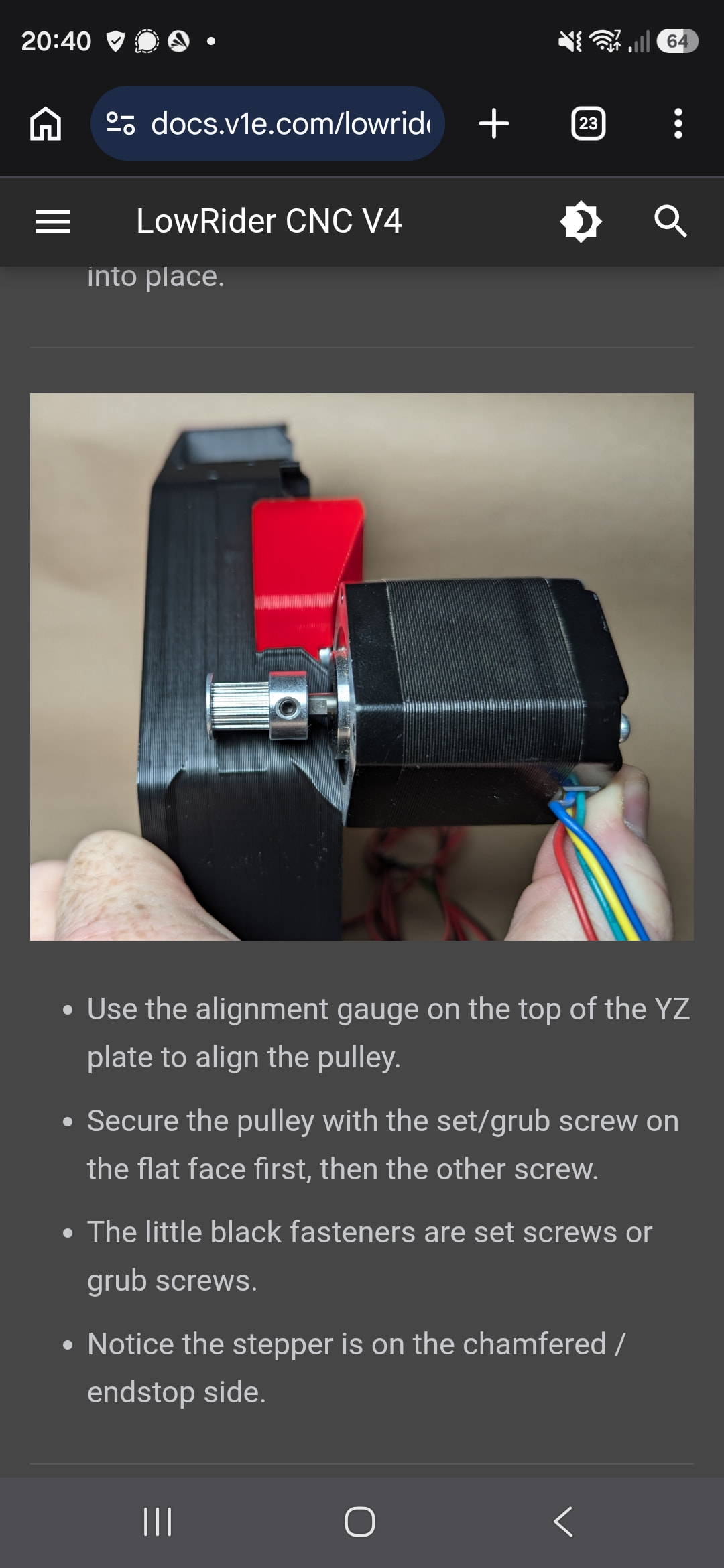
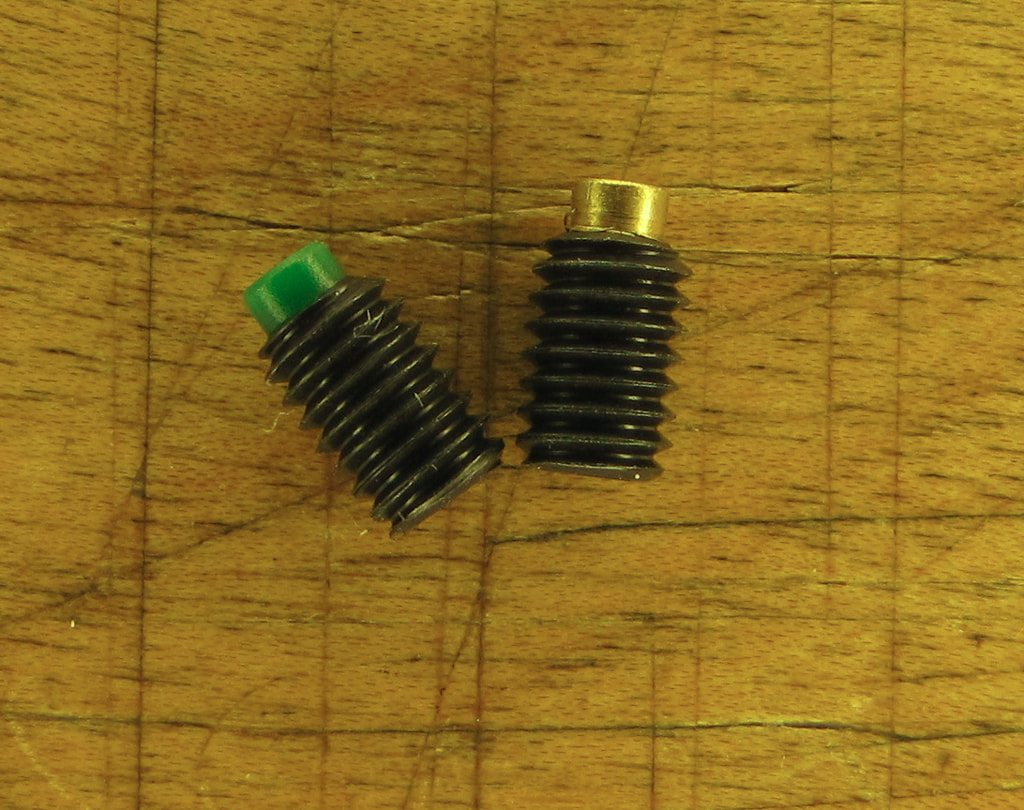
Was talking to a colleague that is doing the same project as me and has told me he had the same issue. In his case its because the grub screw that attaches the pulleys to the steppers became loose. So he had to retighten it and add loctite to it.
Dont know yet if its my case but checking this is going to suck as its probably going to mean i have to disassemble everything again
All of these are possibilities. It would be worthwhile to investigate all items (IMO).
For the grub screws, did you apply loctit on the initial build? If not, it would be worthwhile to apply it to all 10 screws (all 5 steppers). Also it would be worthwhile to ensure that one of he grub screws obn each stepper is tight against the flat portion of the shaft (don’t tighten both screws against the round section of the shaft).
For the wires, did you make an S bend on each of the connections for the extension wires? That connection location is a common point of intermittent failure if the S bend isn’t present.
For the bit, it isn’t a bad idea to replace the bit after several hours of cutting, even if it looks okay to the naked eye.
1.- no i didnt put loctite. I didnt even know it was a thing until now (maybe something good to mention in the assembly instructions as its quite useful). But i did always have one grub screw against the flat part for sure.
2.- yeah i did do s-bends in all the connections. Ill check theyre ok. Strange thing is that if it was a connection issue i managed to jog the machine after easily. So that inclines me more to think is a screw loosening, so only starts slippung against resistance.
Part of the problem is that the instructions say these are optional for grub screws:
( @vicious1 - I’ve never liked that; I don’t think thread locker on grub screws is optional…)
I don’t actually use thread locker on mine, and the kits don’t include it. Back in the 3D printer days I remember robo having a hard time shipping thread locker, I would have to look into it again. Maybe LDO has some insight.
Probably depends on the screws. I know of at least one screw from the linear rails that i need to tighten all the time cause its becoming constantly loose. But thats easily spotted and accesible. The stepper ones are more hidden and critical.
When i was assembling the machine it crossed my mind the thought that it was weird that the pulleys were only held by friction , but as i know nothing about machines i kept my mouth shut xdd. I didnt even noticed the optional threadlock inventory entry!! So its mentioned after all.
To be honest now that i know about it i see no reason not to use it, and at least makes everything more failproof
And yet, “Check your grub screws” is one of the more consistent thread responses on the forums.
This is inconsistent with a newbie-friendly machine build.
At a minimum, there should be a ‘discussion on grub screws’ part of the documentation somewhere that at least covers why you might want to use thread locker, and if you don’t it should recommend regularly checking your grub screws. It should also talk about what goes wrong when grub screws get loose.
I am open to suggestions on where to put it. I do have it mentioned on all the pulley instructions as far as I know. As far as making sure to say tighten the flats first then the ones on the round.
It is kind of a common issue, but I also only ever had the issue when I did not tighten one at all initially during a beta build. I run mine without thread locker on purpose. I am running under the assumption I can not ship it. If I can’t ship it, it needs to work without it. None of my machines use it, mpcnc, LR, plasma, Zen. I have added it to my list of things to ask about on the next order, if it can be shipped.
For more context, the reason most shipments get returned on an international shipment is the 1cc tube of lube. Each time that happens I lose $200. Some countries have strict no fluid imports or something.
Oops sorry didnt wanted to create polemic. It was more a suggestion than a critic.
Its fine either way and at the end i can always come and ask and get things solved.
But maybe as I go through the instructions in the part where tells you to put the pulleys in the steppers and make sure one of the grub screws is facing the flat part, having an image applying the threadlocker and saying: if you have any available now its a good moment to apply threadlocker on the screw. Will avoid it later becoming loose and the pulley sliding on the axle. Like at this point:
Think this at least makee me aware of a problem that could happen and how to solve it
Im still not even 100 % sure thats what happened in my case!! I wont know until i have a look in depth tomorrow. But probably ill apply threadlocker anyway
Spell this out in the documentation. We advise using lube on the leadscrews, and it may be a good practice to use thread locker in the grub screws. But, since every country has different limitations on shipping these, it isn’t possible to put them in a kit.
Let the builder both know that there is a need and explain why the parts kits can’t contain the needed materials.
if you handy with soldering iron just cut the connection out and solder it. the less connections the better. i had a problem with a bad connection and just soldered it in the end. but I’m not using wiring from the store but some crappy ones that i had
How long does it take a bit to dull? If I just cut lets say 3 sheets of 1000mmx900mm is it normal that a bit would be dull already if its carbide?
How much tension is too much tension in the belts? i read in the instructions that is less than one expect but maybe I left them too loose? They wobble when I pluck them. Not like a guitar string but reasonably loose. Its difficult to figure out whats the correct level from some text
I checked my grub screws on the X axis and they seem solid, so they were not loose
If it’s making dust, not chips it can be dull after a few meters because of the heat. Plywood also makes bits dull quickly.
“Normal” wood basically doesn’t dull it if it’s not getting too hot.
You can dull a bit very quickly if you are rubbing too much, or cutting super shallow. This question is very hard to answer and has a lot of variables. If you think it is dull try a fresh one and see if it helps. Easiest way to know. I have had them last 30 minutes, 8 hours, 15 hours.
The belts should be at about 7-10lbs, if you have a luggage scale you can check. Too tight and you will probably break a belt mount or stall your steppers, too loose and the belt can jump teeth. Anything in between is pretty good.

 (maybe something good to mention in the assembly instructions as its quite useful). But i did always have one grub screw against the flat part for sure.