I think he meant methanol. That seems like a terrible idea to me.
1 Like
Uhh&hh…. Tests inconclusive.
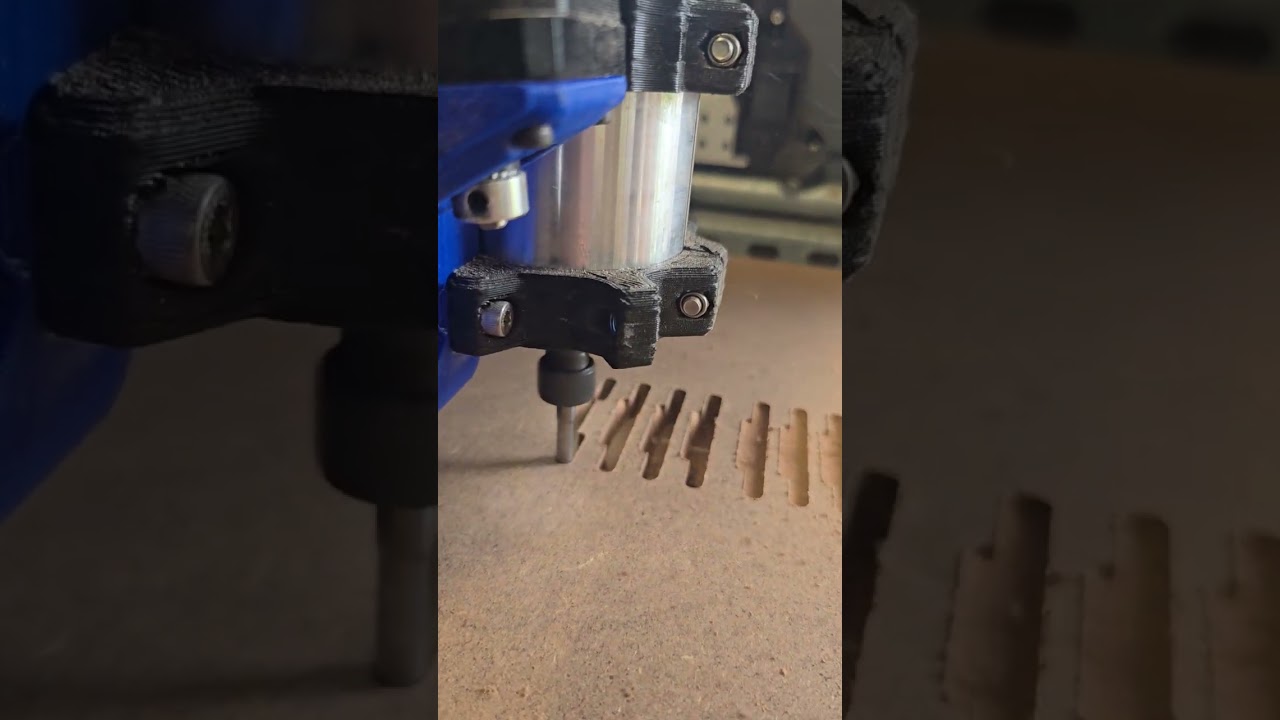
Push that endmill in further. Get the top of the flutes much closer to the collet, that and the RPM is probably too high. I would do some tests with it around 3 on the dial and only move it up if needed. That will help make your endmills last a lot longer.
try not to add text right over the part of the video we are supposed to be watching 
The first 30 seconds of the cutting is hidden
Also, MDF is so squishy you could do whatever in it. 
Router bogged out so hard it almost died. That was on the second cut so 75mm/sec
Much agreed, I had to drop it down a bit further to get the 10mm DOC. My unistrut gives me a touch too much drop for deep stuff. I’ll have to add a second layer of MDF and maybe some fancy t-track to bring it back up a little bit.
MDF near me is pretty tough, usually. I get about the same speeds as IPE.
That is really bad, you need to offset your bed up more if that is the case. Stack more sheets. Teh LR is the most rigid at the bottom with minimal stickout.
Methanol (methyl alcohol) is actually pretty common in industrial and automotive applications. It’s the primary alcohol used in many windshield washer fluids and has been used for years in water/methanol injection on turbocharged and supercharged engines.
The reason is its cooling effect. As it evaporates, it absorbs a tremendous amount of heat. That’s why engines running water/meth injection can safely run more boost and timing—the intake charge is significantly cooler. After a hard pass, it’s not unusual for the supercharger itself to be cold enough to have condensation or even frost on it.
I’m not suggesting spraying methanol around a CNC, just pointing out that it’s a very well-understood coolant because its thermal properties are exceptional. IPA is definitely the safer and more practical choice for a hobby CNC since it evaporates cleanly, is readily available, and is much less hazardous.
And I really dont want to feed my machine beer either
1 Like
I’ve seen machinists using milk as a coolant for milling copper…
I asked the AI to see what the differences are
Purely from a machining standpoint? It would probably work extremely well.
The reasons people don’t use it have almost nothing to do with cutting performance.
Property Methanol Isopropyl Alcohol (IPA) Cooling Excellent Very good Lubricity Poor Poor Evaporation Very fast Fast Toxicity High Moderate Flammability High High Cost Low Moderate Availability Less common Everywhere
The biggest drawbacks are:
Toxicity
Methanol is substantially more toxic than IPA.
It can be absorbed through the skin.
The vapors are more hazardous.
A surprisingly small amount can cause blindness or worse if ingested.
Fire
Methanol burns with an almost invisible flame.
If something does ignite, it’s much harder to see than an IPA fire.
No real machining advantage
For aluminum, the limiting factor on a hobby router is usually rigidity and chip evacuation—not the last 5–10% of coolant performance.
IPA already gets you most of the evaporative cooling benefit.
Seems like toxic and invisible fire are pretty good reasons to avoid doing this. Testing would be neat, but not “cool enough to go blind”
1 Like
I bet the added viscosity would help with lubricant as well as cooling. But can you imagine what the smell would be like in a home shop when the milk gets “forgot” about. 
3 Likes
Agreed. That’s why I won’t use Methanol as coolant.
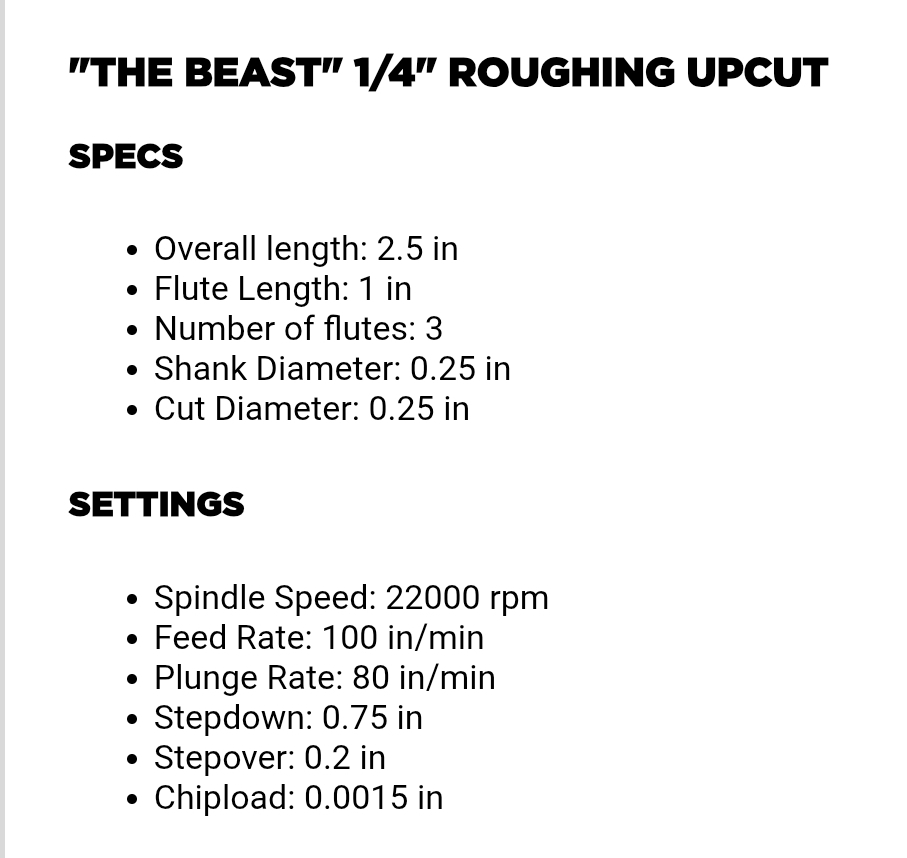
I’ve looked at CIC guy and decided to try something and
I cut plywood and mdf with 3 flute serrated 6mm endmill. the cheap aluminium roughing endmill from china
2500mm/min 4.5mm depth of cut. between 2-3 on the router. stays sharp for long time and the machine is much happier then with cheap single flute ones. then a finishing pass with a compression endmill to get clean edge
full sheet LR4. but i have a very powerful 2 motor vacuum so no issues with chip clearing
1 Like
Get some videos of that. I would love to see how that cuts. Those small flutes do not leave much room for chips to get out, and they come around 3x more often than a single flute. Not saying it is wrong by any means, just not what I would expect to be a good result.
Agreed! And what rpm does that translate to?
The way i think the math works
9000 (150mm/sec) ÷ ( 24000 RPM * 1 flute) = chip load 0.375
So if I want to show the router I need to go slower OR add a flute
9000 ÷ (18000 * 2) = 0.25mm chip load which i believe is technically an easier cut than the single flute at 24000.
But I’m not one for drawing the conclusions, just throwing numbers out there as I understand them. I’m sure I’m missing something
Edit
9000÷(10000*3)=0.3
I will make separate thread and post a video and some pictures in there
I’ve got the idea from cic workshop / idcwoodcraft feeds and speeds recommendation for their roughing bits. I’m not using any of their bits. just a cheap DLC coated serrated endmill from aliexpress with a similar shape
my chipload should be very small according to the calculator but not rubbing or burning


https://idcwoodcraft.com/products/the-beast-1-4-roughing-endmill-bit-for-cnc-routers-1-4-shank