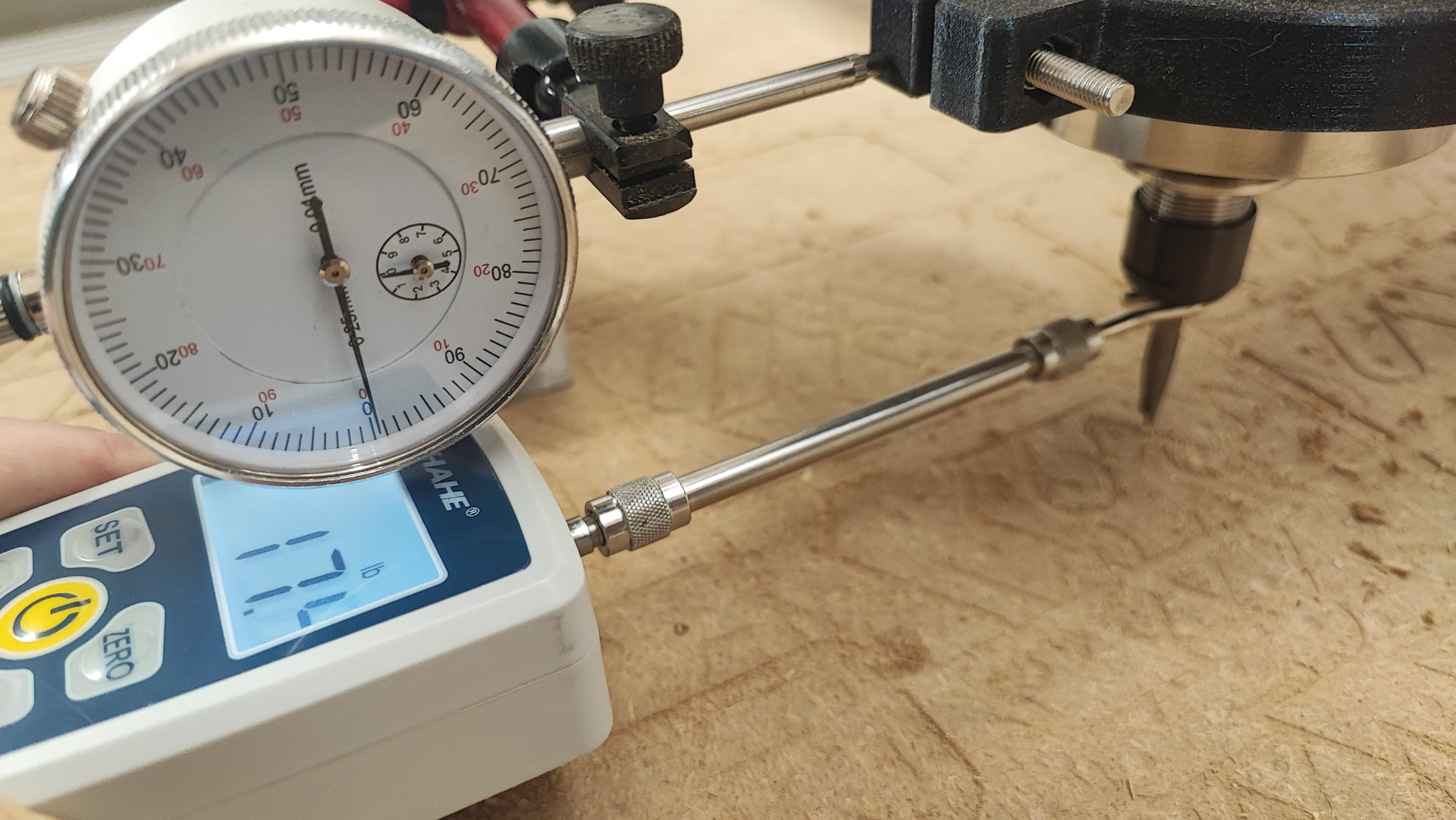
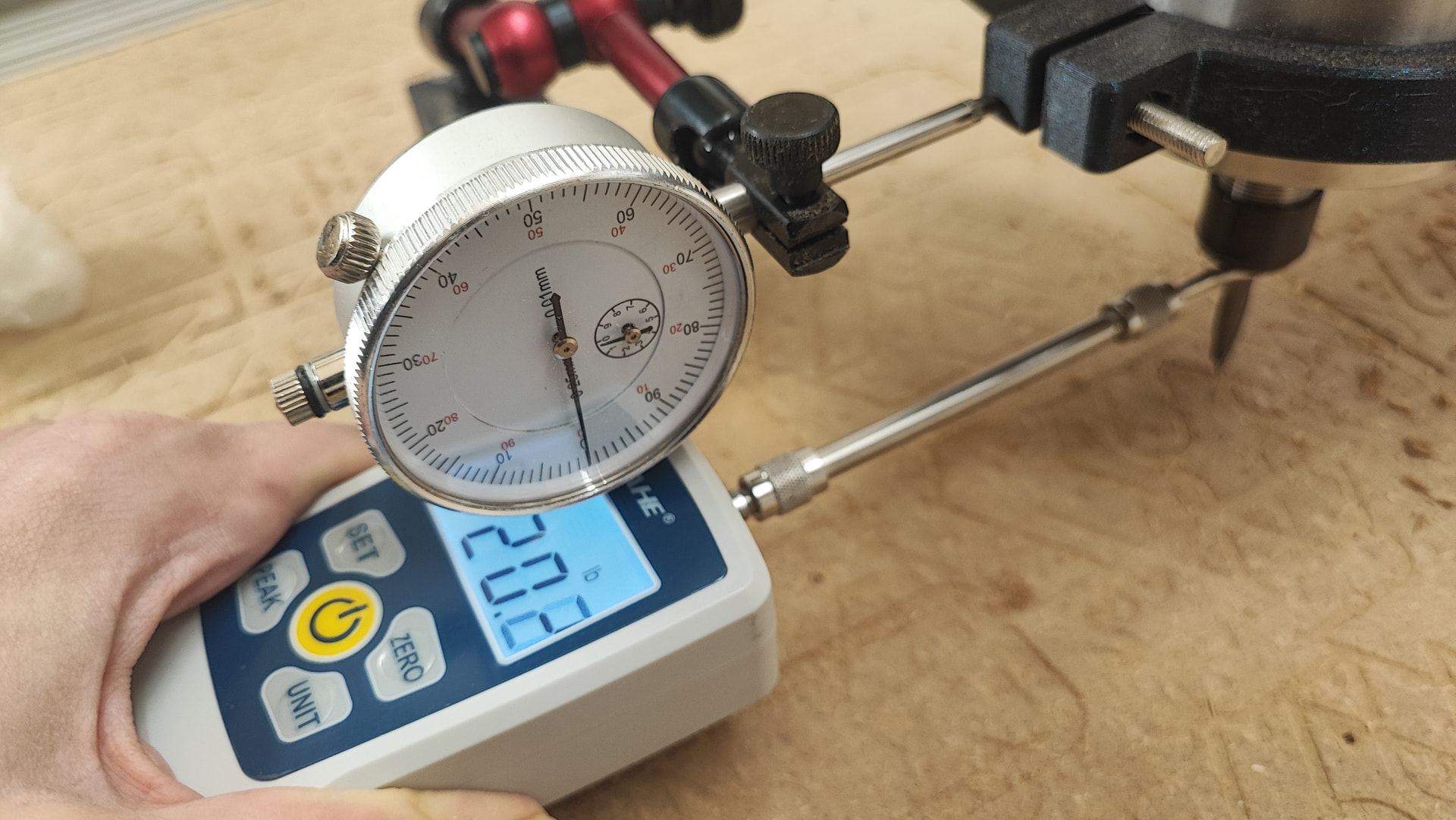
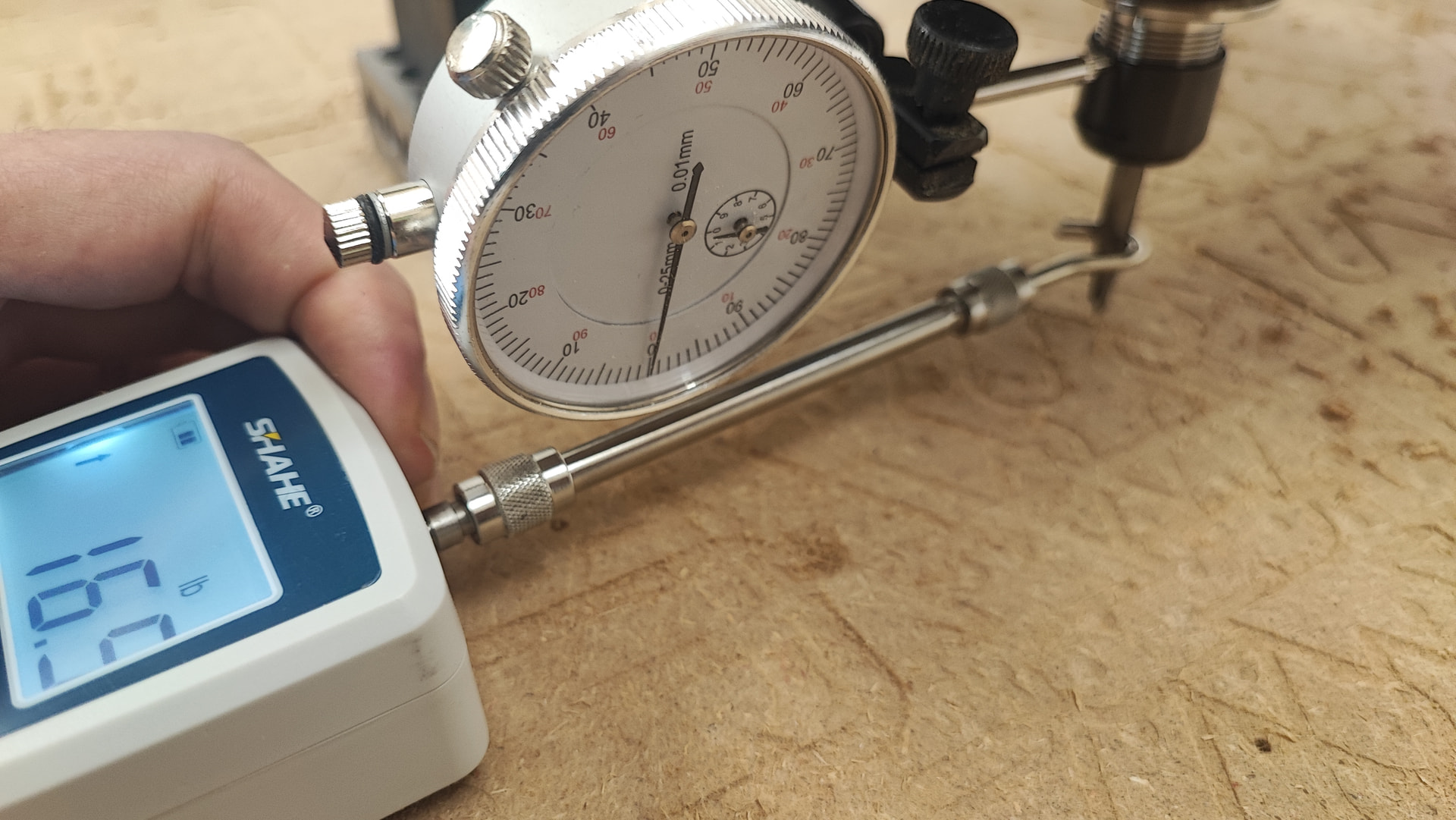
You interested in getting some rigidity numbers for me? If I get you a force meter and a dial indicator?
I am very interested to see how large of a gap there is between machines.
You interested in getting some rigidity numbers for me? If I get you a force meter and a dial indicator?
I am very interested to see how large of a gap there is between machines.
Where’s the popcorn emoji when you need it….
If you tell me what to do and how I can absolutely do that. I actually have a dial indicator already. 
I can tell you already that I can push the whole machine (~150kg) pushing against the gantry without it moving/losing position when it’s powered on though.
That is a factor of screws vs belts.
I am most concerned with tool deflection under load. This is all about machine flex and slop stack. This like backlash could also show up here.
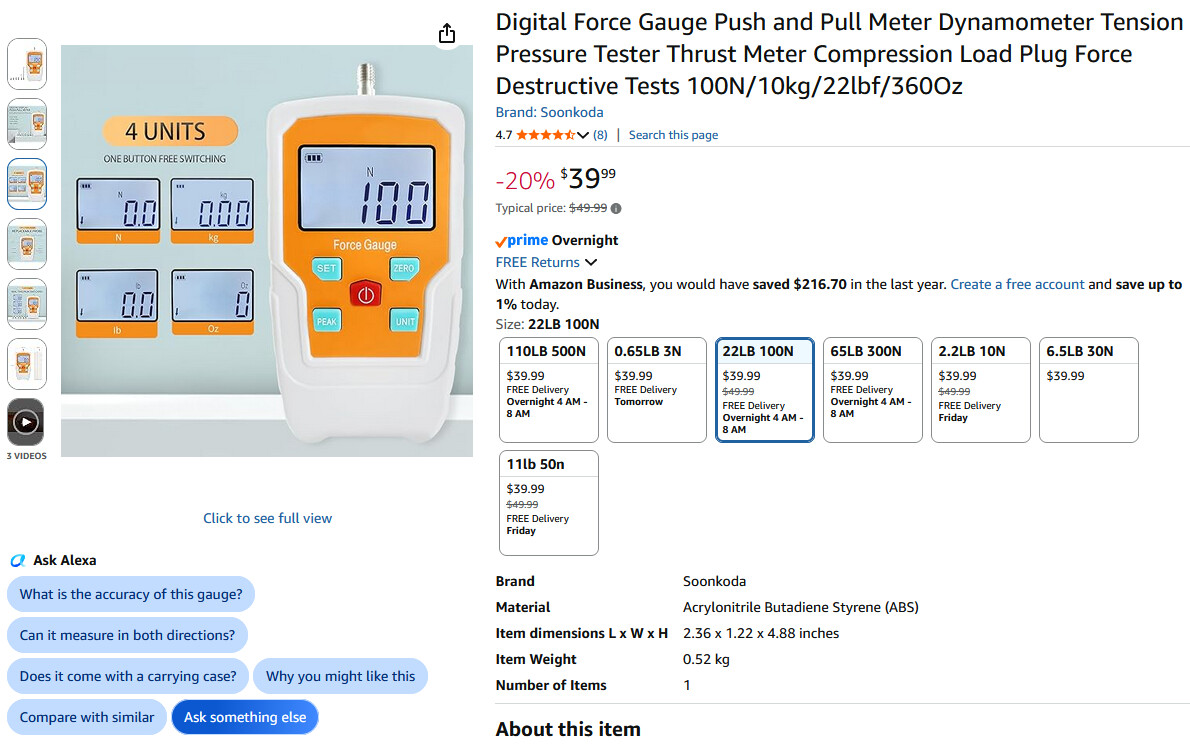
If you have a dial indicator you just need something like this force gauge.
You should not need more than 50lbs, but I am pretty convinced these are all the same with a software limit, most digital scales are, meaning the accuracy is the same so you might as well get the 65 or 110lb version. I test at 9lbs, just because I have for a long time, AI says with a 6mm endmill 5-20 for aluminum, 20-50+ for steel. That sounds pretty correct to me. Since I started this with 1/8" as the base calculation which is 1-10lbs force in aluminum.
Let me check Ali later. I know what you want to test with that thing, pull at the endmill, right?
What do I test with the dial indicator? 
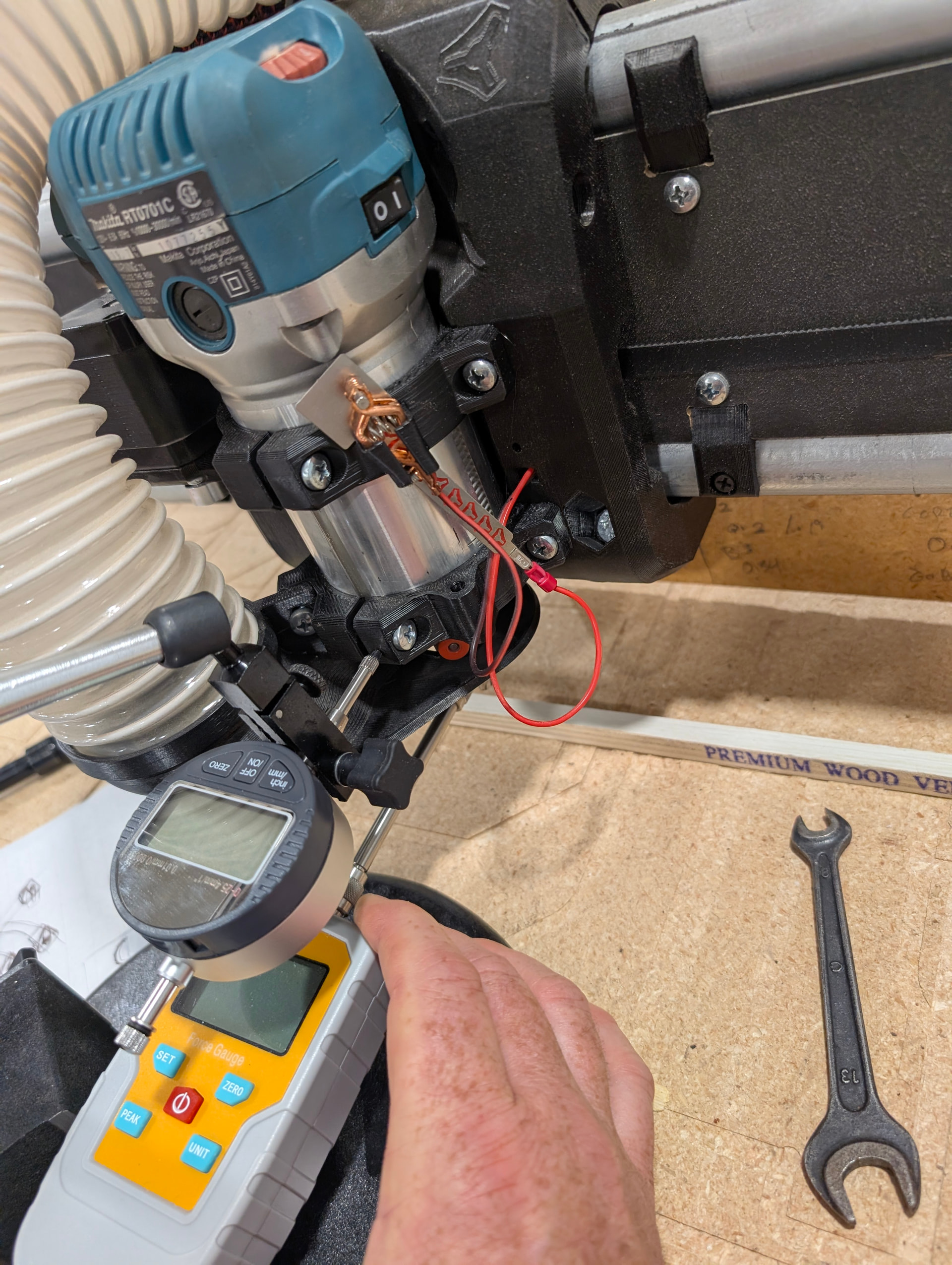
I will take a basic picture later. It is quick and dirty, nothing crazy scientific.
My place of work does scales, on anything that’s not trash your going to have the same analog frontend and the same ADC, but a different loadcell for different weight limits.
Since you now span the same resolution to a higher weight, higher max loads usually also decrease the resolution in units of weight.
Exactly, I assume these fall into the “trash” category. That is why I always call my tests “quick and dirty”.
I understand that part of it. But there are certainly inexpensive devices they are just trying to create more sales with. In this case if they all have the same resolution so I would assume it is the same load cell? If the load cell changed wouldn’t the resolution or price change?
I have an o-scope that has a hack to unlock a very pricey upgrade the manufacturer sells for the same exact hardware, and a counting scale that has abilities disabled over a certain weight unless you pay more. For the scale it counts perfectly all the way up to about 30lbs but stops showing weight after like 3 lbs.
Dymo Label printers as well. There are ones that don’t have a recharge port, so you have to swap the batteries. The only thing they changed is the plastic casing so you can just drill that hole, the hardware inside is exactly the same.
Or Teslas, where you can just “change” the battery size via software.
The signal amplifier & ADC is by far the most expensive part of any scale in that weight range, so the small weight ones would have an absolute atrocious “count” if they where just software limited. Which they might very well have, as conveniently the product listing shows none. Either way, they won’t be THAT bad, even without even an excuse of factory calibration.
Thingy arrived, tell me what you need.
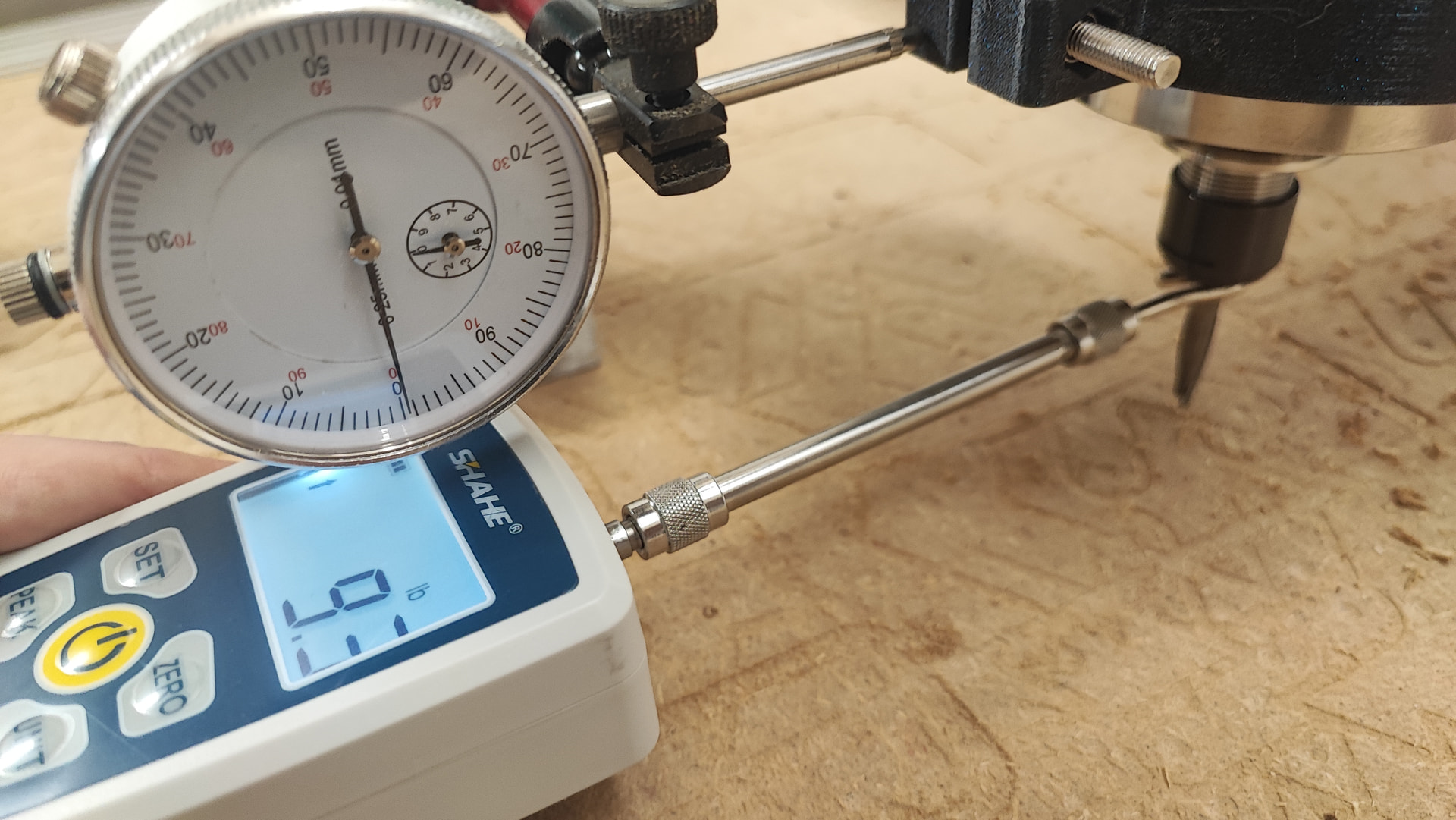
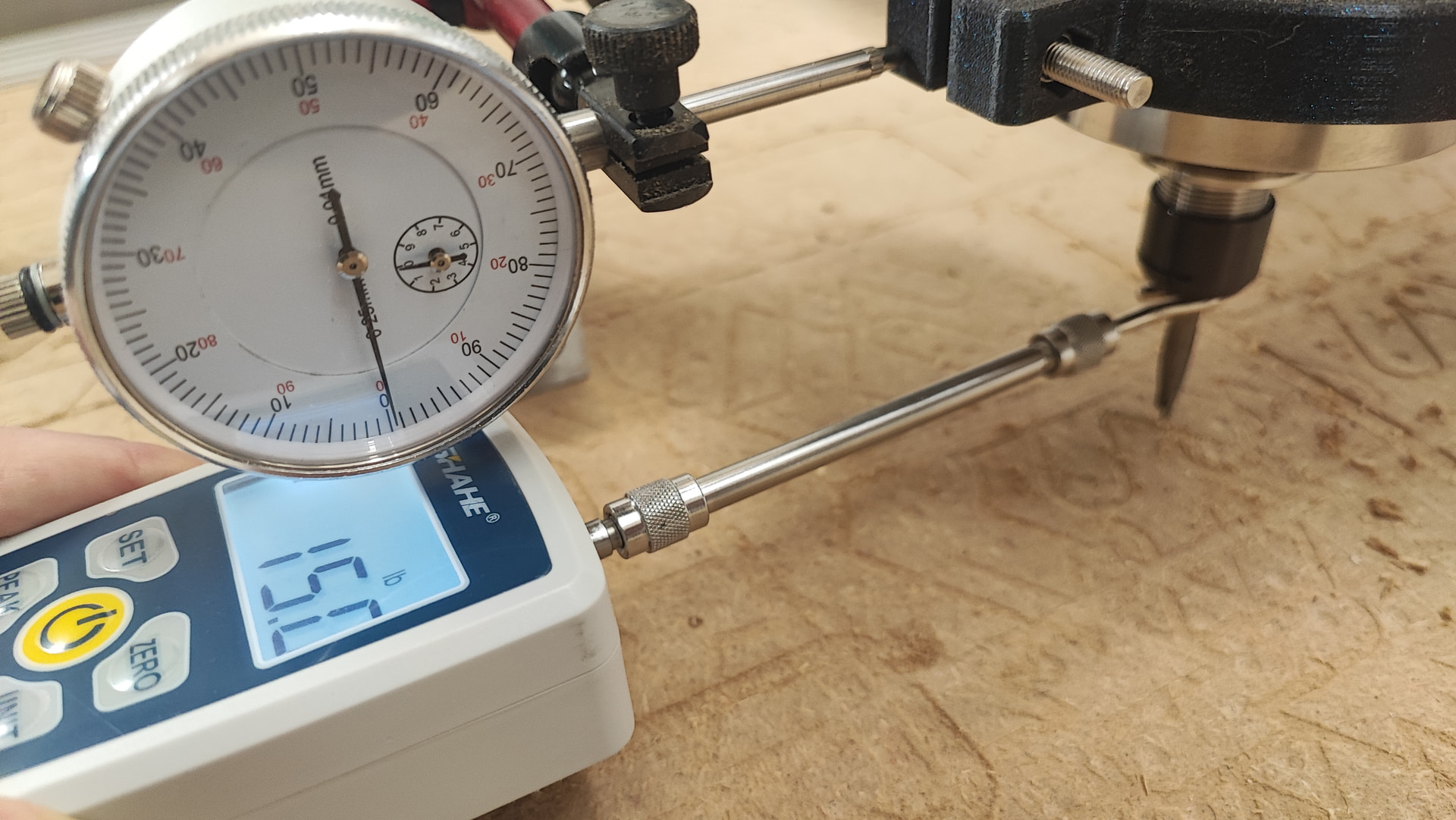
The most comprehensive is just mount the indicator to the table (have a steel weight and a mag clamp), indicator as low as possible but not on the moving collet nut, push and pull from the endmill up at the collet, with the machine on and locked (check highest and lowest position, middle of your work area).
This checks everything. this is the number I am most interested in. From there you can clamp things into place if you and to find the worst offender, but I really am only interested in the push pull number at about 9lbs.
Gotta change batteries. 
WOW!
a push and pull should let you know if you have any backlash currently. otherwise, that is great!
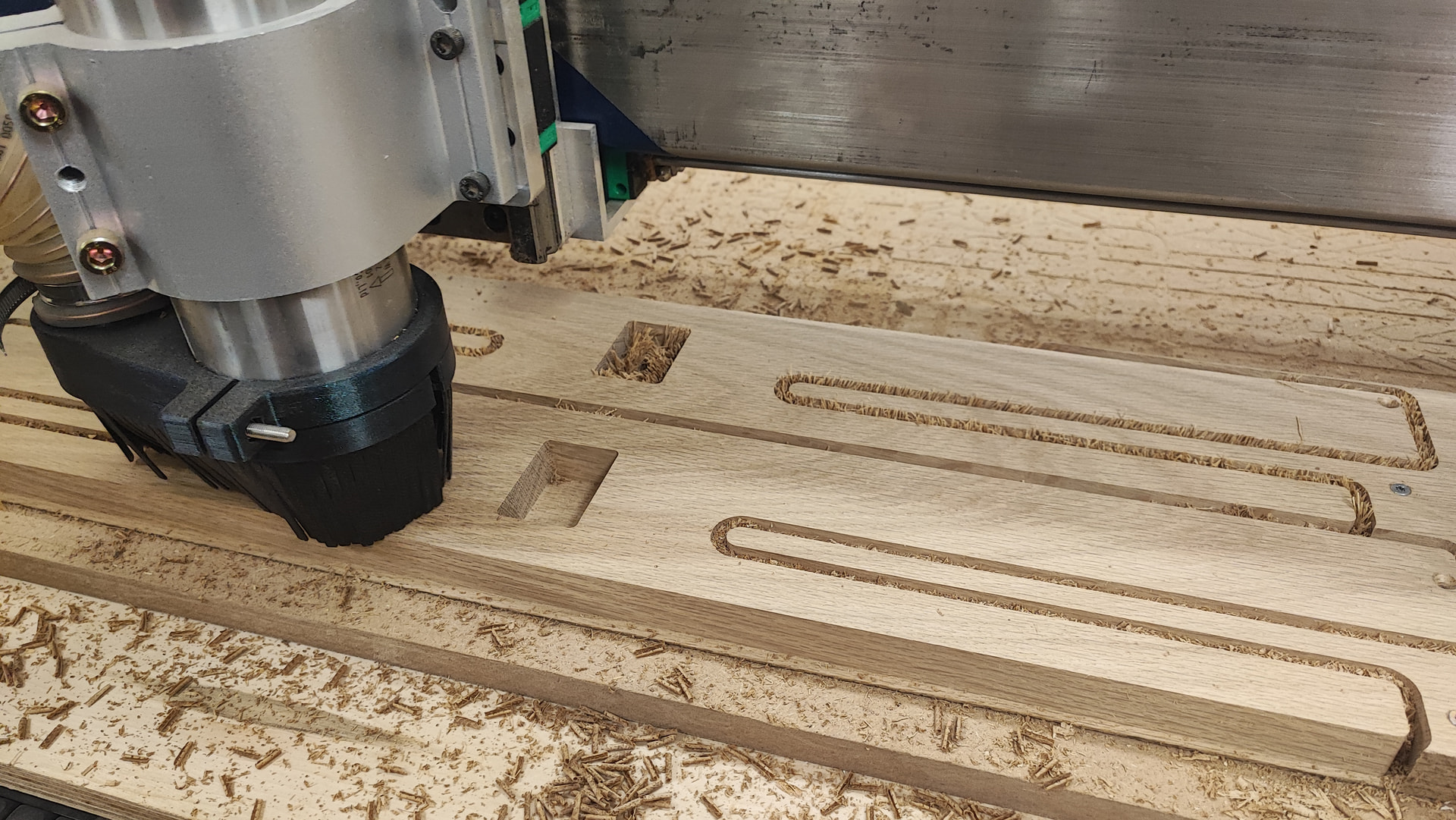
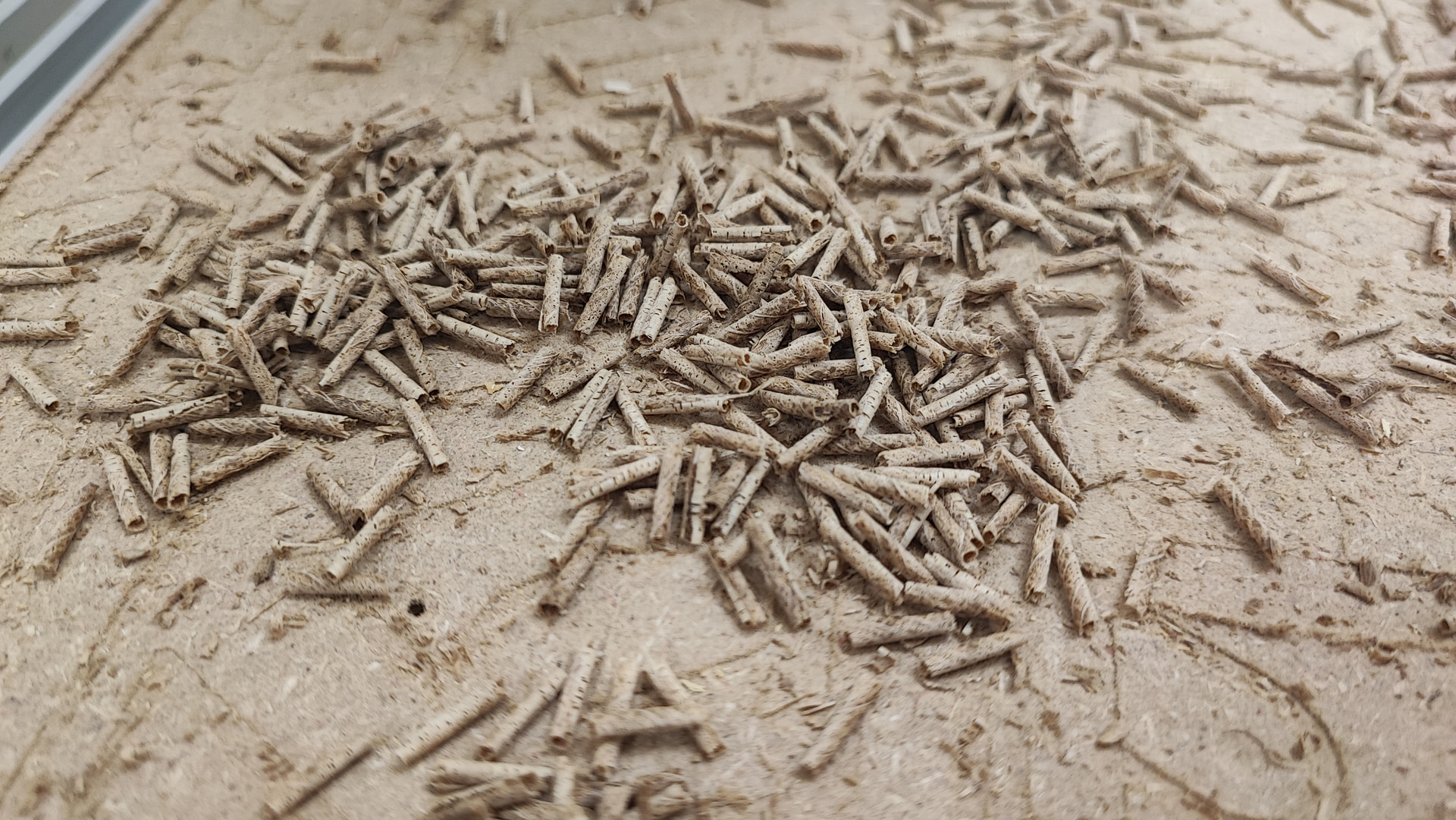
5780mm/min, 6mm 2-flute, 10mm DOC in oak. Look at those curly chips. The endmill wasn’t hot at all afterwards (I am mentioning this because of the MPX below):
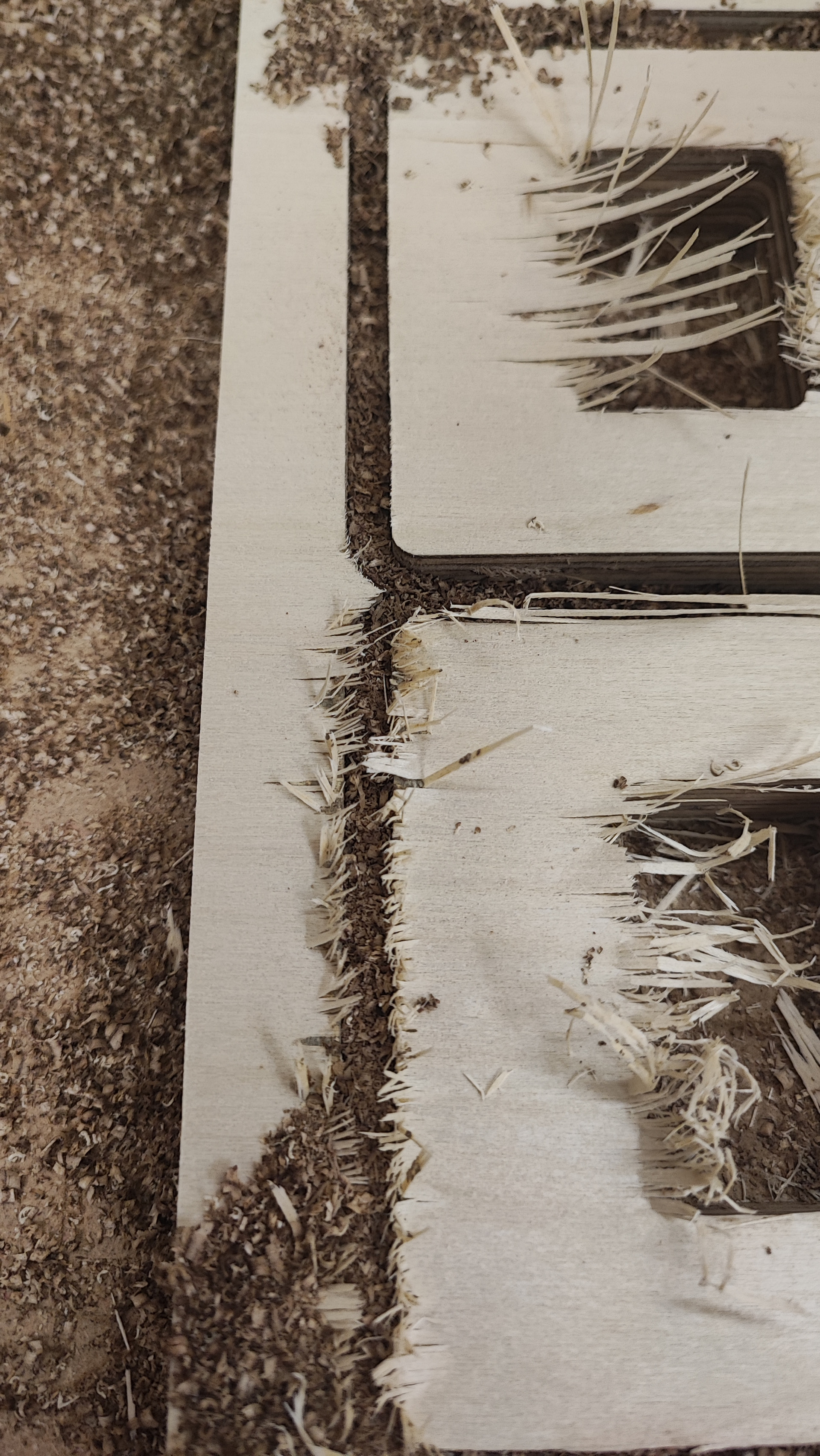
Also, my nemesis MPX proved to be difficult again without the diamond endmills, it also seems that the MPX got worse, it splinters massively (bottom and cutouts), when switching to a downcut the cuts look really great (top slot), but the endmill gets scorching hot with the same settings as above. I actually have a blister from touching the endmill. Maybe I should get an up-/downcut for this? But those are also expensive. Or just cut 3mm with the downcut and then switch, but that’s also stupid. MPX just does not seem worth the hassle and it’s eating up my endmills.
I could also make the MPX ones more expensive. But it really isn’t fun making those.
I just looked at pictures of the first few MPX ones, they look so much cleaner with so much less tearout. They must have changed something during the production which makes it really, really shitts.
Update: it’s the MPX. They sell it as beech/eucalyptus, the beech only being the top and bottom layer.
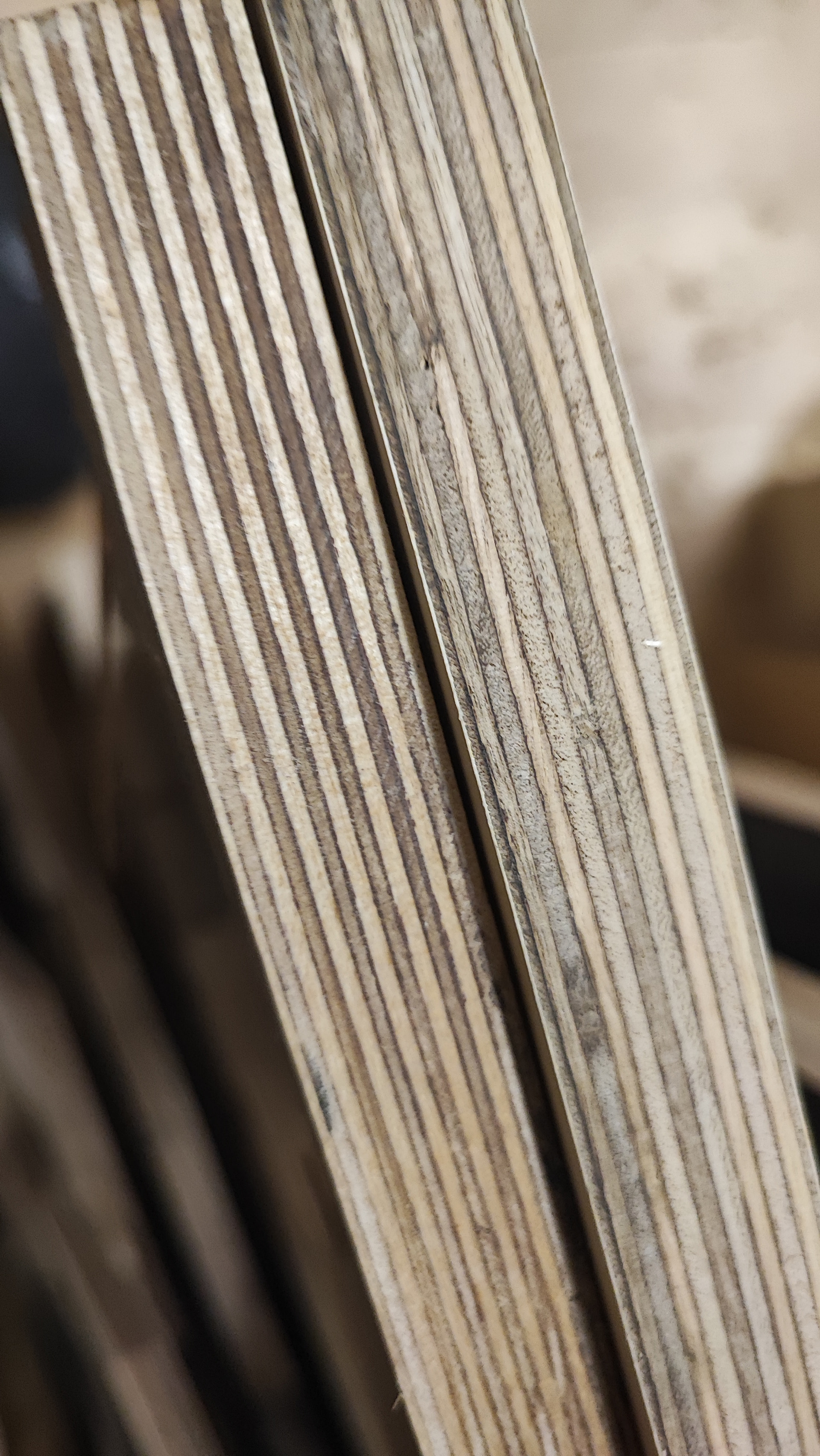
Now look at the top and bottom layers of the old one I bought a year back and the new one:
The new one’s top layer is like, 0.2mm (yes, that thin light line you can barely make out on the right one)… no wonder it’s ripping out everywhere… The old one is ~1.5mm or so.
Out of the eight mounts I cut seven are B-quality that I definitely can’t sell full price. Grmpf.
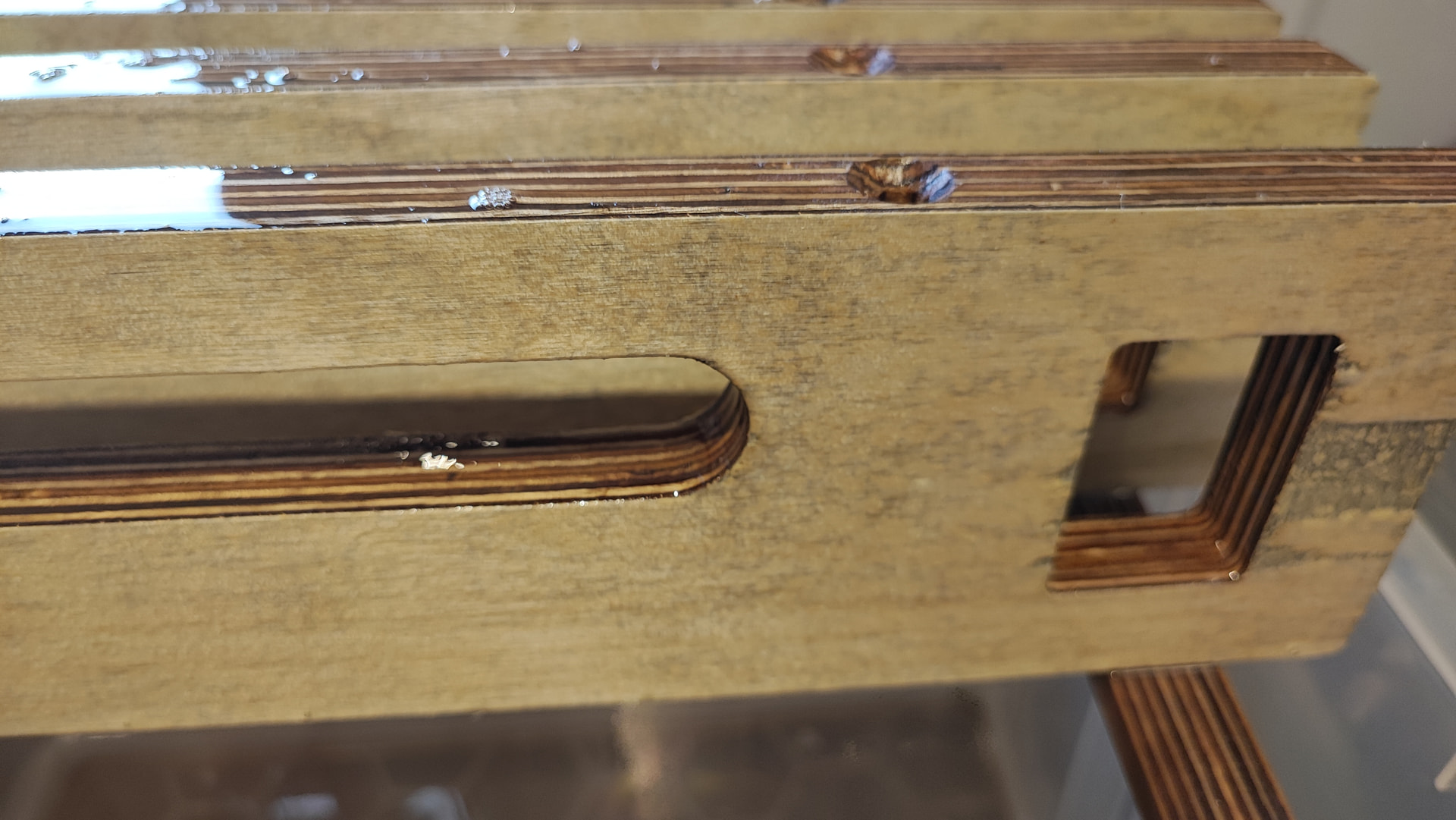
Also, it’s so thin the layer below shines through after oiling… You see how patchy that looks? It’s more than embarrassing for Hornbach.
Got to find a new vendor for MPX, but at the moment I think I’m just going to call it quits and only offer “real” wood ones.
The young folks’ English word for this is a great word: enshitification.
Your supplier has enshitified their products.
I’ll bet there’s a great German phrase for this… crapping on the customer…
Perhaps you could “laminate” it with something? Like a wax cloth or leather?