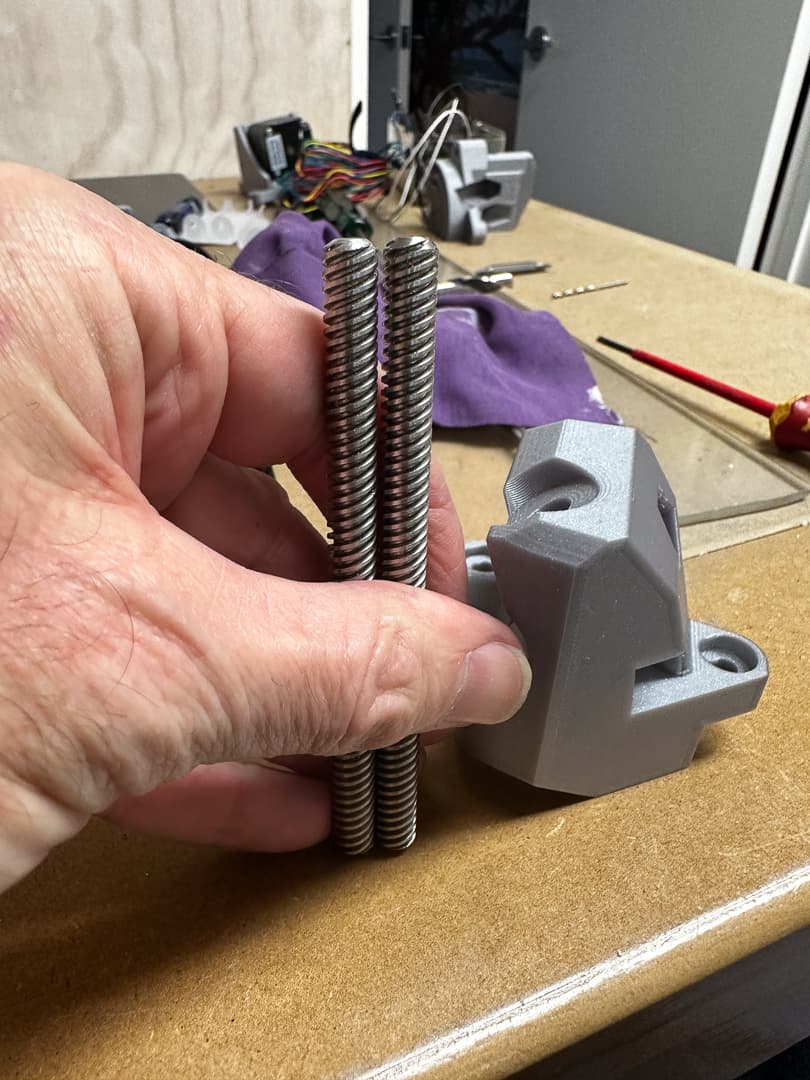
It’s the afternoon and I haven’t done a lot today but I’ve bolted in the prototype clips, which immediately feel way too soft. I’d underestimated how springy PETG is after working with PLA for so long, and I forgot to add a fillet at the bottom, so one of them has snapped off already and that was just installing it!
That’s why we make prototypes boys and girls! 
And while I was at it I I cut down one of my LR2 lead screws to get two new ones of exactly the correct length.
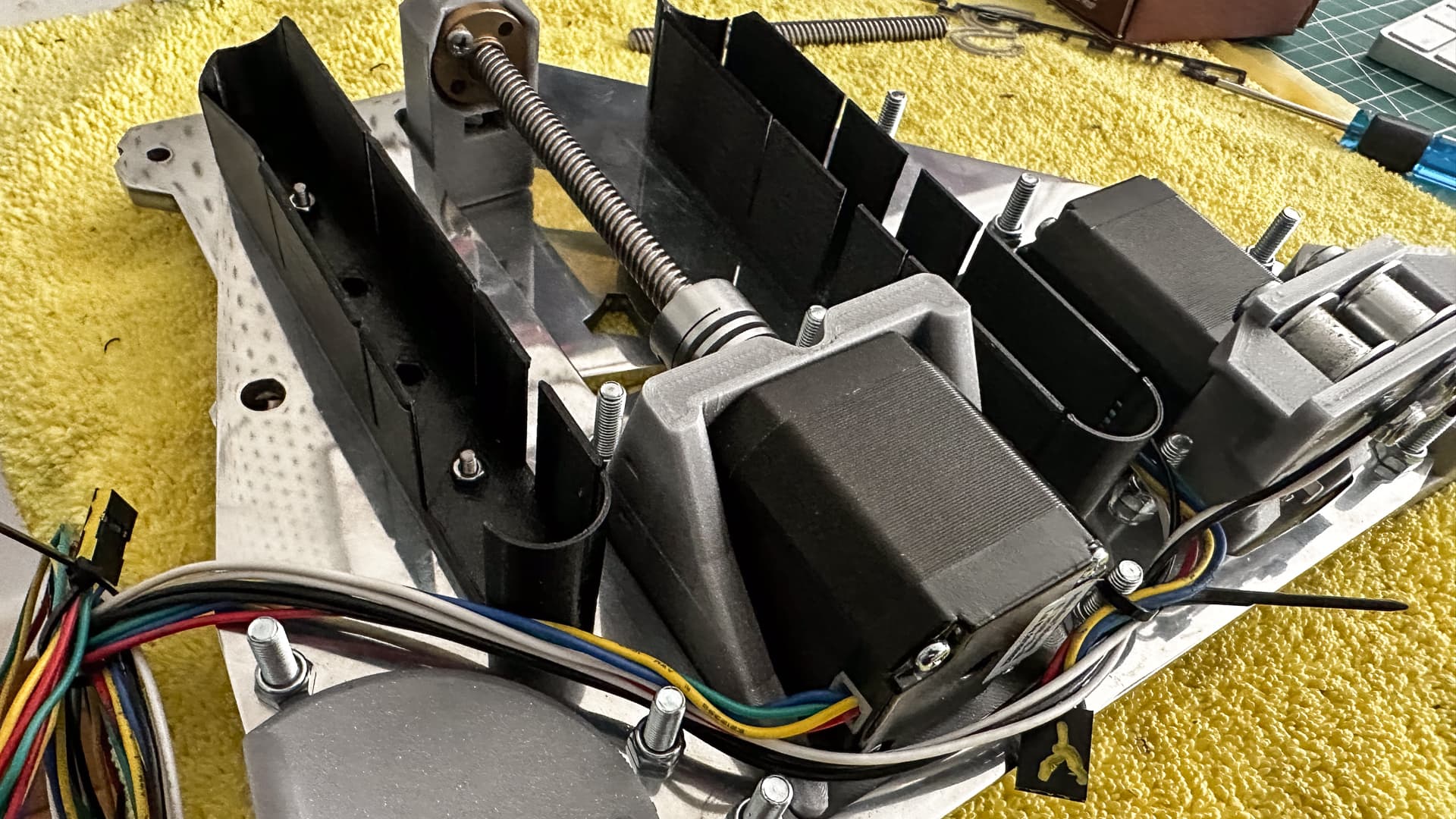
If you know how to cut screws accurately you can avert your gaze now while I go into tutorial mode, but if you don’t; - do this and you will never struggle to cut a screw of any length or size again.
This is how you cut any sized screw to any length accurately, to identical lengths and without making a great jagged burr on the end. No need to thread nuts on, no need to file away the three threads that were marred when your saw (or Dremel) skipped starting the cut.
It’s worth taking just a few minutes to make a small jig every time. It’s amazing how quickly you can cut even hardened stainless steel with a blunt hacksaw when you are holding the screw securely and guiding your cut.
Grab any old scrap of wood, drill a hole in one end big enough to snugly hold the screw. Make two cuts, one through the hole along the axis of the screw so that the wood will clamp tight when it’s placed in a vice, and another at right angles to that one, to serve as your cutting guide.
For shorter length screws the jig is slightly different and I’ll photograph that when I’m up to cutting all the M5’s to length, but for now, make a cut exactly one desired length from the cut guide, and hog out the material to expose the stop so you can get the screw out later.
A bandsaw makes this really easy and it takes less than a minute to do, but I’ve been using a hacksaw for this since I was a kid. (Just make sure if you do that, that your father isn’t watching)
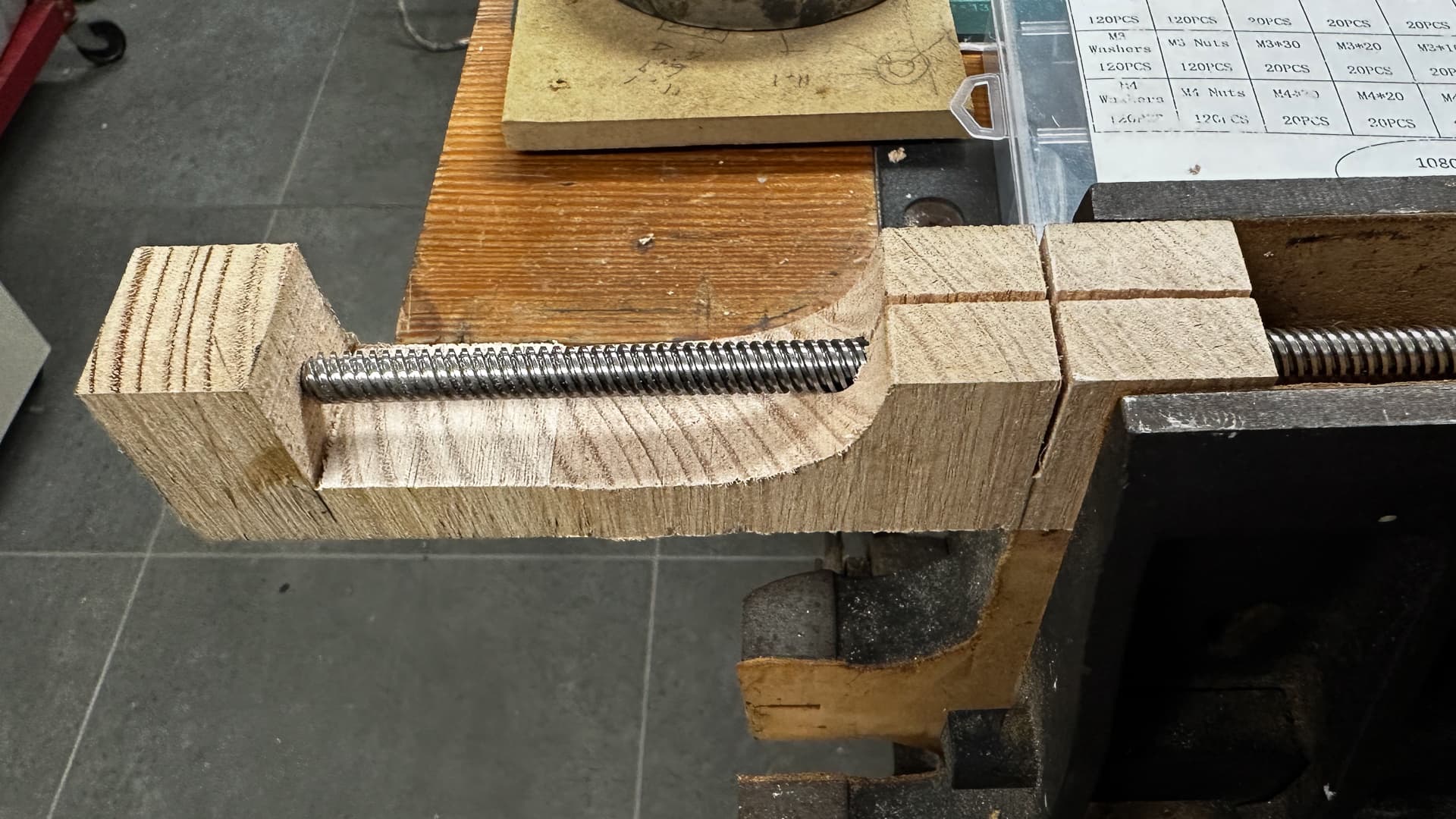
Now clamp it in the vice, and saw away.

You’ll find the cut is perfectly clean with no burr, just a slight “wire edge” which you can thread a nut straight over, although I prefer to clamp the screw in my drill and give it a light touch on a belt sander.

Voila! Two identical screws - on the left is my cut on the right the factory job for comparison.