Marcus from germany here! Old man with silly hobbies (and bad english)!
I’m just started to build a Lowrider V4 for my biggest hobby: kite building.
I already sourced most of the materials, printed the parts… and changed my mind a bit.
My first thought was to build a small version first, to learn how to build and handle a Lowrider CNC. Besides my beloved Prusa 3d-Printer, this is my first step into building a maschine and doing CNC.
So I started small just building with steel tubes of 1m length. After my first steps in building, I’m very impressed how easy and fast it is to assemble a Lowrider V4. The designs are so clever and well constructed. 3D printing was as easy as possible, and assembly goes very well.
And that’s where I decided to do the real thing and build it large instead of a small one to learn and then a second one for real use.
Now I try to source some tubes and multiplex for a Lowrider with a usable cutting area of 1150mm by 2640mm - so I may use a full 3x1.5m sheet of multiplex as table.
That’s the story so far…
And now I want to use the time until I got the missing parts and the parts to big for my small car, and ask you many questions.
I will use the Lowrider most the time with a laser to cut sails for my kites. And that’s where my questions start:
Which laser should I use?
The fabric is very thin and light, but also a bit on the transparent side. And it comes in all colors. And don’t know which laser to buy.
Safety!
I’m not that happy having a powerful laser unenclosed. OK, I will be alone in the room with the Lowrider, no children, no pets, no other persons. I promise to wear protective glasses all the time. But what else may I do, do make operation more save?
Toxic fumes!
How to I handle the toxic fumes created by the laser cutting the fabric? I can open windows to the outside, but is there an easy equivalent to dust extraction, that I may mount near the laser do suck up the fumes?
Is there need for fixing the fabric?
Is there any need to fix the fabric to the table beside some weights at the edges to keep it flat? Do I need a sort of suction table? Or use some “post it-glue”?
But first I will buy a router and use it to do the strut plates and some winders for my kite lines!
I never met the vendor in person, but the mail exchange was very friendly, delivery was very fast, and the parts are fine quality!
And about the tubes: I’m looking into the polished tubes for railings. V2A steel, thick wall, very smooth surface. There is a business the down the street from my home, and I will ask them, if they can and want to sell me some tubes.
Problem with ordering them is: The delivery cost me more then the tubes. So I try to source them as local as possible. And down the road would be perfect: I may carry them by hand home. That’s the curse of owning a small convertible as my car. Not good for transporting long tubes.
You don’t cut things that give off toxic fumes in the first place.
Note that I’m distinguishing between “smells bad” like leather or some woods, and “toxic” like cutting PVC will off-gas toxic and corrosive Chlorine gas. Enclosures and venting to outside can manage the first. For the second - just don’t.
Lots of places that sell hobby lasers also publish “laser safe” materials lists. If you’ve got a question, then contact the manufacturer of the material and request a Material Safety Data Sheet.
*some leathers - Veg tanned leather okay. Chrome-tanned leather emits Chromium compounds and cyanide, very bad!
**I wanted to look it up again to be sure, and more internet myth now. US/EU tanneries use tri-valent chromium which is “safe”, it’s hexavalent chromium that was bad and is only used sometimes in Asia. Myth busted, sorry for passing it on before verifying.
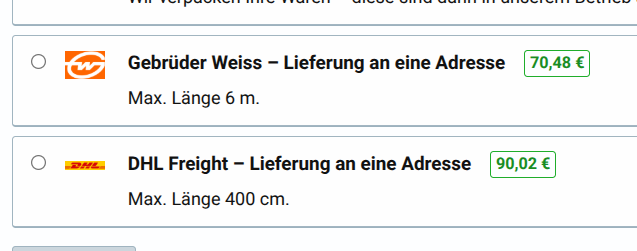
Zustellung: GLS – Lieferung an eine Adresse in Österreich/Deutschland 15,62 € 18,90 €
That’s what I paid for a full size LR when I built the second one, the first one was even cheaper. Did you put cut rails in your basket? You don’t want to order the full 6m.
That was the main position with 150cm rails:
1184103203 Stahl Präzisionsrohr 32x3,0 mm rund, nahtlos, DIN2391
[Position 1]: 4 Stück × 1.500 mm, gerader Schnitt
Individuelles Zuschneiden, der Bezug von ganzen Stangen einschl. Restmengen bis zur Produktionslänge der Stangen
1184103203 Stahl Präzisionsrohr 32x3,0 mm rund,
nahtlos, DIN2391
8,23 € 6 m 12,88 kg 49,36 € 59,73 €
I’m afraid, I can’t choose my materials free. Kites are build using ripstop made from nylon or polyester. So no choice there.
Most kitebuilder cut it hot, using a soldering iron or hot cutter. That also burns the fabric… So, laser cutting can’t be that more bad. :-/ Maybe!
And there are some other kitebuilders (most often kite clubs) with lasercutters around too.
So I would give it a try, and would wear a breathing mask, and do some good ventilation. But maybe some sort of vakuum with some filters near the laser would be good too?
I still think a bit about using a track knife instead of a laser. But my experiences with track knifes are mixed at best.
If you can do that, even better, I just used a printed one. The LR has been used to cut like, 50 chicken coops already without a problem. Also, 2mm wall thickness is more than enough, the 3mm are really, really heavy and only worked because I had external drivers.
No, you absolutely want the Präzisionsstahlrohr, it’s basically DOM tubing without any variety in its diameter.
Let them cut 4x1.5m, the second option where they also send you the rest without it becoming more expensive (there is no rest). Also kindly ask them to be extra precise because it’s for a machine in the comment. Mine were perfect.
You have to do some rust treatment for the Präzisionsstahlrohr, use Silbergleit for instance. You are not going to be happy with Edelstahl geschweißt because it’s never perfectly round which leads to core wobble in some spots and minor binding in others. I know from experience with the MPCNC and the LR3.
Everyone gets to choose their own safety and risk tolerance levels. Just remember, if you can smell it then it’s getting past your PPE. I understand the appeal of hot cutting the ripstop to prevent fraying.
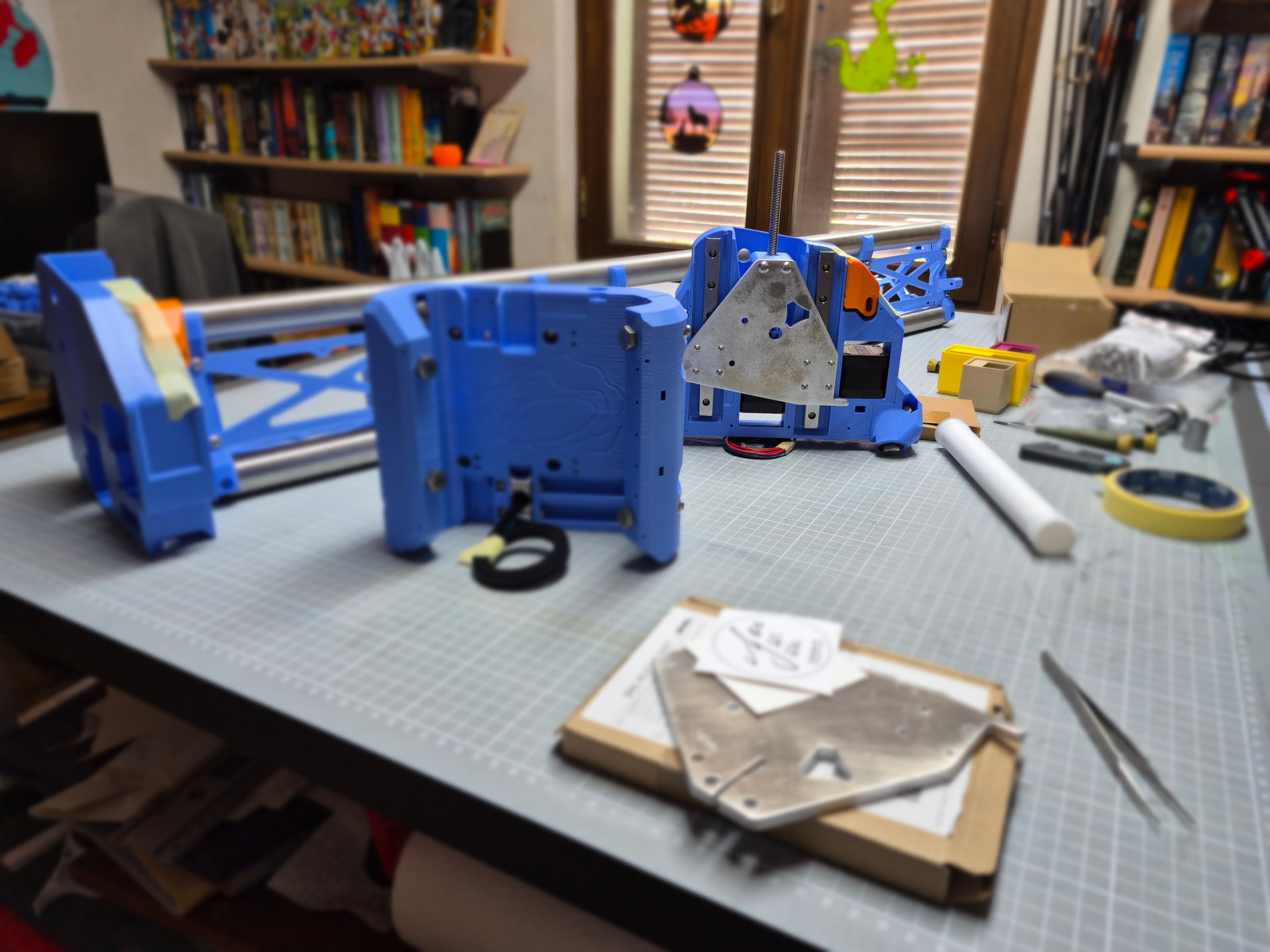


 Really nice you found your way here, your project sounds awesome. I can’t add anything substantial though.