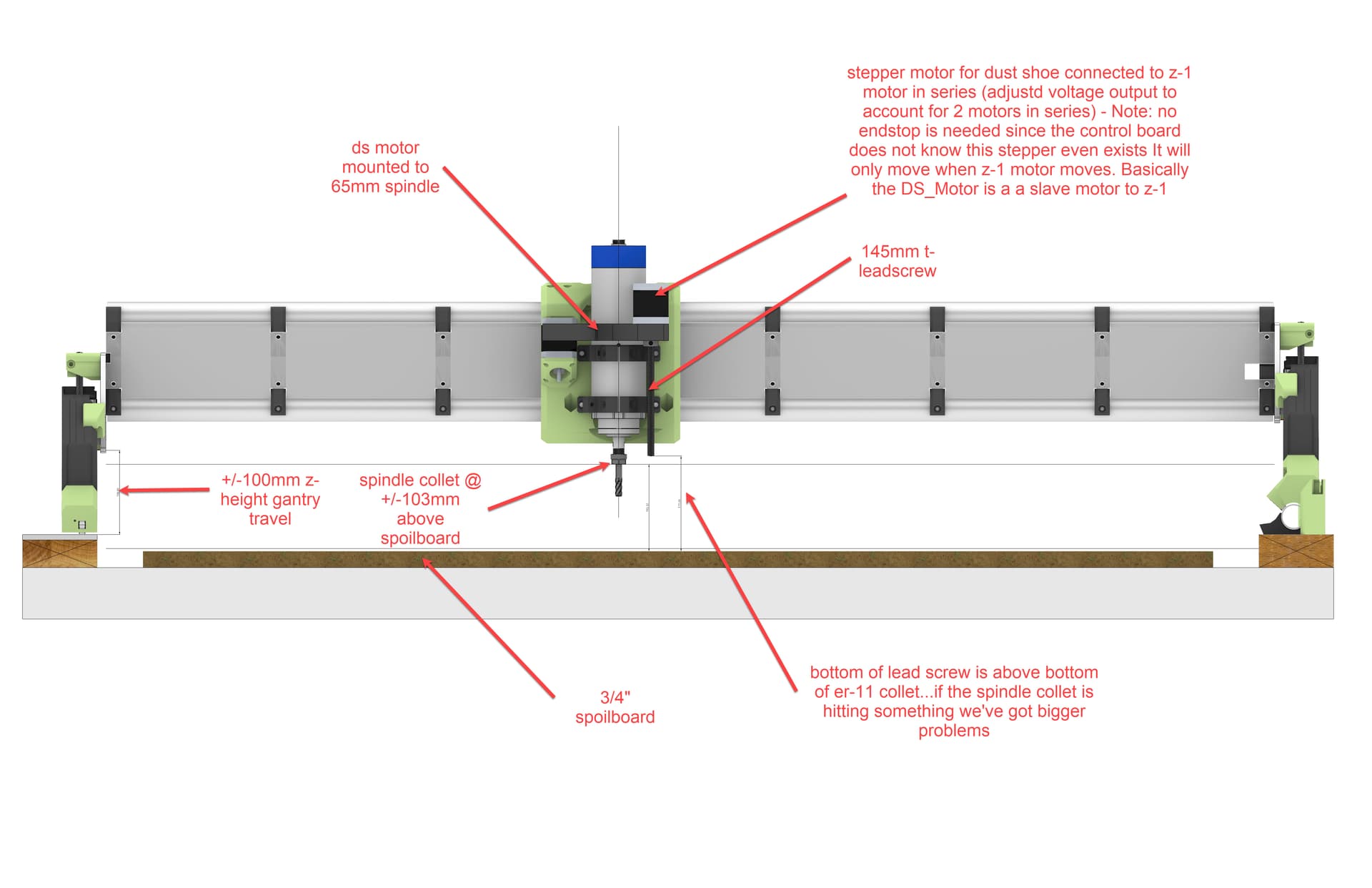
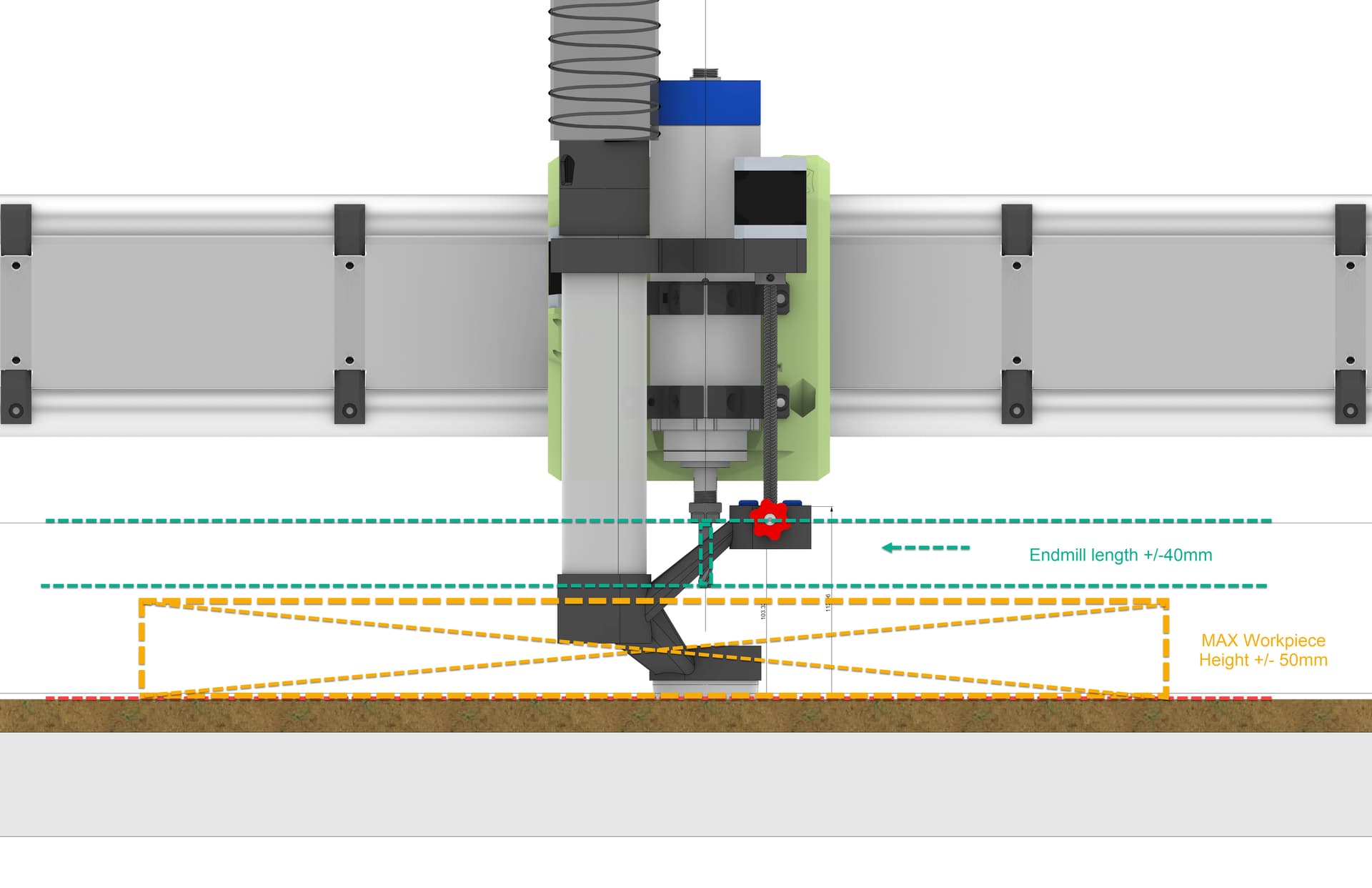
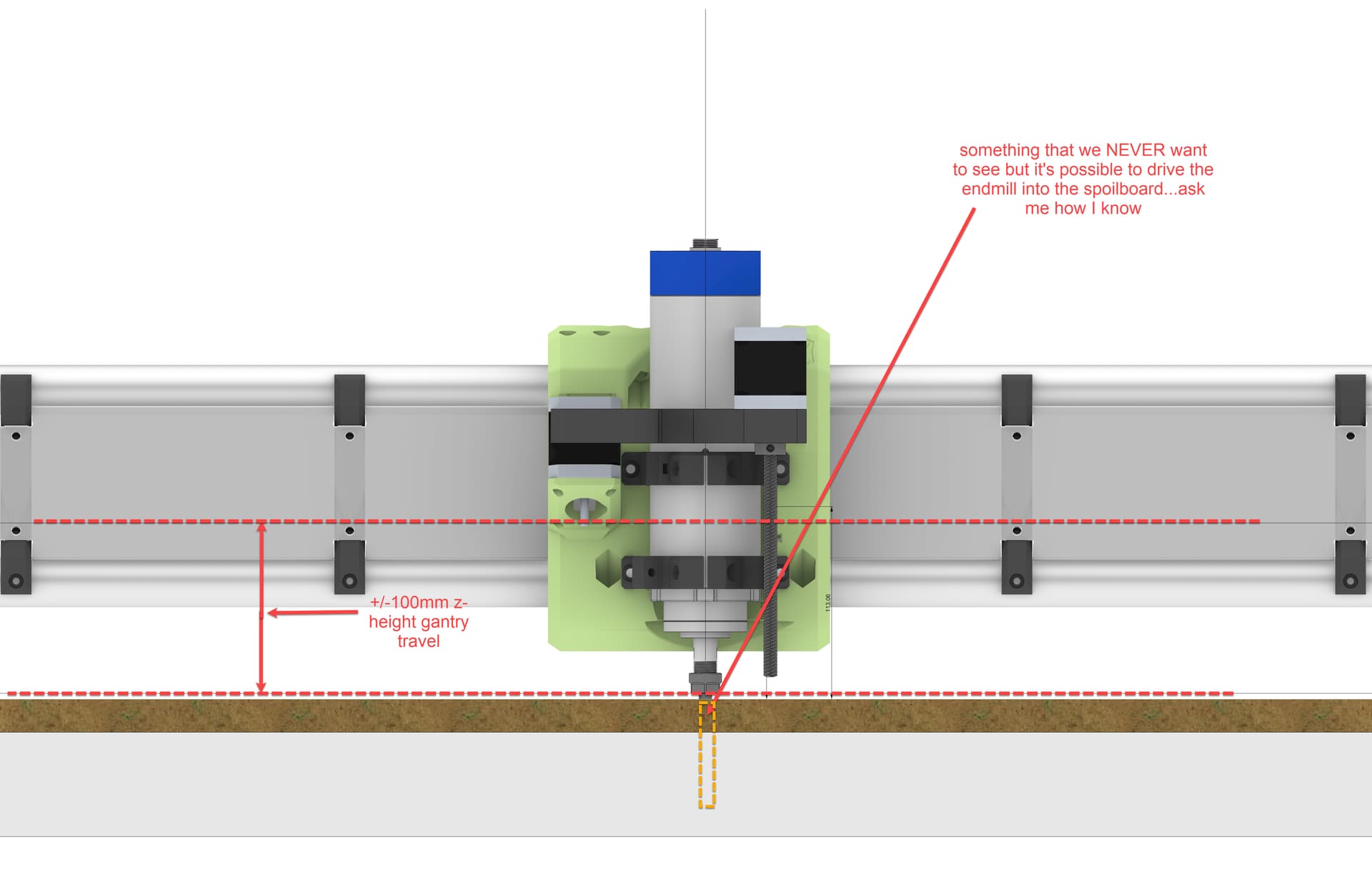
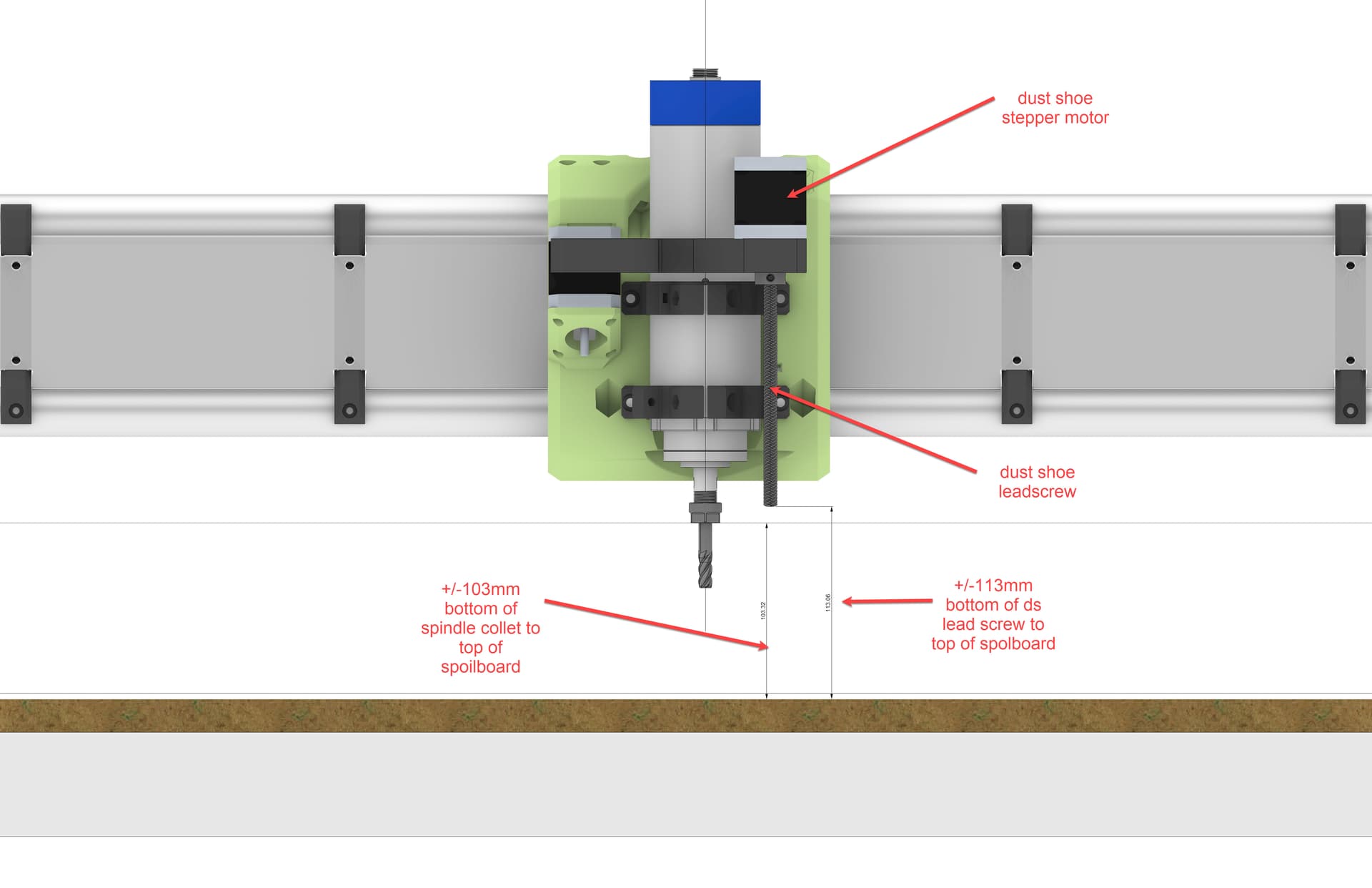
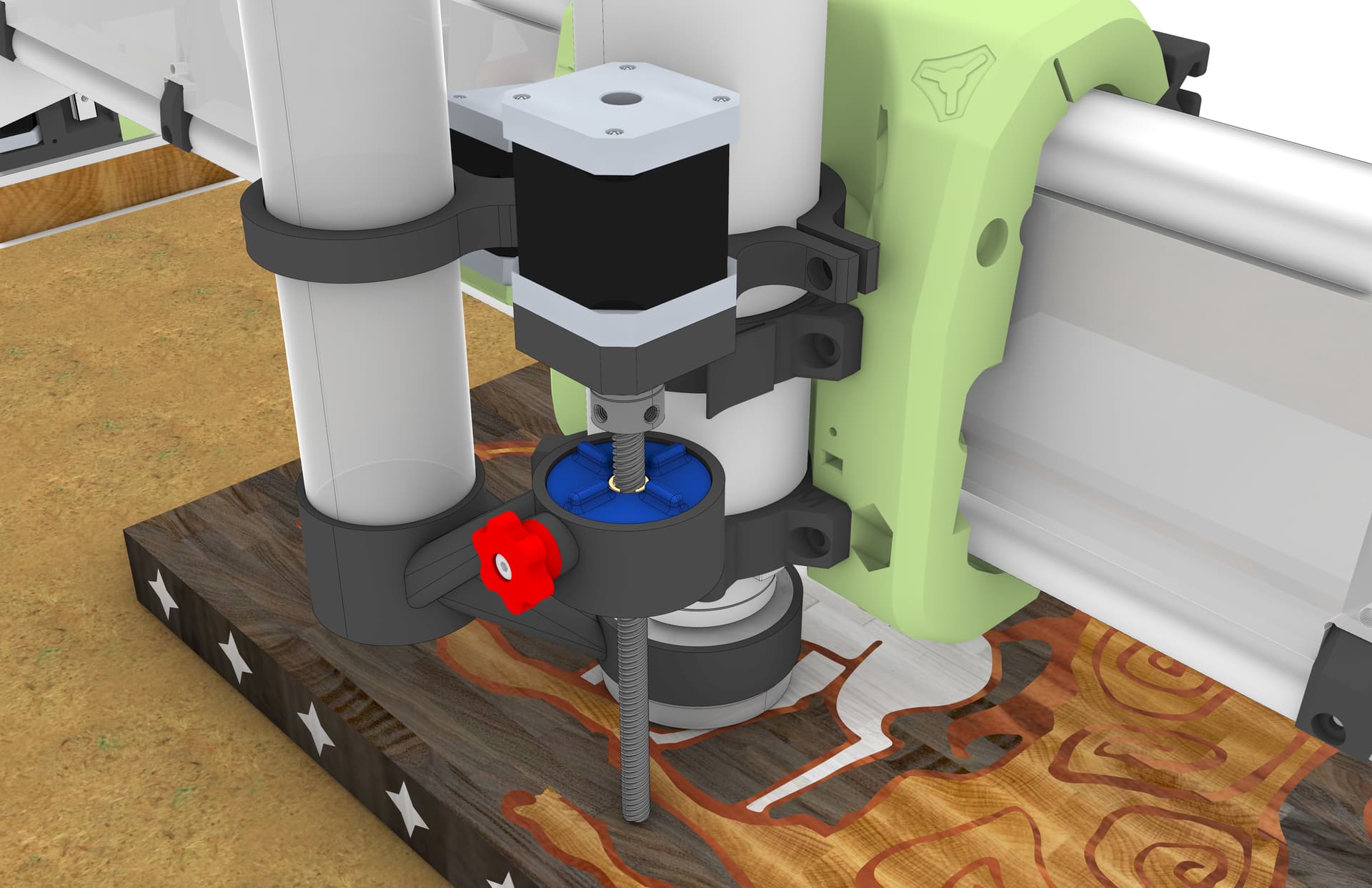
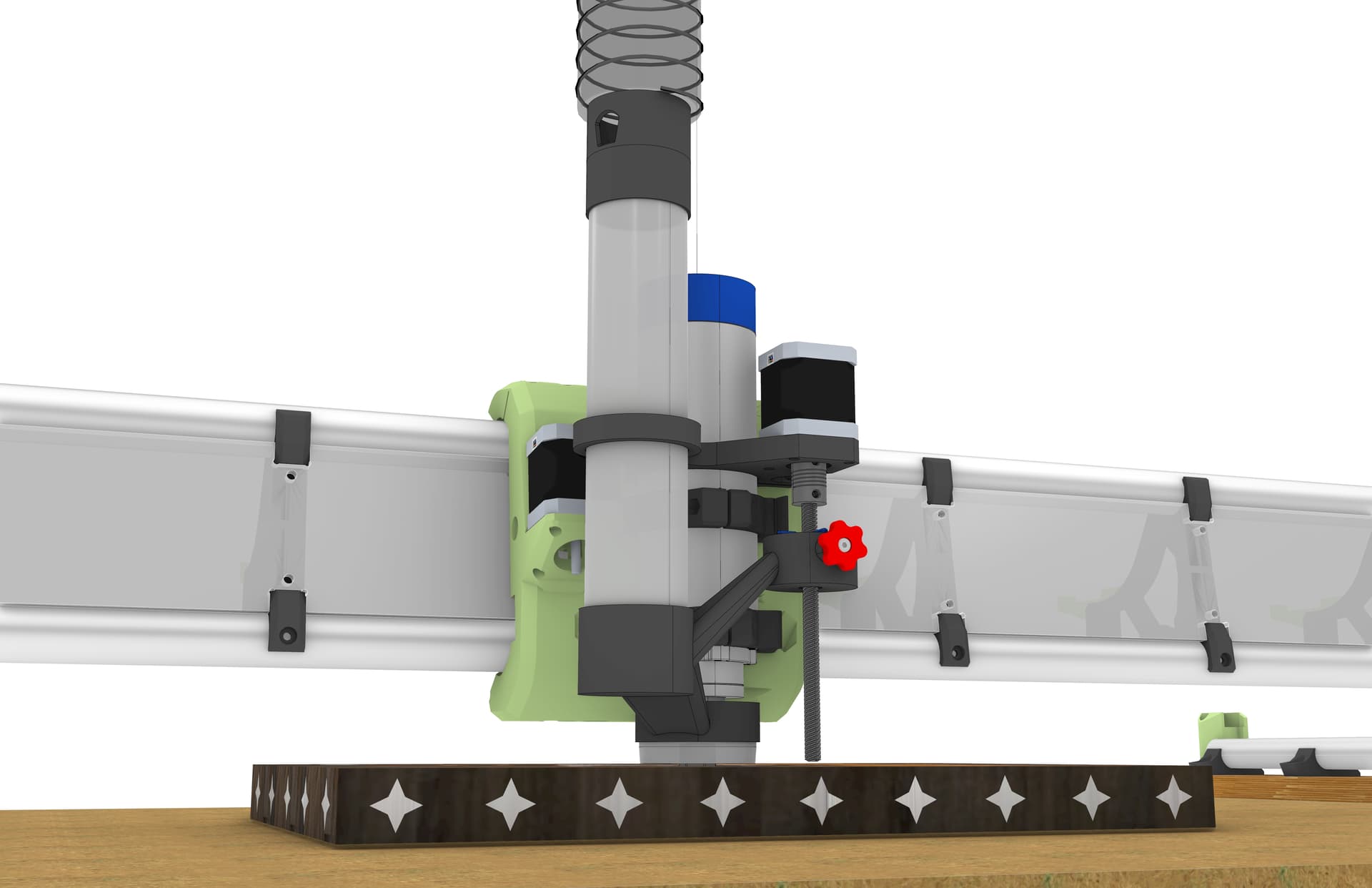
He’s already solved how he can go about adjusting the dust shoe height, by a length adjustable linkage to the leadscrew nut.
1 Like
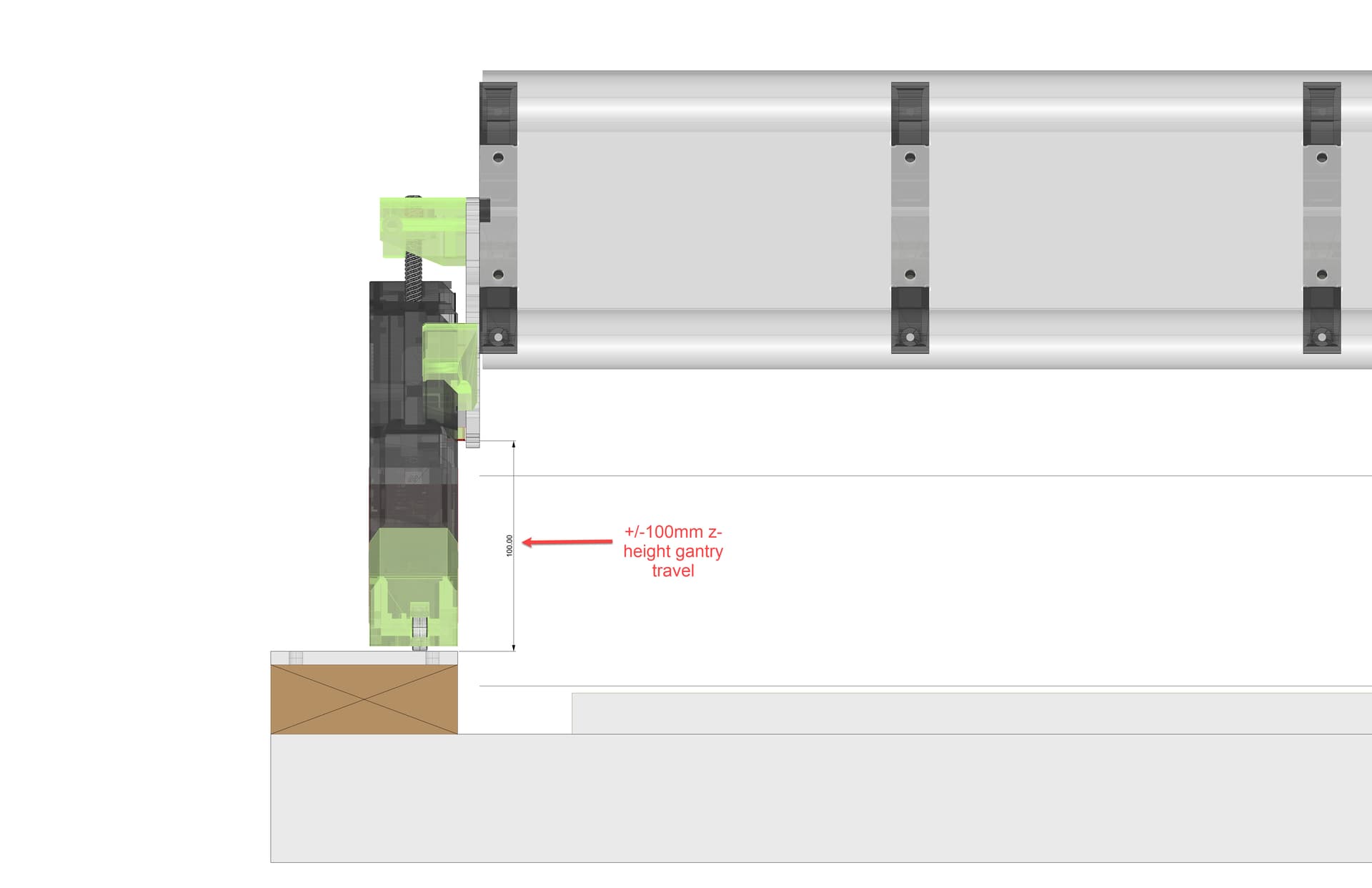
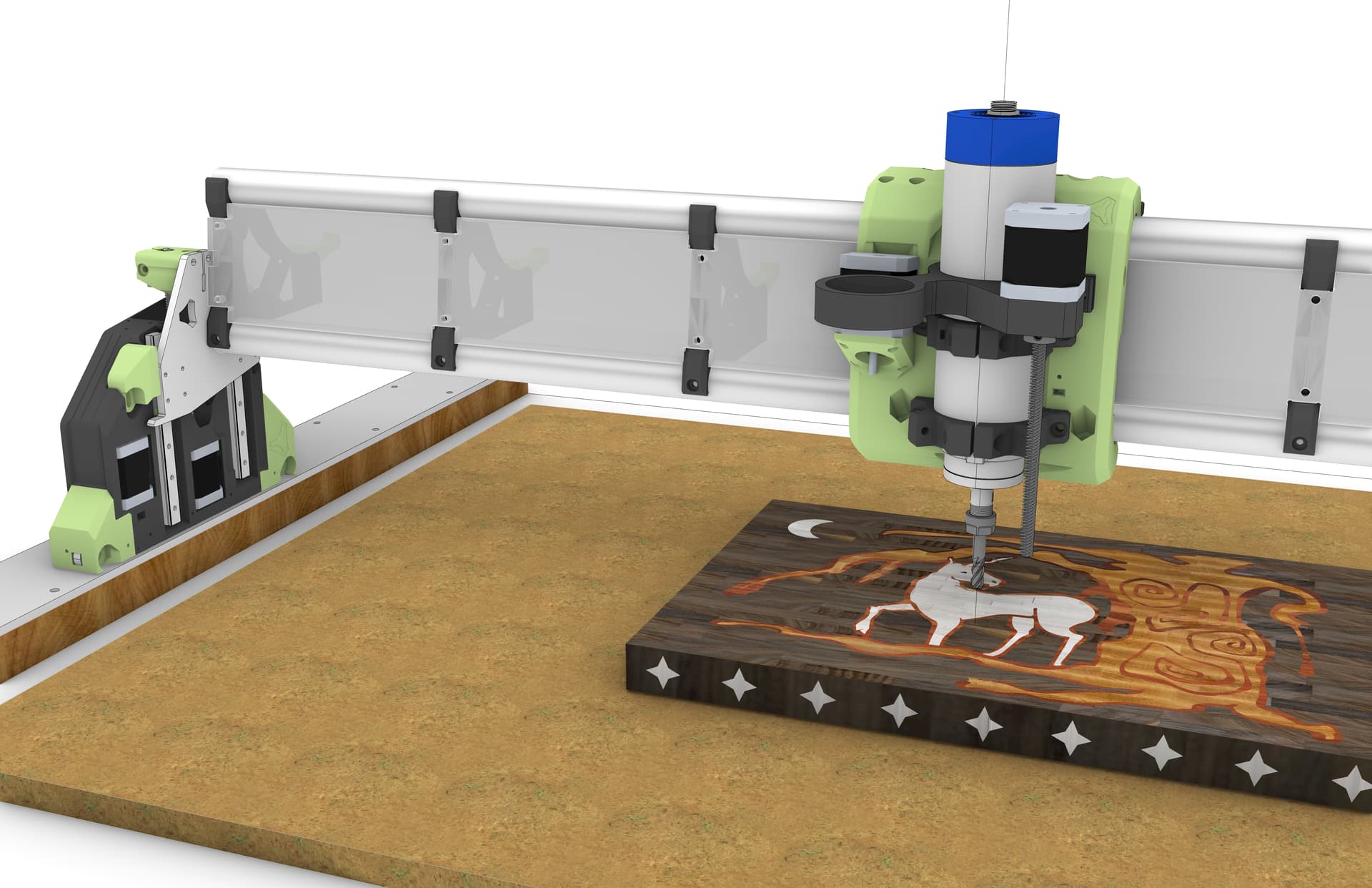
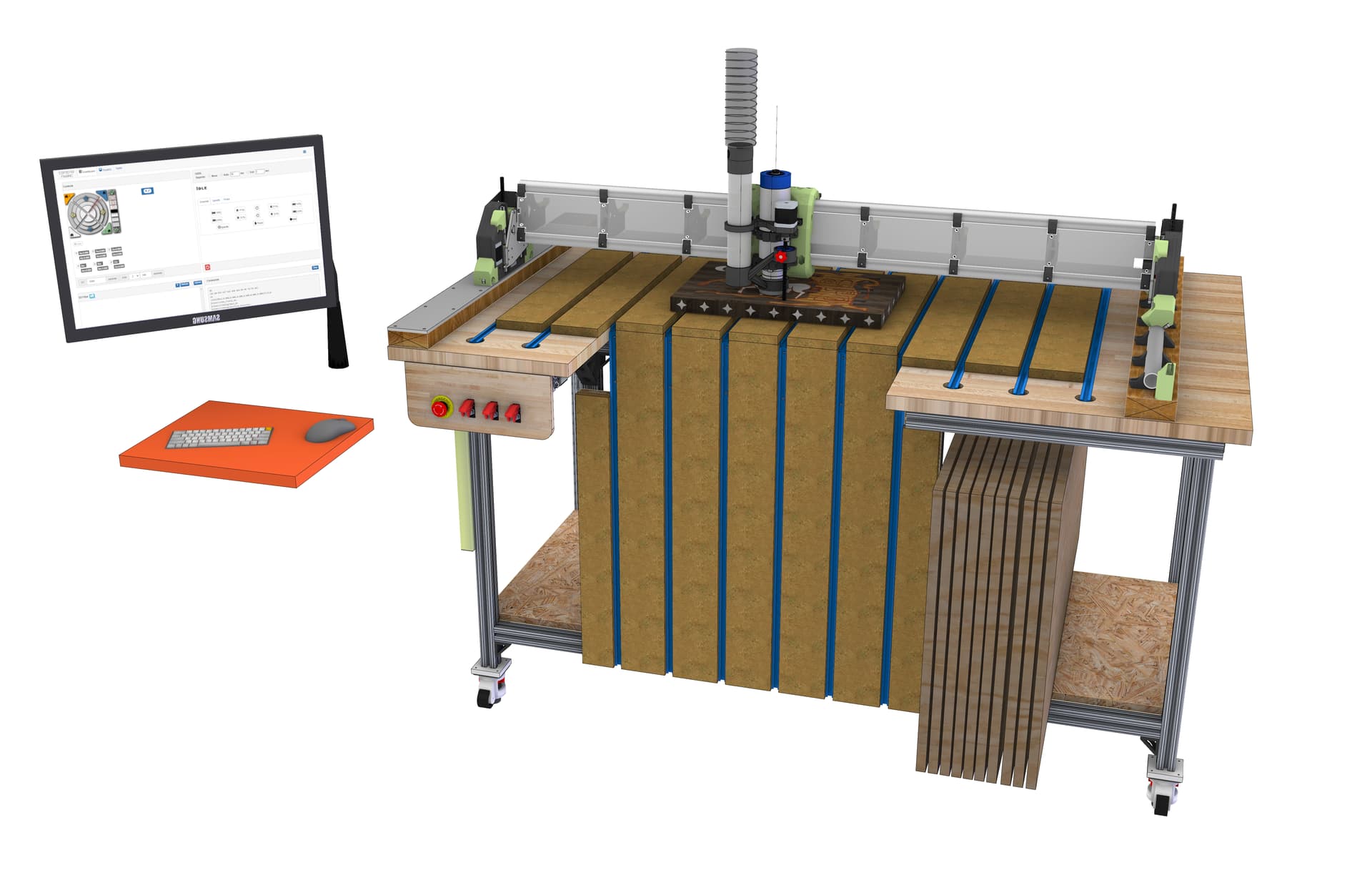
Here is a mock-up of the “Glowrider” on the existing Primo table I already built.
Now I just have to build it.
5 Likes
I just saw this “auto-dustboot” from the Altmill, and this is cool. Using the mist settings to control it’s activation is a neat idea.
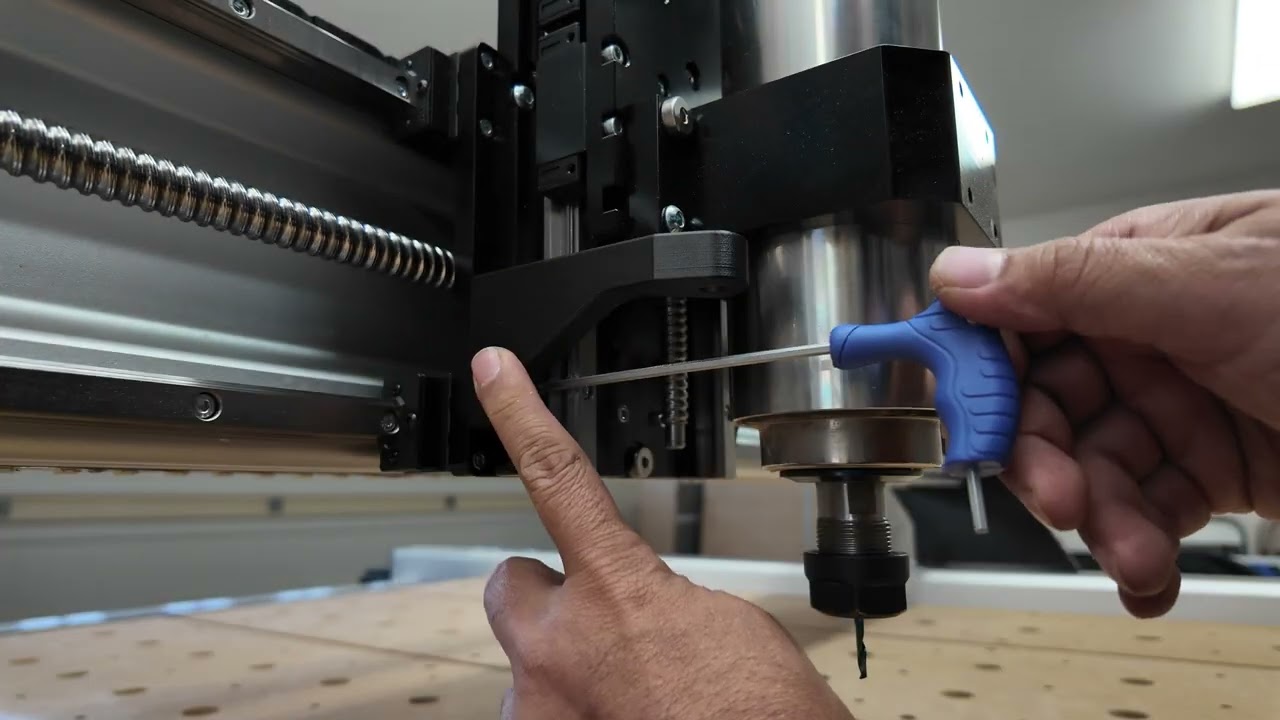
I’m going to k.i.s.s (keep ot sort-of simple) and do the height setting manually to “zero” out the height of the dust shoe and let it raise and lower as the gantry lowers and raises. However, in principle, once you have a stepper that drives the device, if you can write code and plug in the correct wires, it could be automated with sensors and controlled via GRBL commands, etc.
I see the benefits on a regular fixed height x-gantry cnc, but the LR z axis moves everything up/down. Im going to be really impressed to see your working setup, as i would like something like that but for attaching a pressure plate
2 Likes
Yes and no.
For a fixed height gantry where only the Z-axis of the spindle goes up and down, having a “software-controlled” dust boot mounted to the fixed gantry that moves up and down independently of the spindle makes sense. Obviously, many people do that for various reasons, not the least of which is to get the dust boot out of the way for tool changes.
In the Case of the LR4, there are use cases for having an independent z-height dust boot.
The complexity, if you want to call it that, is that the gantry is moving up and down, not just the spindle. So mounting anything in a “fixed position” to the gantry would be pointless, which is why we still need the stepper motor.
However, unlike a fixed gantry setup, we can not control the “height” of the dust boot with “separate” movements from the gantry unless we add the 6th stepper and create the g-code that controls that motor separately from the gantry z motors. Hence, the reason why we need to make the Dust Boot stepper motor a slave to z-1 and establish the dust boot starting z-height when the gantry is at z-maximum or homed position.
This could be useful for an air nozzle for chip removal when cutting aluminum as well as a coolant mister for cutting metals, essentially keeping the coolant or air nozzle at the top of the workpiece instead of burying it into the workpiece or having it above the workpiece to avoid contacting the workpiece.
Anyway, like I said at the outset, this is just a crazy idea until it works. For most LR4 users, this is not necessary and would be a nuisance.
1 Like
Genuinely curious to see what you end up with.
What are the non stepper motor based options, that avoid the need for firmware/gcode massaging? Can’t believe I’m suggesting to not code more, but, maybe use more EMT… Already considered attaching an additional fixed height 3rd EMT rail (above the existing moving gantry), mount to the fix height YZ Min and YZ Max plates.
3rd Fixed height EMT would need to be high enough and/or forward enough to clear the spindle. Then hang/suspend freely X rolling, fixed Z (with manual adjust for stock height at start of job) Vac adapter-to-DustShoe.
LOL, maybe add a 4th fixed height EMT rail that pairs (same Z height) with the 3rd to create a gutter/ledge for the Drag Vac Hose to seat into. Higher Vac hose makes clearing table edge easier.
Maybe there’s other Pros/Cons to having a mix of existing variable height gantry and an additional fixed height one  .
.
1 Like
Ryan has those holes on the back of the YZ tower to help with managing the cables as they hang from the side. I wonder if something could be added to hold 2 EMT and a truck. It might imbalance it, but then the Z should stay at the height it’s set (if those holes are used it would wrap underneath to reach the tool location.)
It would be out of the way for tool changes, it would remain at the same Z-height regardless of the gantry height. Could add magnets to the core to guide the thing, but allow it to break away in the event of crash. (I crash mine often enough that I plan for it!) 
1 Like
Or make some tall lift Bro Peter Plates, to attach fixed height EMT(s) and/or other stuff (e.g. weights to reduce wheelie popping)… Something like this, but for LR4, better designed to not rack, or tip, and less fugly…


3 Likes
I was noodling in my head with (2) 1/4” diameter stainless steel rod flanking the spindle and mounted to the gantry.
A dust boot would ride up and down on these rods with a collar to set its z-height max, and springs would be mounted outside of the 1/4” rods, say a 3/8” diameter spring that would have a stop collar at the top of the rod.
The spring would push down on the dust boot, thus keeping it on top of the workpiece.
But >>>>> and it’s why I stopped thinking about it.
If the gantry/spindle ever moves away from being over the workpiece, the springs would push the dust boot down to the top of the spoilboard, thus making it crash into the workpiece if the spindle moves back over the workpiece.
This is why we need to match the gantry movements, but in reverse so every gantry movement down results in a dust boot movement up.
Of course, this is all theory and pixels right now, I need to make it plastic and real to test it out.
Um that’s BEEFY.
Are those round black things actual weights?
Also I like your dust plows on the xz plates do they help keep the path for rollers clear?
Yes, dust covered seldom used Bowflex dumbbell weights. The additional weight on YZ helped, but wasn’t needed when I switched to more appropriate offset V bit.
Am no mech eng, but figured adding weight to YZ plates instead of gantry might help MRR, I didn’t do significant testing to gather data, so, I only partially explored the idea at this point.
Kinda, that was the goal of the LR3 almost pointless pointy dust flaps, they helped, but there’s better ways to help keep the rollers’ path clear (e.g. dust guard/deflector along Y-axis, folded paper works for my setup).
1 Like
I would love that been looking for a upgrad to do 3D easier and thick stock
Tim, have you seen these “extensions” for the LR4:
1 Like
Looks tipsy to me 
4 Likes
Yeah, keeping the base triangle roughly the same is important
4 Likes
Yeah, vaguely recall Barry, Jim, Ryan and maybe someone else(s) telling me at RMRRF to be careful if venturing off yellow brick road to build an untested HighRider… Would need to ensure Y footprint is larger (and larger table Y footprint for same Usable Y…) to ensure stout Pyramid triangle aspect ratio maintained, like Jim’s mentioning.
2 Likes
What if it only move in the X axis? As in rotary? Or i suppos X
What machining type? If it only moves in X why not use a drop table or elevator plates?
1 Like
Just curiously if i put the extenders on and only use them on rotary jobs. If it would be faster to switch.i could put a drop in the table at the far end and semi permanently mount the rotary also