It’s getting close to two years since the last thread on this topic was started by @jamiek and since it’s been closed for a while, I thought I’d kick off again.
No, I’ve done nothing about dehumidified storage in the intervening period, apart from building a not properly sealed cupboard waiting for me to decide how actually to go about adding bits to make it work.
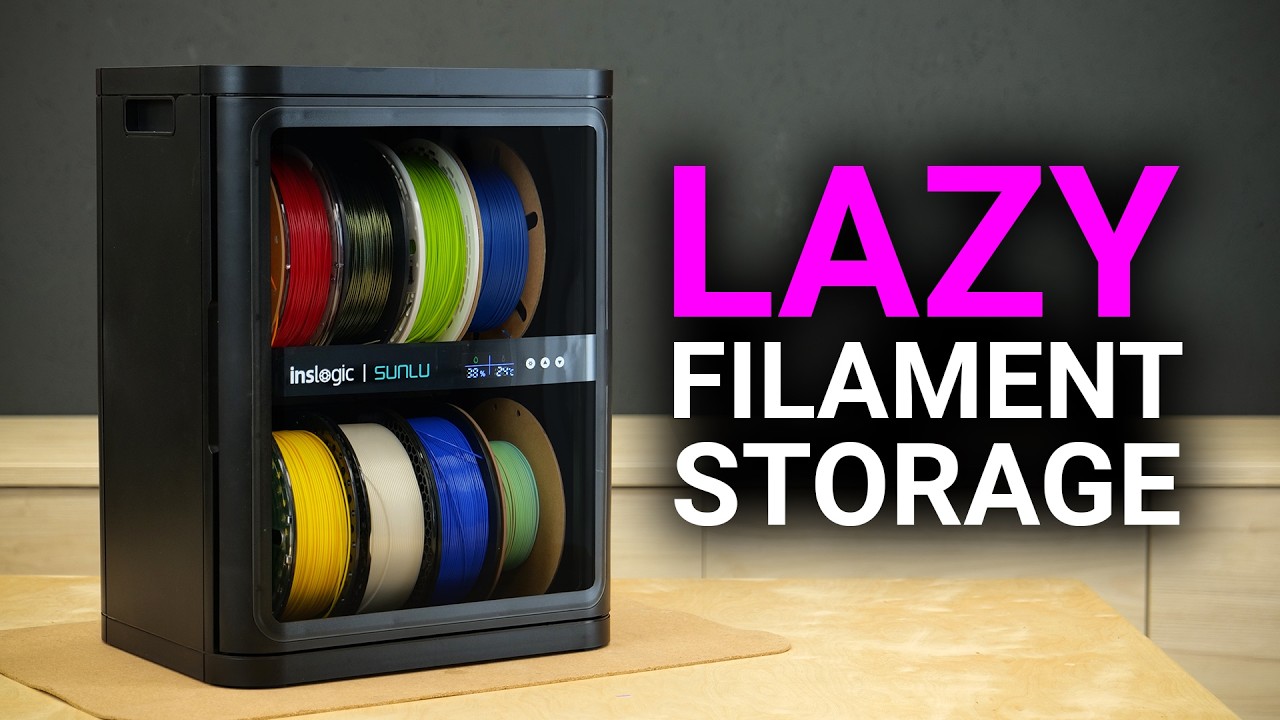
In the meantime Sunlu are in the process of bringing a cabinet onto the market at a fraction of the price of other dry boxes commonly sold for camera gear etc. At $US 20.00 per spool effectively, I don’t think I can even buy the parts for less, if it works it seems to be quite a bargain, probably less than the cost of the parts to build the cabinet.
Should I put an end to this sorry chapter of my life?
I am going to take a closer look at the SUNLU storage, maybe combined with the USS Dryboxes it‘s more than enough in my climate. Could throw in a SpacePi for good measure for PETG and TPU.
I bought the $10 pre-order coupon thingy for $1. Let‘s see how much the thing will be for early adopters.
There’s a lot to like - all of the reviews are from shills of course, living in climates with 40% humidity - (currently here it’s our driest season and it’s 87% inside!) Since it’s exactly what I’ve been pondering for so many years, I too have invested a single dollar!
My “dry” boxes after close to five months unopened are running between 21 and 44% so I really need to do something about storing the PC and flex (as well as PETG).
I’m waiting for someone to tell me if the Prusa Boxes are as good as they look - but I suspect they are.
The Creality dryer looks great too - is it time to replace my design-faulty eibos?
If I buy new dryer and eight boxes and a drying cupboard, I don’t want anyone to tell me ever again that teh cost of printers are out of hand!
They seem pretty great, but they are basically my IKEA dryboxes but from Prusa and I don’t have to print stuff for them. What makes them attractive is that you can just snap them to the side of your printer and connect them, so they are easily exchanged. My boxes need pretty long PTFE tubes.
So I guess, my first thought, would you dry then keep in there? I recently found out my Sunlu dryer is not going high enoguh for petg or tpu, only goes to 55c. You would not want everything in the cabinet at 70.
Never mind, they state that this is NOT for drying, but for storage.
I have a sunlu dryer which is working well for my filament. My printer and filament is in a brick shed which is basically at whatever humidity it is outside and maybe a few degrees cooler in winter and 10 degrees warmer in summer. I did just buy some resealable filament bags with vacuum pump so that after I dry a filament I can store them sealed with a silica packet.
I would love a better option to keep them in a humidity controlled environment and this new Sunlu cabinet seems great for storing more than 4 rolls which is what all the AMS options seem to be fore. I have probably 12 open rolls at a time but need to bring that down a bit.
Correct - the opposite of my constant whining about living in high humidity is that we are not living in 2020 any more, and my observation is that keeping PLA in reasonable 20-40% humidity isn’t a problem, PETG likes a warming tickle, ASA, PC and TPU need care. Generally results are OK even with modest drying. I think the “4 hours” or whatever is recommended is a bit of a crock if you are feeding from a dryer, but with an 8 toolhead setup that gets a bit messy.
Let me know how when you work it out - I usually have around 20 - the mix of colour and material is the killer for me.
12 Is down from what it used to be. I really only print PLA and PETG, most of my parts are functional or not really needing any particular colour but I like to have black, grey and white on hand at all times. Only have 1 printing running now so that also helps, as much as I would like more. Contemplating a Voron IDEX build but I think with two CNCs on the go I might have to wait a while until I can justify it more.
Yeah, that was my original game plan, but I could only keep the humidity down for a few weeks at a time. Then I switched to Ikea boxes like @Tokoloshe and they are good for a few months, (each with 300 grams of silica gel), but they can only be trusted to maintain r humidity at around 20%.
That’s more than OK for all but TPU and ASA, so I tend to save that for batches that will minimise the amount of times they have to be dried, because as far as I can tell, over drying is just as big a problem as over wetting - I used the word “problem” in an internet alarmist way, because I really over think this and have had few problems.
First - Stefan at CNC kitchen has done a sponsored video, and props to him has chosen not to use affiliate links. So he’s as serious as anyone who gets paid to review new products about trying to be seen to be impartial, or at least objective.
I’ve seen two other “reviews” and they are absolute rubbish, but at least this one goes a bit further with some actual data - it’s only two week’s worth though. One of the first comments has a couple of paragraphs about molecular sieve rejuventation - I am guessing that the sieves are never fully rejuvenated, but I’ve paid my dollar deposit. The cupboard alone is worth the money.
@jamiek@jono035 - this pretty much is what I was hoping to achieve back then - I think closing the cabinet while exhausting the humidity from the desiccant was what was the missing link.
I had (and still am I guess) been thinking in terms of using a dehumidifier (small heat pump) and constantly heating the interior. This whole setup is less than the cost of the heatpump.
I have been following Ricky Impey for years mostly because he agrees with me on some of this stuff - I think he was the first to add a vent to the original Sunlu drier, and I’ve been waiting to see how his dry cabinet turned out before finalising my own thoughts. Now I am not sure - if this works I can see a couple more in my life!
As far as I can see this is at least half the cost per litre of other dry boxes, and uses significantly less power, although my jury is still out on the effecaciosness!
That looks pretty similar to what was being discussed in the previous thread, although without an internal heating so no way to rapidly dry the filament first.
The whole approach of having a separate air path for the drying process is the key, there. I’m impressed by how little power it’s using to regenerate the desiccant, as well. My guess is that it’s a relatively small amount of desiccant which would make sense given that it’s only really pulling moisture from the air, not the filament itself, really. Ultimately it doesn’t really matter as long as it can bring the air humidity down quickly enough to keep up with periodic door opening etc.
I like it. I’m less of a fan of the separate drying process, but I don’t tend to work with a ton of rolls at once so that’s potentially more specific to my situation. It definitely needs a way to print directly from the box, though… That’s a weird omission. Looks like it’d be relatively straightforward to replace the filament holder bars with a structure for the filament to run on.
I think one of my bigger errors in the way I’ve been thinking about this is trying to optimize for energy efficiency without looking to see the actual cost/benefit. So I was very much over-engineering the idea and at the end of the day it was unsuccessful.
I think this cabinet is a good approach. Simple and cost-effective.
I think an interesting modification would be to build an external dehumidifier unit that has a CPAP hose dry-air outlet and return, which you could connect to an external cabinet, or you could daisy chain several dry-boxes. Those could be dry-boxes you could print from. All the hoses and joints could be leaky and moist air leaking in could produce extra regeneration cycles, but overall maybe it would be fine.
And maybe one of these Sunlu i10 boxes could be modified to be that. A couple holes and CPAP hoses connected with a blower, and you could have multiple boxes or larger boxes kept dry by the one Sunlu i10 unit. You could rig it so that the blower to the other boxes doesn’t run during the regeneration cycle, so the raised humidity during the regeneration cycle is restricted to the Sunlu cabinet and not the other connected boxes.
I’ve seen mini dehumidifiers like this for cheap on aliexpress. It appears its just a case for silica beads and when powered it dries the beads. They say not to power in enclosed space, not to dehumidify while drying the beads. I bought 1kg of silica beads when making my own dry boxes but its annoying to open them up and redry the beads etc.
Then there are these cabinet dehumidifiers which could be a better option.
I would love to make something as $250 AUD could get me a lot of CNC tooling, or a laser head, or plenty of other stuff I don’t have, while the drying cabinet is going to save me 5 mins of work here and there to load a roll into my active dryer. But it’s also decent value for a ready to go automatic system.
Hi James, I bought one of those to test years ago, and it works very well in my small (10.6l) IKEA 365+ boxes. I use it to store camera gear that I’m not using, and after four months away and therefore keeping it unopened it is still showing an RH of 15%.
After more time than I care to think about experimenting with this stuff, it seems the museums are correct, and there’s no substitute for using heaps of dessicant! I’ll go through the costs in a minute, but I think my version has about 300 grams of silica gel in it.
This is by far the most convenient to recharge, just plug it in to a socket (out of the box) and unplug it after a few hours.
After years of failure with custom printed 70 gram containers that neatly fitted into the spool centres but gave such a little service life and had to be emptied to recharge, I settled on these metal trays with 350 grams of silica gel in them. Depending on the box and the number of times it has been opened after recharging (seven months ago because it’s such a bother! - and that’s the problem) they are currently running between 20and 41% RH)
Now let’s look at the cost!
The Ikea boxes are $10.00 (AUD) with lids, even the Ali Express reusable dehumidifier is $15.00 so that’s almost an identical price to the Sunlu cupboard.
By buying silica gel in 5 litre bottles, and adding a cheap thermostat/hygrometer the cost is similar per spool stored.
The difference is that the Sunlu cupboard is using molecular sieve material not silica gel. That material is much better at holding lower RH but harder to regenerate. If the auto system in the cupboard works beyond the medium term it’s a great deal IMHO.
Someone may correct me here, but beware the peltier dehumidifier in this circumstance - they work, but are not so good at getting down to a lower RH and are quite inefficient. This is why I’d considered a small compressor version but the cost was prohibitive.
Let’s know how you get on with that - that was my “self made” budget, but it’s a lot cheaper to find a disused bar fridge and use that as an existing air tight cabinet! (Let me know if you are interested! )
As an aside, my single dryer works well as you say, but with eight tool heads on the way, and living a few hundred metres from the salty blue stuff, RH in my printer enclosure today is 75% - and it’s a cloudless, windless, perfect spring day!


 - I think he was the first to add a vent to the original Sunlu drier, and I’ve been waiting to see how his dry cabinet turned out before finalising my own thoughts. Now I am not sure - if this works I can see a couple more in my life!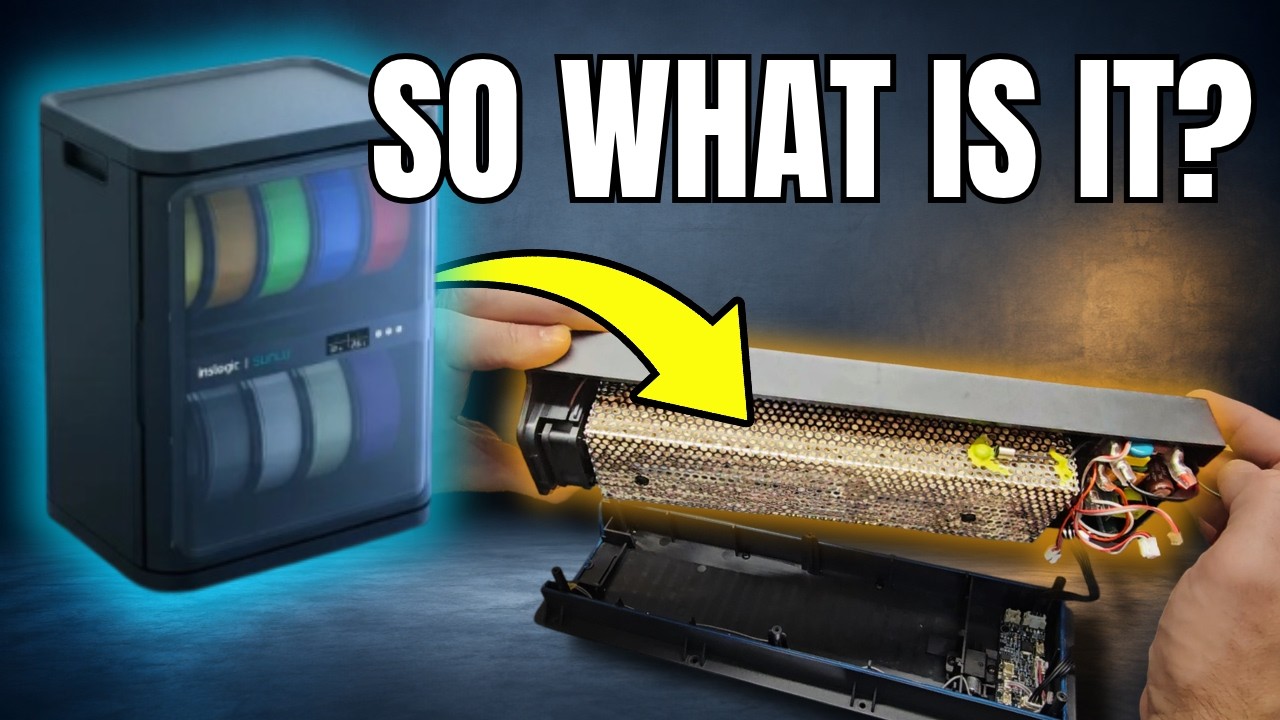
 )
)