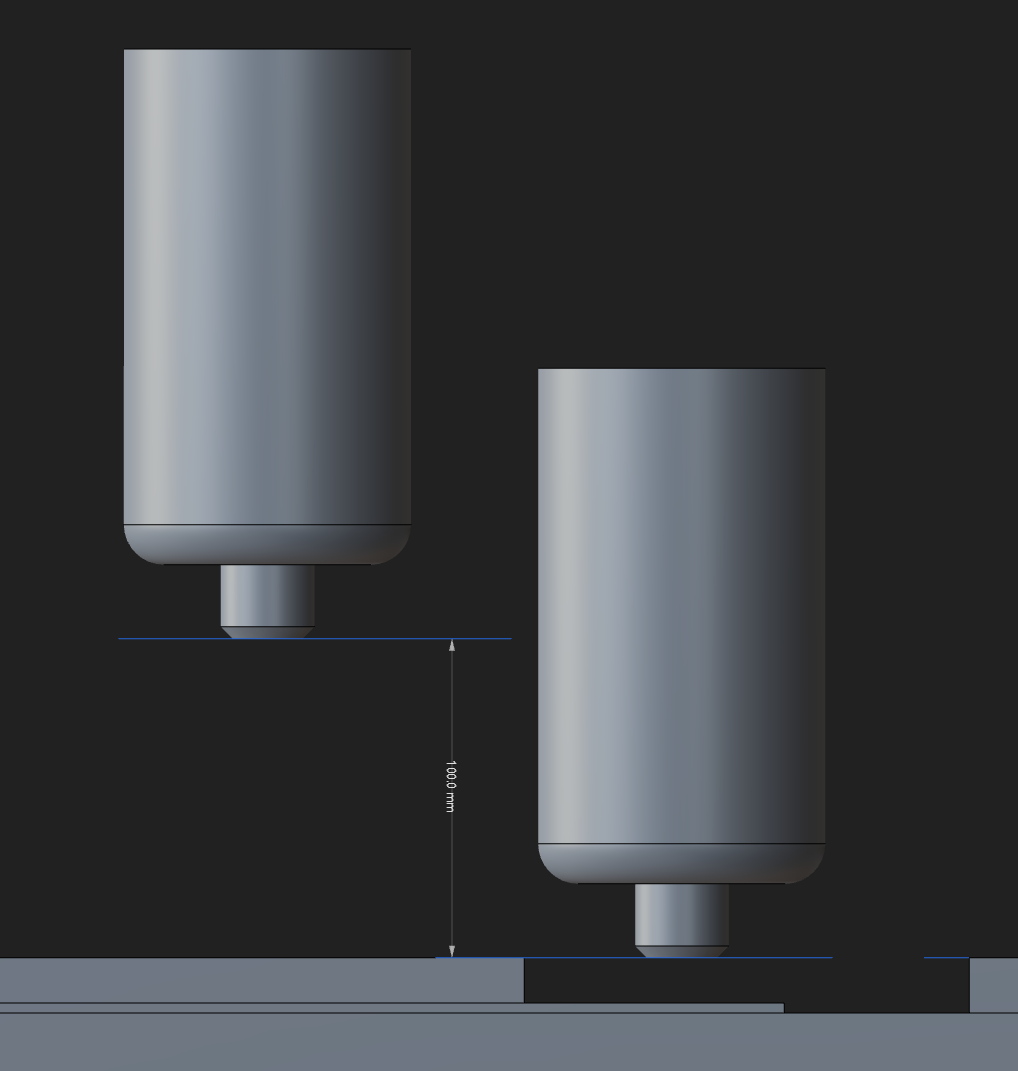
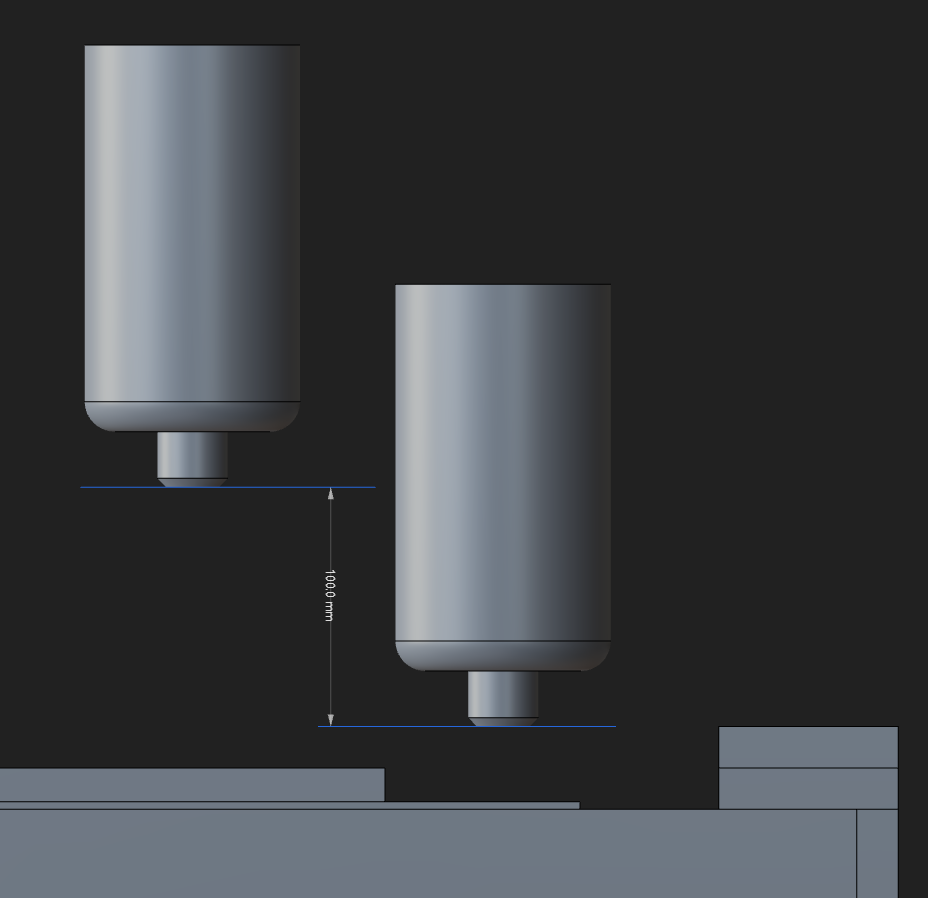
I’m planning on having my LowRider4 raised up a bit, to get more capacity for working on top of larger workpieces.
For that purpose, I’d like to have the machine roll on flat wooden rails, i.E. about 24mm of multiplex or OSB with a hardboard top layer.
How wide would these be on the xMin and xMax sides respectively?
Assuming a table with no extra spacing around the minimum from the calculator.
I can do that math just fine than
I can only find that info for the LR3 in someone’s drawing from Ryan’s parametric table.
I built what I call elevator plates to use with one of my beta LR4 builds. It was just 3/4” MDF cut into strips that were about 4” wide, and intended to be stackable one atop the other. The top one on either side gets the usual fixings for the machine. (Belts on both sides, Y rail on one side.). I just pick it all up and can add/remove as needed.
Having said all that, I stacked this 4 strips high and tested that it works. It works.
I’ve never used it to get the height as I’ve not done a project that needed the extra Z height.
The elevator plates have sat in the corner of the garage giving me the stink eye ever since.
Just wrapping up my prints and parts are coming tomorrow.
But was thinking about the same thing. Is there any downside to just doubling up the mdf strips on the side rails to get another 3/4 inch cutting depth?
I assume a mill will make up for the 3/4 left? Or am I missing something here?
(The surface on the left represents the spoil board)
First off, Dominik: Welcome to the V1 community forums.
Using another set of MDF strips is what I call lift plates on my LR4.
To be clear about what that gives you, it allows you to accomodate thicker stock on your table, but it does not give you more total Z axis travel.
The use case for the lift plates is similar to a drop table, except the lift plates are super simple.
Note that the LowRider machine is very cleverly designed to be most rigid when the cutting tool is closest to the table, and either lift plates or drop table allows you to tune that rigidity to be right at the top of the work piece.
If you need more Z azis travel, you have to go about that in a very different way.
I encourage you to start a new forum topic to discuss your machine and your applications for the machine so it’s easier to find and can be tailored to your specific use cases.
You are correct, what I’m looking for is not more z travel. But being able to accommodate thicker stock.
My question I guess is if I raise the rails by 3/4 will that put the surface of my spoil board out of reach of a normal milling bit, so that I can no longer create through cuts on normal sheet stock? Or is there still plenty of reach?
In my case it isn’t, but I’m not going to add much height and my regular endmill for wood is still going to be able to cut slightly into my spoilboard. If using harder materials I’ll need to shim them up to use shorter endmills.