I know Apple used to use windows machines, or at least virtual machines for their packaging design. The software they used was windows only.
1 Like
That’s a problem with software. I hate windows (and I am not a big fan of apple either, sorry). But I have to have a windows machine available for some things. Stupid things like updating the maps on the gps in my car.
It is one reason why web apps is so interesting to me. If web assembly (especially) can make web development mainstream for software, then new products can actually be used on anything that has a the hardware speed to do it. Decouple the OS from the software that runs on it.
3 Likes
I really not a fan of software as a service. I want to own the software I run.
4 Likes
That’s fair. Most of the software you run in Linux is free (completely, not free like Facebook, where you are the product). But I can see how most businesses would like to make some money  . But I do have an installer copy, so I can’t lose it easily.
1 Like
I have finished building mine and am in the tweaking/upgrading stage.
-
The biggest thing I would want is on the big XZ main part, nut capture holes. I have to hold the thing with needle nose pliers and its a real pain in the ass. Those guys were definitely the most painful thing for me personally building it.
-
Some kind of strain relief for wires by the motors would be nice. That has been a nuisance to me as well (and also my thing to fix today).
-
Wider side plates would also be nice since I have been making parts to attach to them and have basically run out of space.
1 Like
As well as cloud storage which is as secure as their most disgruntled employee. Thank you very much, I can handle my own storage.
6 Likes
I know I’m a software ignoramus, but doesn’t web software have an OS behind it?
I think it’s great that I can use onshape without thinking about what’s running it for instance, but once I return to the peripatetic life that Covid took away, I will be pretty much confined to not using it due to an absence of access to the web.
Is there a difference between web based and “browser based” - and how can either operate without an OS somewhere driving a machine? Is it built in somehow?
The OS is definitely there. But the browser makes every computer run the same code in the same way (with some exceptions). If I write a C++ program, and I want to play sounds, I have to write three different routines for windows, Linux and Mac. If I write it in a browser, the browser figures out how to work with the OS to play the sound, but my application just has one routine to play with the browser. The code I write is not dependent on which OS it is running on. That is what I mean by “decoupled”.
The browser is almost always used with the Internet. But it doesn’t have to be. For one thing, any browser can run browser applications from a computer. I develop sandify by running a copy locally and changing the code to test new features. That method is a pain for normal users, but it doesn’t have to be.
There are also programs that look like regular apps, but they are actually a thin browser running JavaScript. Some you might know are Microsoft vscode, the slack app, or the desktop version of cncjs. These all have great platform comparability because they are written for a browser and then include a small browser to make them desktop applications. Users may not know or care that they are running JavaScript locally.
A lot of apps for iPhone and Android are thin browsers and JavaScript. For the same reasons. You can write one thing and just release it on both platforms.
Software as a service and also the massive data collecting social media platforms are very lucrative business models. VCs love them and you can print money if you adopt something like that to get your startup off the ground (add crypto and AI to your presentation and you don’t even have to have a product ). But you don’t have to do either to make an app that runs in a browser. Onshape could make a version of their cad program you could download and install and run from a hut in the woods. But their business model doesn’t allow that. They also benefit from always knowing their customers are running the latest version of the code if it is loaded from their servers. No need to support bugs from 3 years ago. It lowers cost for them. It has negatives too though.
6 Likes
Thanks for the detailed response I think I don’t understand much more clearly now! 
1 Like
Conceptually, think about a program running inside of an emulator (program running inside of another program).
The emulator provides abstraction layer(s) [portability layers, hardware abstraction layers, network, storage, graphics, audio, etc.] between the program and the specific platform it is running on.
The program does not need to know the specifics of the operating system or how a control knob is twisted, only that there is a control knob and it can be twisted from left to right. The emulation layer then handles the specific deltas between the different OSes and different underlying hardware when the program twists the knob.
The deeper/more extensive the emulation layer, the less the application has to know at the expense of more computational overhead (e.g. standard versus automatic transmission). One emulator could run over the web and another emulator could run on a stand alone computer and the program wouldn’t necessarily need to know the difference.
If that helps.
3 Likes
That’s kind of what they meant the Java Virtual Machines to be. Let’s hope it goes better this time around, the java web apps (looking at you Norwegian BankID) were trainwrecks…
2 Likes
If only docker had the ability to run a gui…
1 Like
Thought of another couple things that would be nice in a LR3.
-
a bit of an edge around the center x plate for mounting dust shoe/skirt.
-
being able to take it off the table without taking off the y belt mounts that go into the table.
that last one might just be me with how i did it though.
2 Likes
Umm, well both of those are covered, but not exactly how you are asking for.
Want a peek?
4 Likes
There is a loaded question! 

4 Likes
Oh come on now!!!
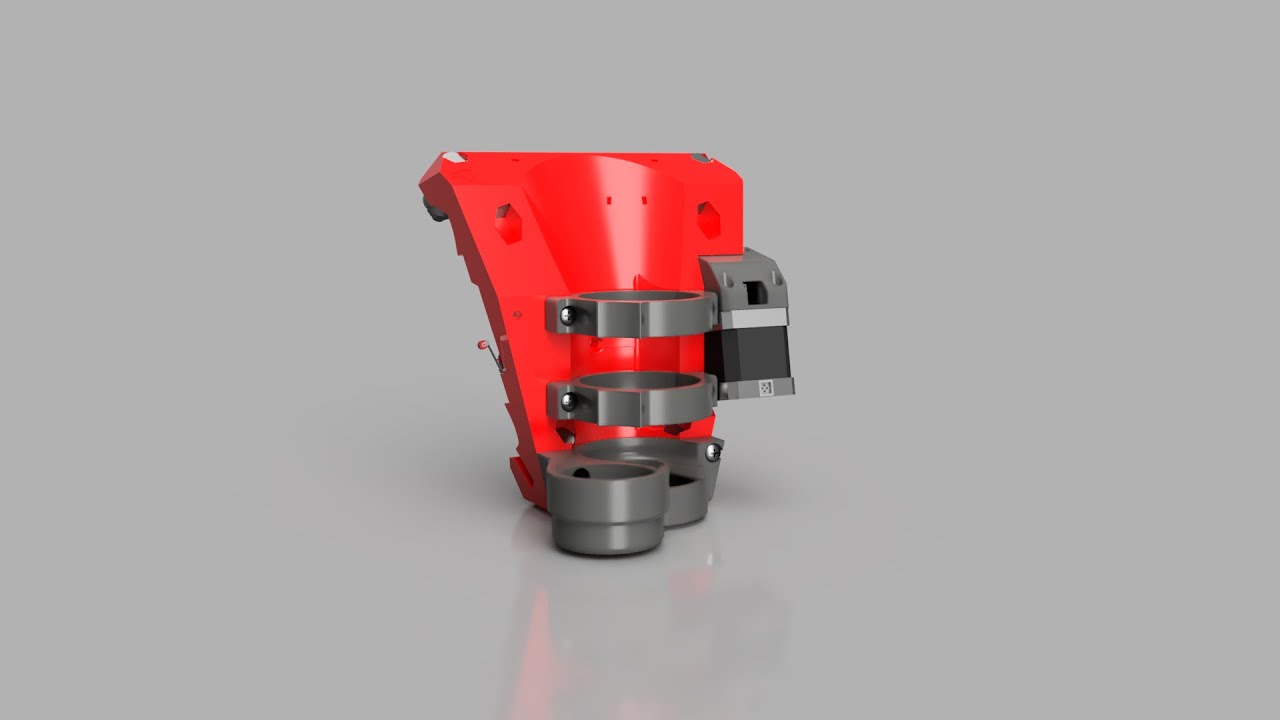
Since this might be the only animation I do for the instructions…
21 Likes
I’m in love. Following eagerly.
2 Likes
I just saw the Patreon sneak peak… Looking good.
2 Likes
Can’t wait! Are we nearly there yet, are we nearly there yet?