V2 to v4, should I?

A few years ago (2019!) , I built a Lowrider 2.
It was my first CNC machine. I had no experience with CNC before this. I made it really big so it could handle full sheets.
The size has given me some challenges, as it actually sagged a little in the middle, maybe about 1mm. Also, the speed is so low that I’ve never really used the large size for anything extreme, though it is nice to be able to place full sheets on the table.

Unfortunately, I’ve now had to take my machine apart, as the plastic parts had started to break. Maybe age has started to break down the PLA?

The question now is:

1: Should I just reprint the parts for the Lowrider 2 and rebuild the machine? Maybe there are some upgrades for the V2 that fix the issues it’s had?

2: Or would it be smarter to upgrade to the Lowrider 4? It looks like I’ll need to get quite a bit of new hardware. Maybe even a new board?
It will probably also require a major redesign of my table. Right now, I can fold the machine up against the wall to save space.

Machine to machine, the LR4 is lightyears ahead of the LR2 for sure.

1 Like

Thank you very much for the response.
So you think it’s a no-brainer to upgrade to v4 :grinning:?
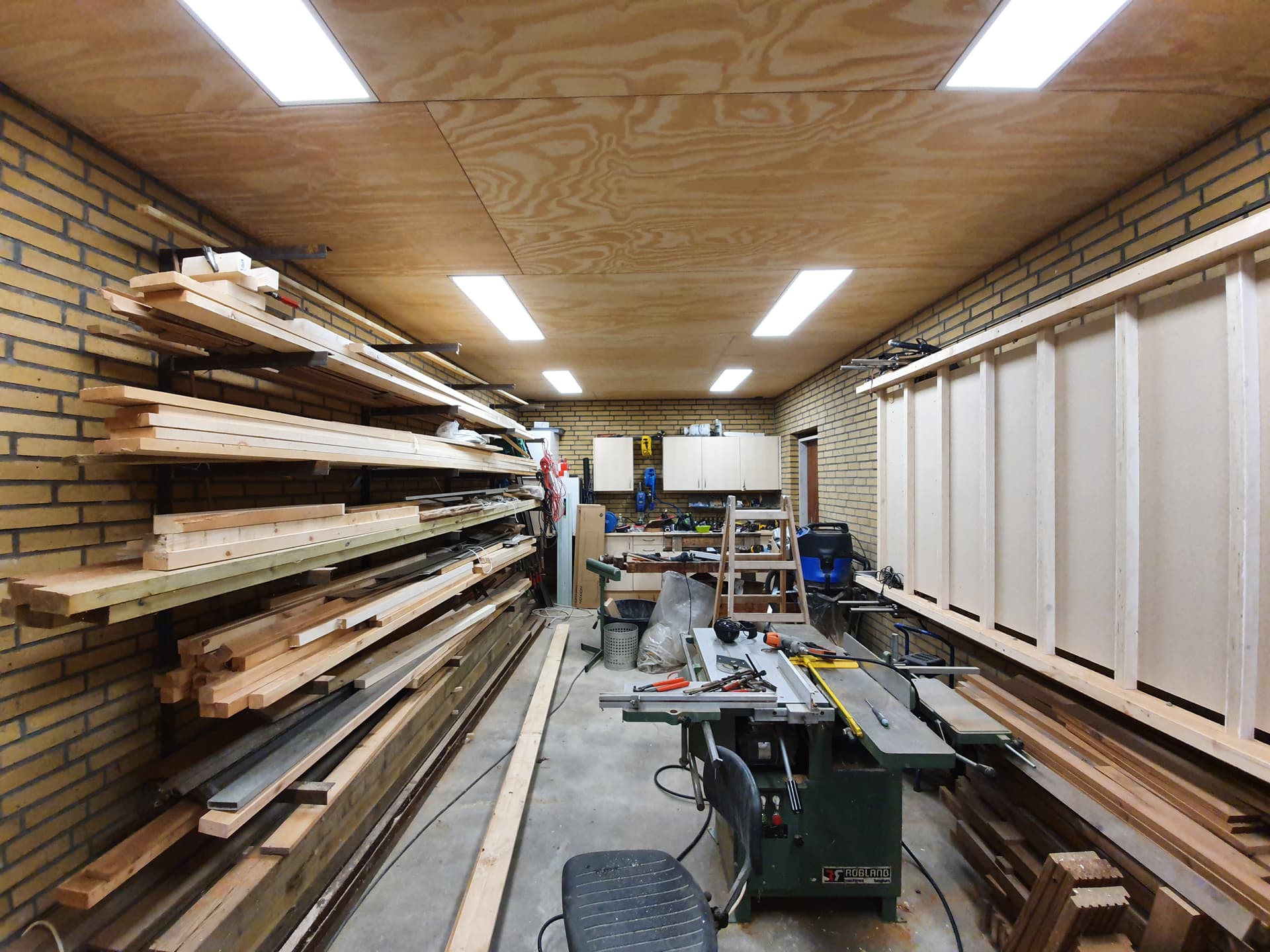
Do you think I can maintain the design of my current table as seen in the picture up against the wall? I’m having a bit of difficulty seeing if v4 is taller than v2?
My other question concerns the mainboard; I believe v2 runs on a Rambo board. Is it compatible with v4?

2 Likes

v4 is a no brainer. It’s a lot sturdier and faster.
Do you have endstops on your Rambo? If so, you can continue using it with no problem.

3 Likes

YES. You will (probably) have to remove the gantry and store somewhere else while the table is folded up though. This is easier that it sounds and its easy to put back, since it indexes on the rail. The upgrade path is pretty inexpensive as well. I just did it (v2 to v4 upgrade) and was blown away - LR4 is a completely different animal. Rambo board should still work.

One thing to note is that the v4 needs a slightly wider table to achieve the same cutting area as the v2. I had to widen my table.

2 Likes

I curently have a Mini rambo board. Acording to the specs, this board only have 4 stepper drivers MiniRambo - RepRap
The instructions for the v4 states it needs 5. What are the extra driver used for on the v4?

2 Y steppers, 2 Z steppers and the X stepper. I recommend the Jackpot board and adding the 5 endstops. I upgraded from a mini rambo to the Jackpot and am very pleased with it.

2 Likes

Like the others have said, the LR4 performance is light-years ahead of the LR2.

Here are a couple of specific responses to your questions.

First, you need a control board that can handle 5 motors. That is an absolute requirement since there are two pairs of motors on the Y and Z axes and another on the X axis. You also will need to be able to accommodate 5 endstops so that you can take advantage of the auto squaring. (But, in truth, you could probably work around this if you were to build the machine carefully, but, I doubt it would be worth the effort.

As for the board itself, the Jackpot is the latest and greatest, but the LR4 runs just fine on less sophisticated controllers like the SKR 1.3, which you can probably find for under $20. It’s firmware is Marlin but you are probably already using that, possibly along with Estlcam, in which case the switch will be very straightforward. You may want to add a display for convenience, which will be another $25 or so. (The Jackpot is around $65 so the total price is not too different, but you need to use your phone or PC for the display. But, the Jackpot is the future, so if you can swing it, you should)

As for your table, you can use it but your working width will be a bit smaller as mentioned. Since you said you haven’t actually done large pieces, that may not be an issue. There’s a calculator that will help you determine what your working width will be if you use your existing table.

As for hanging it on the wall, that is completely doable in one of two ways. The simplest would be to remove the gantry and storeit separately. This is actually very easy since it just sits on a rail on one side, unlike the LR2 which was essentially captured on both sides. Your just release the belts at the ends and lift it off. Re-installation would take less than 5 minutes once you get familiar with it…you would place the gantry at an appropriate place, attach the belts and square the machine. Looking at your wall, there probably enough space above your folded table to have a shelf where you keep the gantry.

Another option, probably not ideal but possible, would be to devise some method to lock the gantry onto the table when it’s folded. Since it merely rides on a rail on one side and on its bearings (think “wheels”) on the other, you would need to have a way to fix the gantry onto the table using some sort of clamping system. In that case, you’d probably remove the router and then it would be fairly easy to design this clamping system.

As for the other hardware, you probably have most of it from your LR2. You’d need all new belts and the linear bearings for the z axis. The pulleys and idlers are also new, I think, but you could re-use the 508 bearings. You might need some additional or different bolts, etc., but that is all pretty minor stuff. And, as I remember, LR2 required much less plastic than the LR4, so there’s that issue.

One thing to consider is that if you have not already dismantled your LR2, you could use it to cut the “strut plates” for the LR4. You’d need to have all your dimensions worked out, but that would save you some fiddling as you do the LR4 build. Alternatively, there’s a straightforward “bootstrapping" method that folks use very successfully.

So, for me, the decision would be clear. Go with the LR4. You can figure out the options as you go, but it’s really a much better machine. Good luck.

*******one more comment re: the height. The LR4 gantry is probably slightly taller than the LR2 was. The ends of the LR4 are fixed and will determine the clearance needed to hang the machine on the wall with the gantry in place. If you have trouble getting this dimension from the STL files, it’s a simple matter for someone to measure it, but my guess is that it would be around 10-12”. If memory serves correctly, with the LR2 in the lowest z position, there was still significant protrusion above the table surface, but maybe not as much?
2 Likes

If you were OK with the mini RAMBo on the LR2, you could.manage with the LR4, but a 5 driver board is better.

You could still run Y and Z In series. You woild use hard stops and Z blocks to start the machine square and level, presumably you’re doing this with the LR2. Work flow would not need to change.

With 5 channels, auto-square and levelling becomes possible. It’s super convenient, and I really like to use it that way though.

If the cost of the board is holding you back though, you could delay that purchase.

2 Likes

Thank you so much for all the advice! I really appreciate it!

When I bought the parts for my V2, I bought everything as a kit from V1E/Ryan. It’s not quite as easy these days with tarifs and everything. I live in Denmark. Therefore, I have to go out and find the various parts in many different places. It seems a little bit more cumbersome, especially if I can’t get it all to work together.

Nevertheless, I think I’ll try my hand with V4. I can see that I can buy the Jackpot board in Europe. The rest of the electronics I can find on Aliexpress. So, there are only a few things I need to find a solution for. The CNC-cut endplates in metal might be a challenge though.

1 Like

Should arrive this week, thanks @dos for the link. :slight_smile:

I just called the manufacturer, they have been cut, my money should be there (but the accountant wasn’t available to confirm) so they should be sent out tomorrow or Wednesday. I therefore expect them at the end of this week. :slight_smile:

/edit: You did see the international kit? It has got the plates included as well.

They don’t really need to be CNC cut. You could do it with a paper template and metalworking tools. But they’ll son be available in the EU for purchase anyway.

1 Like