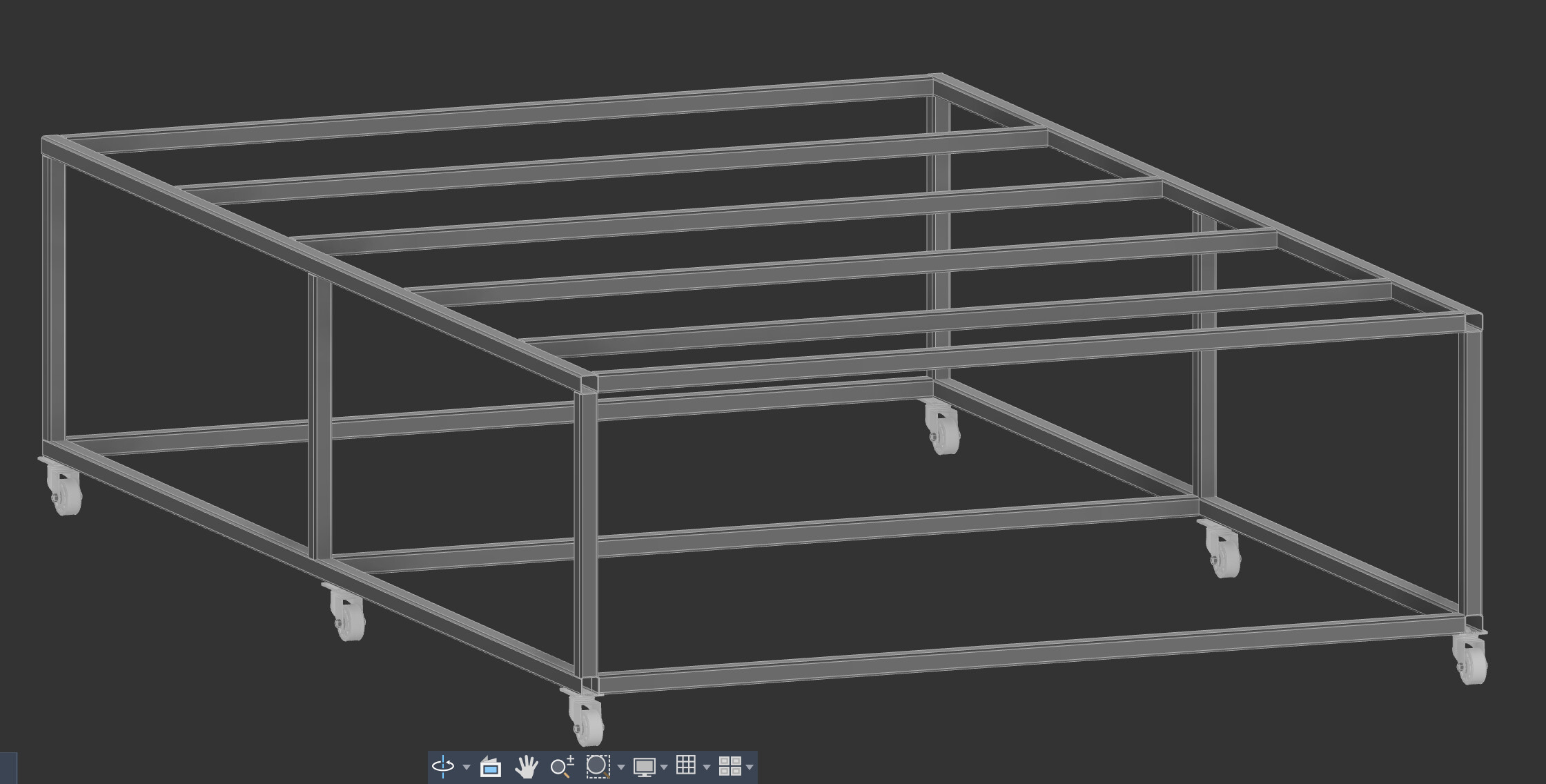
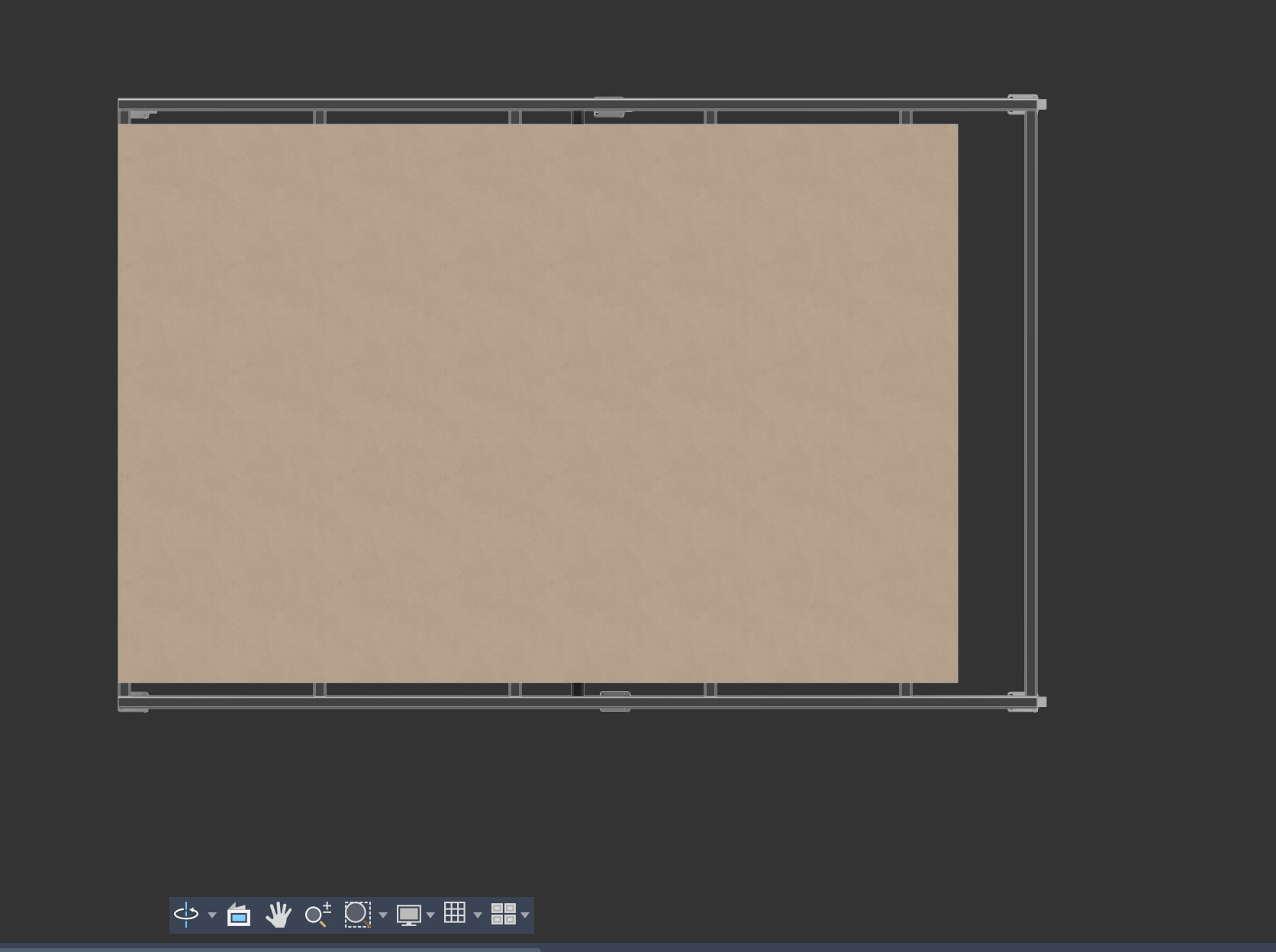
Hi guys, I'm in the process of planning and building a full-sheet LR4 table. I made a drawing in Fusion 360 (using 40 x 40 mm square tubing) to get a better idea of the situation. My questions are:
1. Do I need to reinforce the corners?
2. If I use two overlapping MDF boards (18 mm + 18 mm), should I add another square tubing on each side to raise the carriage higher?
3. Can I leave a gap at the end to make joints? I'm really new to this and I hope you can help me. Thanks.

My table is similar - I left the bottom space free to store sheets of wood but added extra diagonal supports.
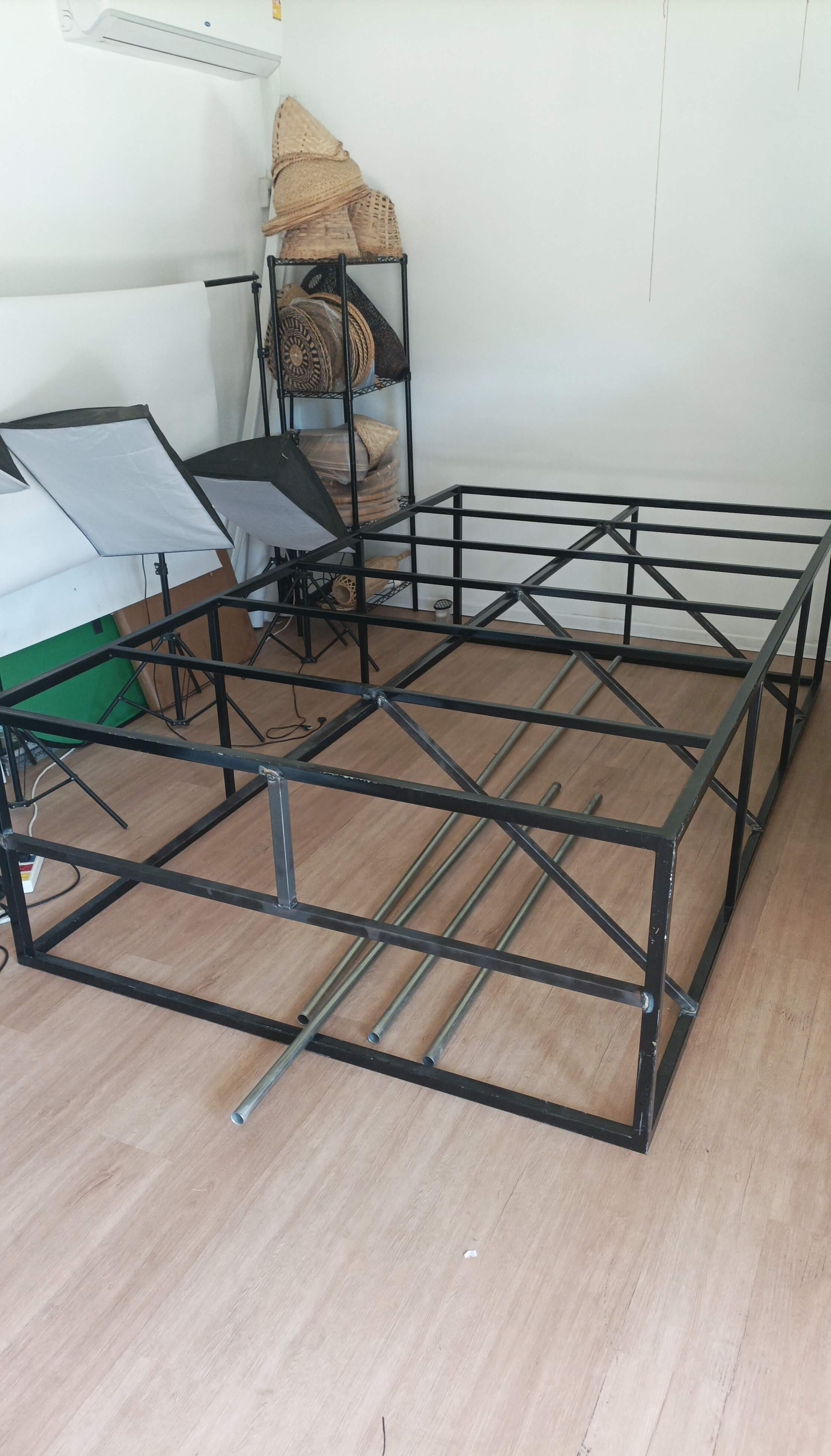
I cut three HMR MDF sheets for the top. No real issues with the joins as there’s a full sheet spoil board on top after this, although it’s not completely level/flat, probably .5mm difference at most, which I assume I can sort by surfacing the spoil board, just haven’t got around to it yet
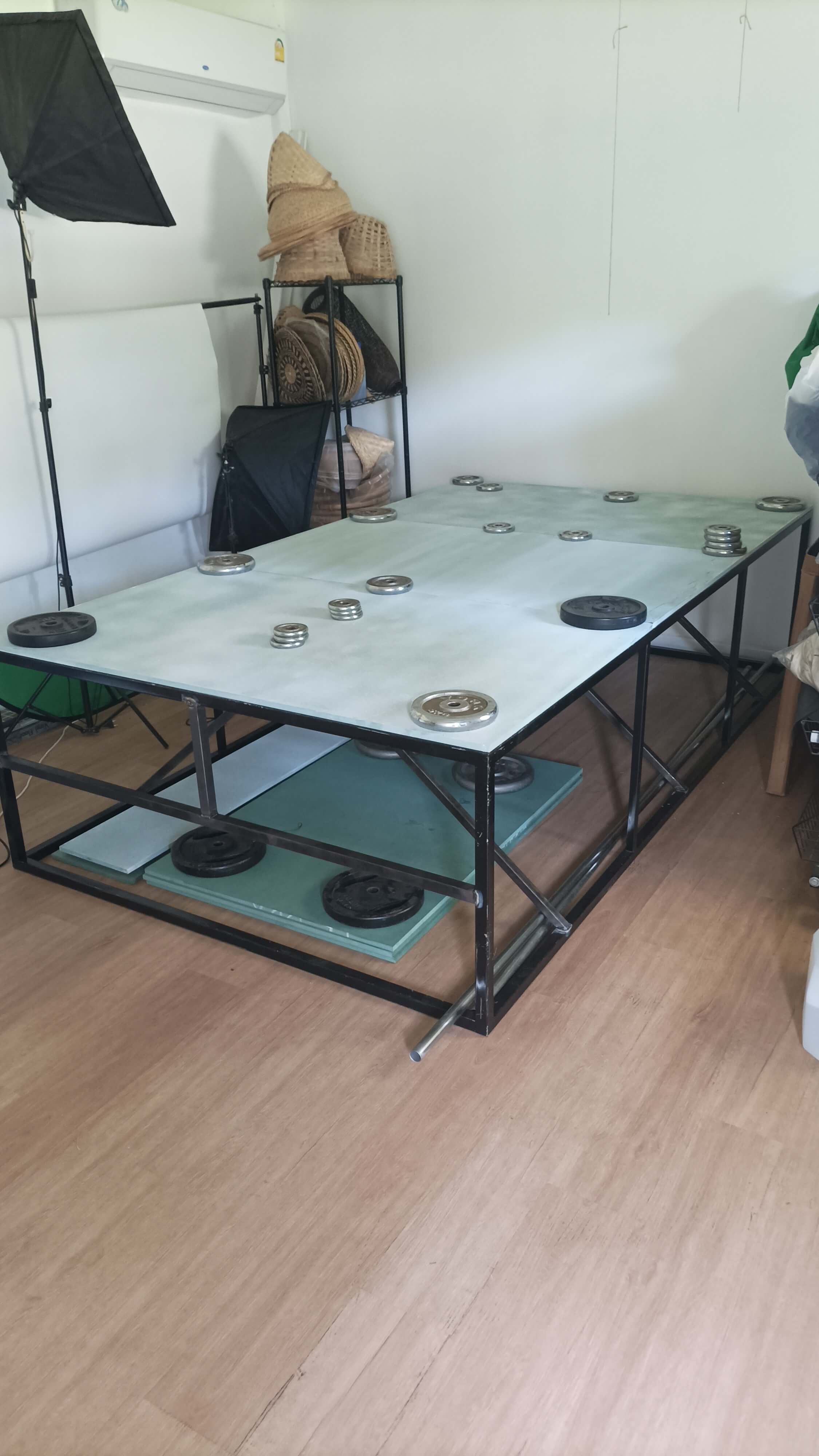
I wish I left a gap at the end just for attaching things, clamping etc. so it’s a good idea in your plans I’d say
Thanks for sharing your experience, that’s really helpful.
My table is planned to be 3010 × 2050 mm, also using 40×40 mm steel tubing, so it’s a pretty large build. I’m considering a similar approach with storage space underneath and adding diagonal bracing for rigidity.
Good to know that ~0.5 mm variation worked out fine for you and can be fixed by surfacing — that gives me some confidence.
About the gap at the end, that’s exactly what I was thinking (for clamping and flexibility), so it’s great to hear it actually helps in practice.
One thing I’m a bit concerned about is welding distortion on a frame this size.
How did you manage to keep the frame flat during/after welding?
Did you use any specific technique (tack sequence, welding order, clamps, surface plate, etc.) to minimize warping?
Thanks again!
I didn’t weld it myself so can’t help you there unfortunately, but I expected slight warps or bends (basically not having it perfectly level everywhere - though tbh I don’t think I even checked it was level before adding the wood on top), I just figured a small enough space between bars would be enough to counter it with big flat sheets of MDF (and can always surface after).
You can use a torch to heat the steel tubes and use water to cool the tubes they will move back to be as straight as possible (before you welded to a complete state)
Thanks for the advice, I’m going to put it into practice. I’ll upload photos of how it turns out later.