Actually not sure that’s true. 
2 Likes
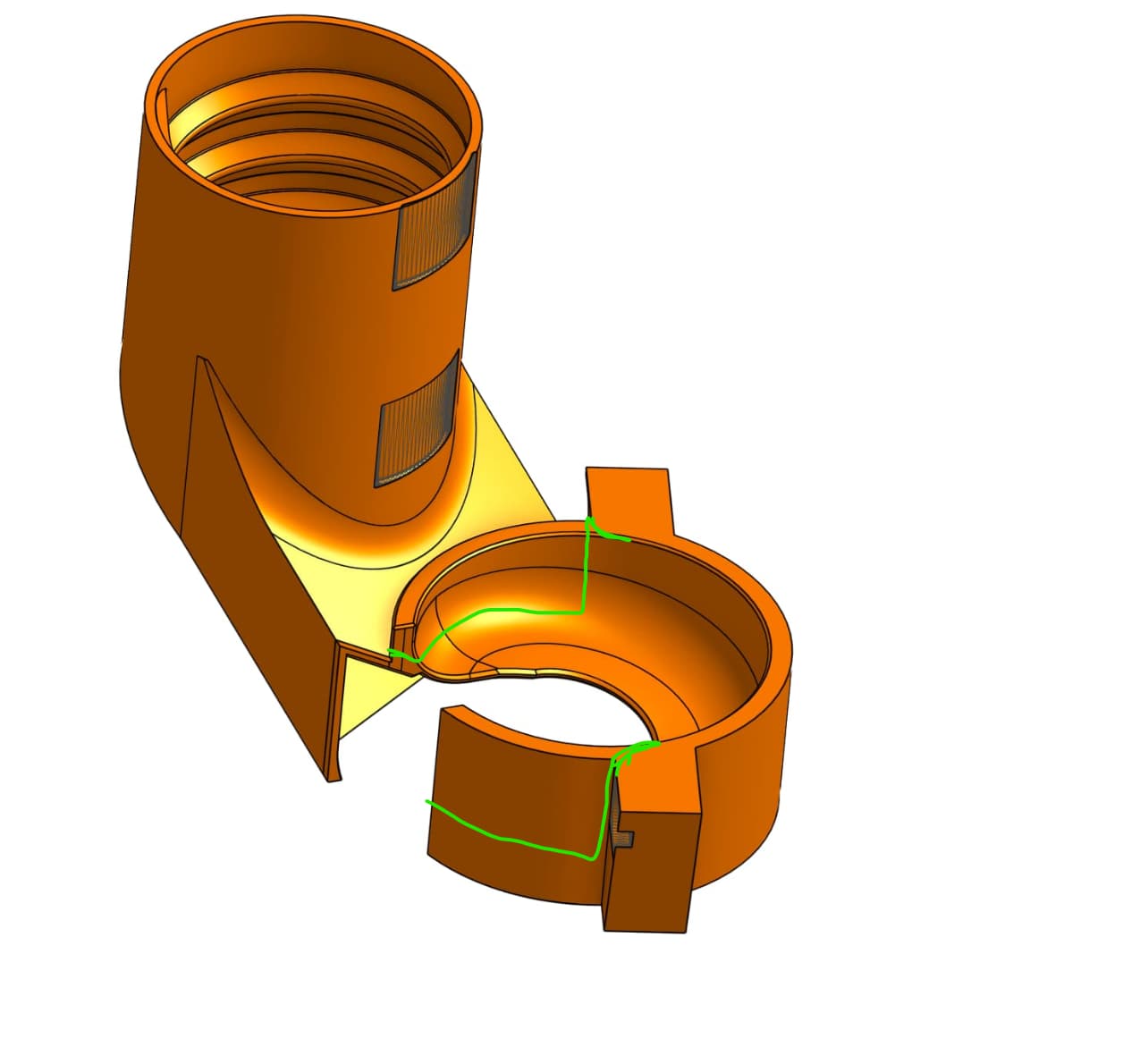
If you cut away these green sections, will it help increase router airflow, and not compromise your design?
The only way to find out is to test (in the absence of the desire to learn to use some CFD analysis tools) is to build one. If anyone wants to take a deep dive please be my guest! (I assume things have moved a long way in the last four years!)
My hope is that the exhaust from the fan will miraculously accelerate and choof into the vac inlet, creating negative pressure and therefore assisting vacuum - rather than working against it.
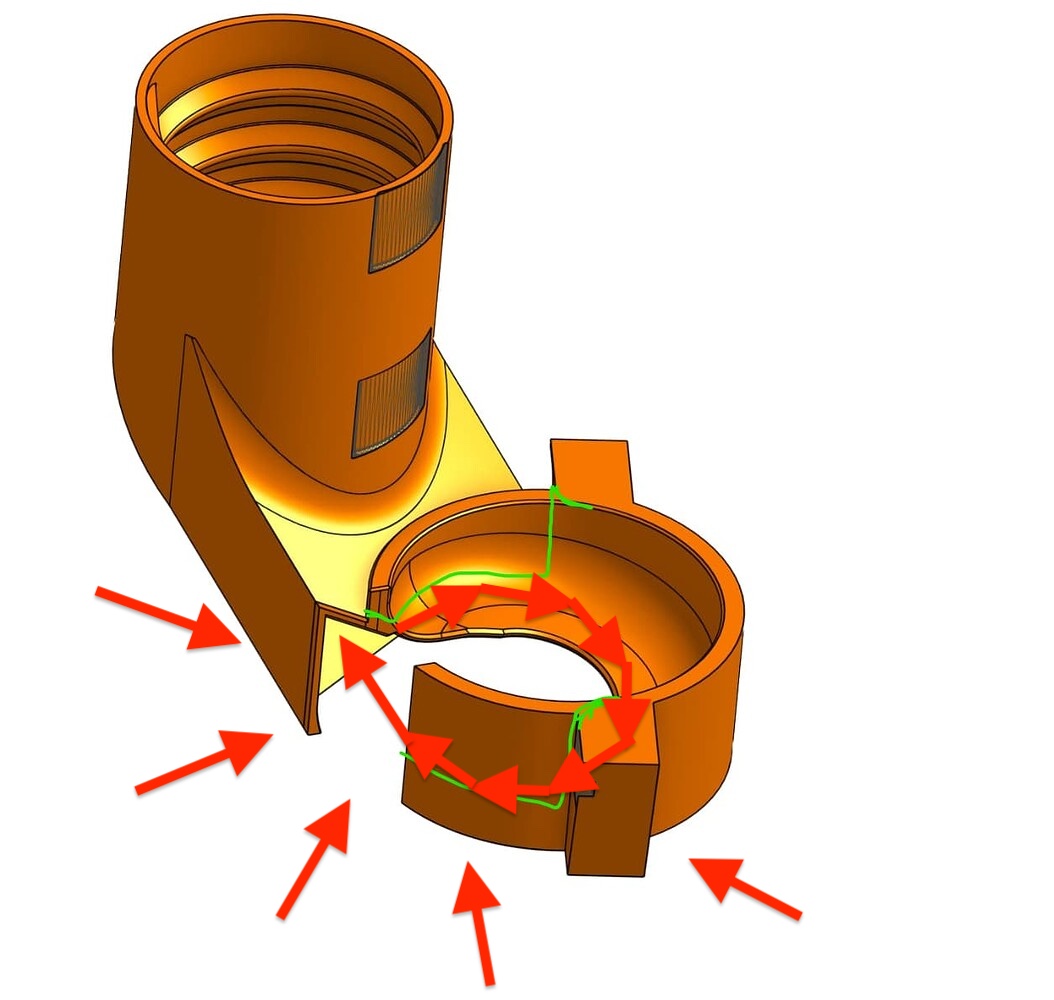
I’ve always been captivated at how a tiny change on an F1 car can make a massive difference in cooling or downforce, but without any maths ability have no way of making this work - I’m pretty sure even the basic inputs for a CFD simulation are well beyond me. On the other hand, I’ve worked with enough mech engineers in my life to at least understand some of the theory - but I’m not sure that I’m any where near correct here.
If any of the engineering brains here would like to work with me on this I would seriously enjoy that - we could then compare what is happening between various designs perhaps.

I have considered cutting the “top” as shown, but not the bottom - The top is the “stock V1e” (your) design depth - the bottom of the cyclone is slightly deeper than the Makita Router mount when at it’s lowest setting.
If this pans out (IF) I have a concept for a snap-in TPU “door” over that opening which incorporates a skirt around the circular base.
I suspect at the end of the day, we won’t be able to show any difference from the stock fitting - I will do some basic small particle measurements as that’s my main objective - to keep the air cleaner (and have a cooler router for some).
Ohhhh, I get it you are combining the two. That makes sense. Seems plausible, could be amazing!
1 Like
I understand the difference between “plausible” and “works in practice” though!
Signs of success (cautionary report!).
I’ve played with a few different heights, from max Z to zero clearance and the results are always the same. There is no disturbance below the router with it turned on - all air shoots out of the cyclone opening until the vacuum is turned on, the the vac is powerful enough to overcome that and sucks the airflow back in where it is supposed to be.
I guess the next step is to make actual dust, but I have no idea how to capture that in a meaningful way.
Clicking on below will take you to a short clip with air in three stages - off, router only, and vacuum on.
I think it’s worth persevering with - any other thoughts will of course be welcome.
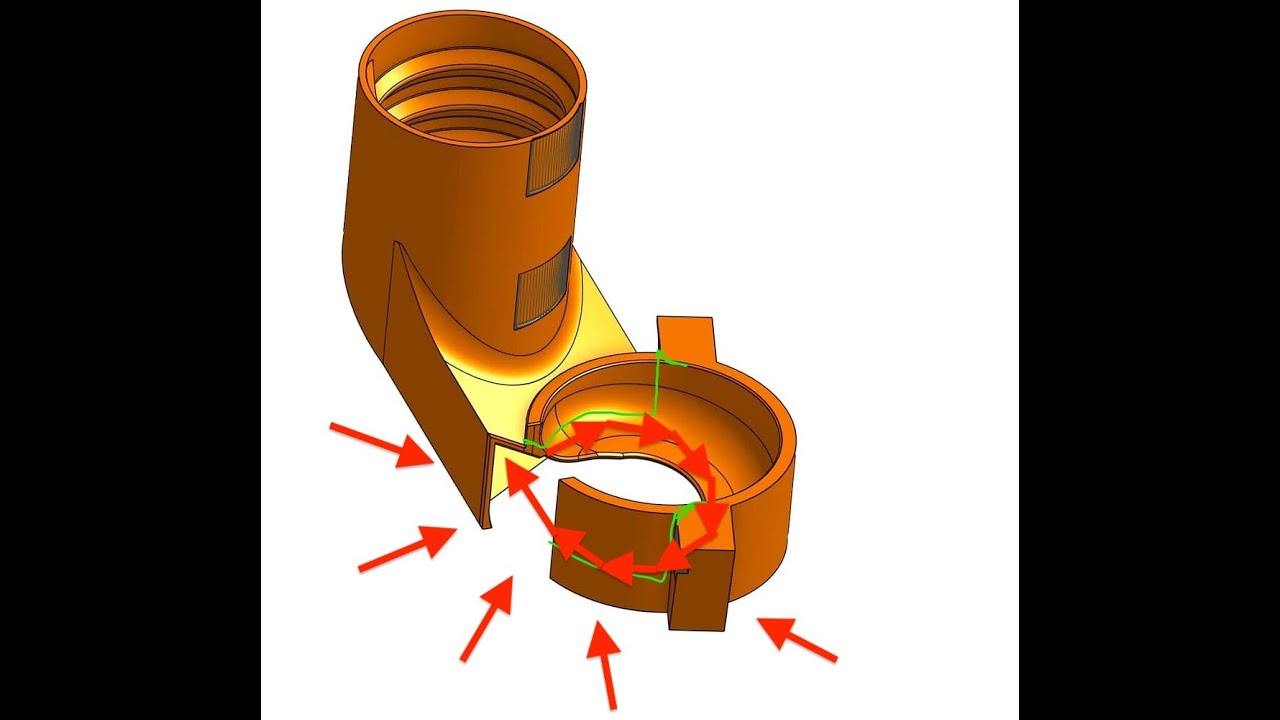
Try to make a consistent mess, drive over it at a fixed height router on, vs router off. As long as the router fan doesn’t overpower too much of the suction I think you are winning! That looks really good.
1 Like
I don’t think that can happen in the present config, but it’s unrealistic to think that the vac can overpower chips and/or dust being flung at a zillion miles an hour in the opposite direction - I’m pretty sure a skirt will be necessary on the opposite side to the vac at least.
Perhaps I should break out the “old roll of masking tape trick”?
Or you can copy my TPU brushes. 
1 Like
I’ve seen some YouTubers who make different fan designs use a vape pen to create “smoke” to see air flow. I suppose you might be able to use a Halloween fog machine?
1 Like
That was my plan.  Well you gave me the idea at least, I think they are a great idea whose time has not yet come!
That’s not going to happen - I don’t often get on a high horse over a principal, but that industry is a sinister evil thing and I’m not going to contribute one cent to it’s coffers!! 
But I do have some mosquito coils somewhere… 
I think the tape has shown enough of the airflow to demonstrate that it works - I doubt that much will change with the static machine - I now need to make some chips, measure the dust in the air and set up some comparisons. There’s no way that it’s going to pick up a high percentage of chips flung in the opposite direction to the vac inlet, but that’s where the skirt comes in.
I don’t think it will affect compaction in the routed channel either, but it’s not impossible that the additional negative pressure could help.
1 Like
close older topics to help with spambots, and faster new user questions.