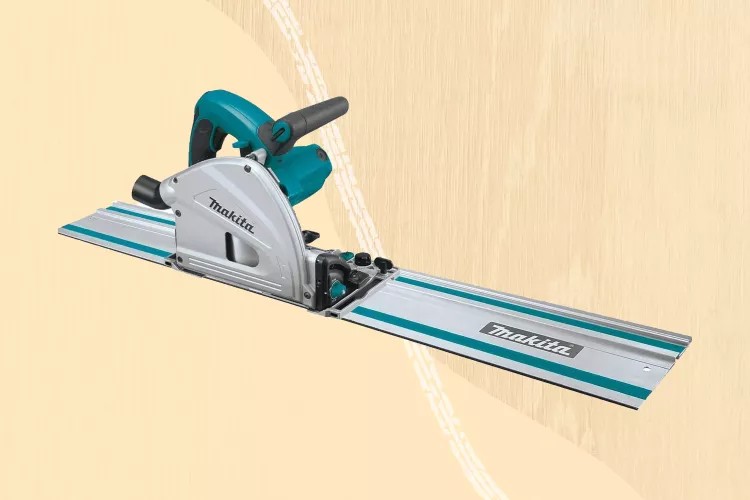
Looking at getting a plunge saw with a guide rail. To cut mdf that eventually will be made into garage cabinets.
So should I get a plunge saw, if yes, with or without battery?. If no, circular saw or table saw?
Looking at getting a plunge saw with a guide rail. To cut mdf that eventually will be made into garage cabinets.
So should I get a plunge saw, if yes, with or without battery?. If no, circular saw or table saw?
Yes, I am looking at a Makita Track (plunge?) saw. The model I am leaning towards is the SP6000J.
I have the WEN track saw. Cheap and works awesome. I did get the little more expensive powertech track for it though. Mine is older with a cord but a friend has the one with the batteries. Honestly if I had to do it again, I would get the battery one. The cord is just a pain
There are 1000mm, 1500mm and 3000 mm guide rails. Two or more guide rails can be connected to each other with guide rail connector. Is this connector seamless?
The 1000mm and the 1500 mm guide rails are cheaper then the 3000 mm.
I have 2 that hook together. It works really well. Have never had a hang up or even notice when I am passing the joint
It’s the easiest to do if you don’t have the space for a big table saw.
For cutting large sheet goods, a table saw requires good out-feed support, especially if you’re working solo. I’ve had table saw for 40+ years and have gotten pretty good at using it but, I think most people would find a track saw more convenient and easier to use.
I have bought this one (or one that looks like this one) for our musical decor/set construction group.
I like it a lot an used it a couple of times for personal projects..
I bought it to replace a tablesaw. There are a couple of people in our group that I don’t trust with a tablesaw. I’m pretty handy and quick at stitching wounds, but reattaching fingers is a step too far for me. It would be quite a challenge to saw your fingers with a track saw.
So I vote for the tracksaw!
I have a table saw but don’t use it often. I’ve considered replacing it with a track saw. A table saw takes up a lot of space and requires more respect to use safely.
With a table saw, size matters. Don’t bother with sheets if you’ve got a small one. Saw that is… 
What about number of teeth on the blade? There are 48 teeth, 56 teeth and 60 teeth? I want to cut 19mm plywood.
EDIT: Blade dimensions is 165mm x 20.
48 teeth will be fine , just take it slowly, i generally use a diablo 40 tooth on ply
60 is your finishing blade , i dont like using them on ply they heat up to much
do you already have a skill saw take a look at the Kreg rip cut , since i brought mine only use my table saw for ripping small pieces
60 teeth on a 165mm sawblade is waaaay too many.
Good on a 10 incher
I have a 310mm blade and have 36 teeth as my universal blade. For crosscuts I should use 48, for cuts down the length (don’t know the English word) I have one with 18 (!) teeth. Mostly I am too lazy to swap them though, so the 36 has to do… 
It’s funny to reflect - I’m sure I asked this same question 20 years ago on some Internet forum.
I have both a track saw and a table saw. They’re different tools. Both have advantages and disadvantages. With an MFT table a track saw can do many of the same things a miter saw can do as well. And it does many things a crosscut sled does.
I primarily use my track saw to break down sheet goods, or for some awkward cuts that would take a lot of setup on the table saw.
If you are going to use the track saw instead of a table saw, I’d strongly recommend parallel guides, if you’re going to use it for crosscuts, an MFT table with a fence would be a great addition.