Private and Charter schools partially exist because they don’t have to follow the rules of public schools.
All those rules for spending public money are because someone bought some ridiculously priced paper clips or something from their cousin. This is why we can’t have nice things.
A curriculum with the LR4 would be incredible. I don’t think the bar is that high either. Most teachers are capable and willing to fill in the gaps. You’ll get more excitement and recommendations from more flushed out stuff. But I have seen some lesson plans that were pretty light.
the ball valves I use are a modified version of this
with a 20KG servo attached.
Similar to this, but I think his model is for schedule 40 PVC and I’m using 4" DWV.
There are a few other servo-controlled blast gate models out there as well.
I just don’t like that people tend to model their stuff to fit inside the pipe instead of outside, so made my own system of attachments and stuff to make sure I never reduce the pipe along the path.
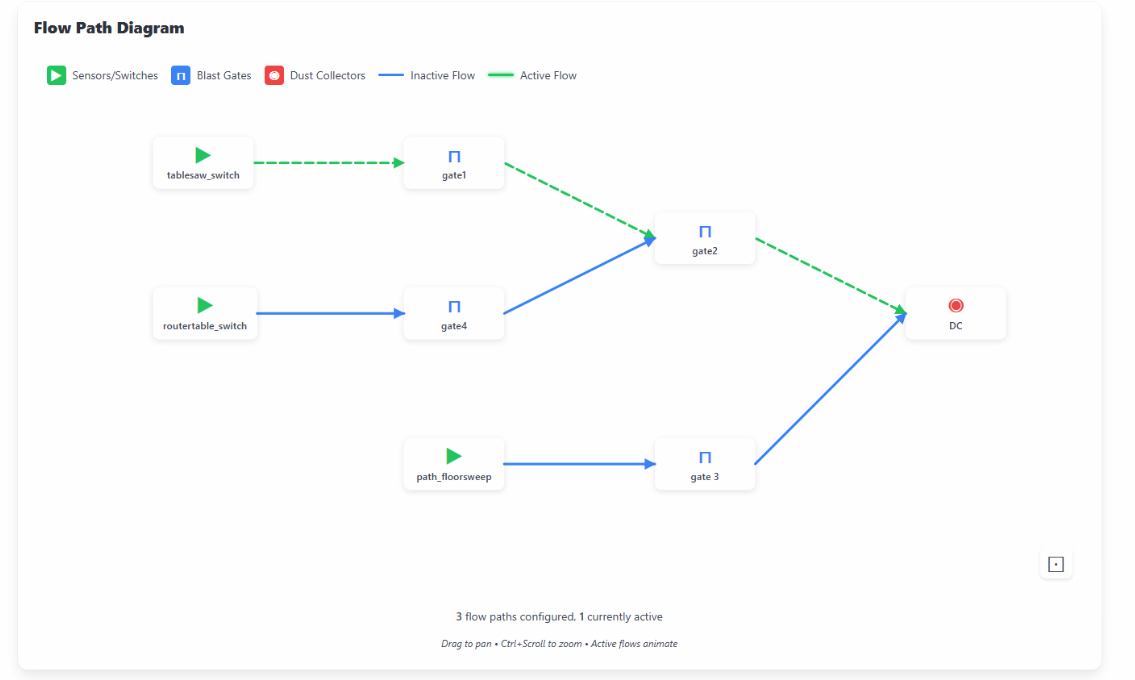
At the moment, the system I’m building doesn’t care what you use. All it cares it that it is a servo-controlled blast gate. You give it the control GPIO and the parameters it needs (open position, clode position, travel limits) and it will do what it needs to do.
It could be easily extended to include other actuated blast gates types as well.
My original intent was just to have a single controller and wire everything back… but it sat in my head long enough for me to sufficiently over complicate it
In general, I would say the type of Dust collector you have is going to drive everything.
Whether it is a real impeller-based dust collector vs a shop-vac style that creates stsatic pressure is going to change performance and drive a lot of those decisions.
From there you have to know CFMs etc. A Harbor freight dust collector can support a 4" pipe. Larger systems can work on 6" pipes with no problem.
How many tools you have, how many you run simultaneously, size of pipe, type of pipe, type of collector… all of those change the effiectiveness of the system and how it needs to be designed.
So… it depends on what you mean by optimal. Optimal for what?
For most people, their limits are going to be budget and power requirements.
I started writing code for a similar system years ago, using Arduinos and XBee links. Implementation never happened and in the interim, I’ve changed the approach to ESP32 using MQTT over WiFi.
One of my former careers I was a high school science teacher, and I will say without a doubt solid lesson plans would be highly desirable. If they were hooked to national/state standards such as the NGSS or mathematics then it would be candy for teachers. One of the reasons I left teaching 12 years ago was looking at creating a lesson plan for each prep I taught, 3-4 at a time, taking 15-45 minutes for each document. The documents aren’t actually useful in the classroom, just proof you linked to standards for auditing purposes. After that, burnout became undeniable.
I can see creating a form on V1E or otherwise that has the necessary headings with space to fill out that describes the project. Then the STL, G-code or file would be stored to an external repository so you wouldn’t have to host any actual files.
With today’s LLMs you could have them generate a reasonable instruction skeleton doc based on a well documented forum topic that journaled your project as you build it, and shared with the community.
I like @azab2c idea as well, have a field that you put a link in from the build forum and it would populate the lesson plan using LLM based on the build. It would also link back to the forum itself for the teacher/students to reference later. Then use the LLM to generate any applicable STEM state/national standards. Looking now, seems there are a lot of sited dedicated to making lesson plans from AI which makes sense - teachers making lesson plans and coursework from AI so students can use AI to complete the work, and then teachers use AI to grade the work. Big tech is creating an ouroboros for schools….
Maybe even more reason to have lesson plans ready to teach kids actual physical skills.
Whoa, these do seem pretty solid. I just tried one out. It seems Really good, some of the times seem a bit off but the rest is solid.
What I am seeing is the Time aspect. That is new to me, seems important.
So how is my time best spent here. Do I generate some of my own lesson plans as a very basic example, or do I make some new instruction pages that have some “expected times” for each task built in?
Do I do a build plan or just A couple different use plans, drawing a crown, cutting a wooden part?
Lego Mindstorm has been around for a long time and has a lot of lesson plans available, building various things, using motors, some basic coding etc:
There could be a sequence of lesson plans to build an MPCNC, using a 3D printer, assembly, using math and geometry to square and calibrate the tool, and first cuts.
Another path I see could be a build series, some basic like testing for square to cutting a frame for a battle bot. FIRST Robotics is a program for a technology class or group to build robots, bringing them to competition and completing tasks head to head. Designing parts in CAD, transferring to CAM and building using CNC can be a vital part of that.
Flight Test has done a good job on integrating RC planes into STEM education and could be a potential model to follow as well. I know a teacher here in the Midwest that had good success with it. With a CNC they could design and test their own plane!
Just now thinking of what my classes would have been like with 3D Printer and CNC access. I could build Earth Science models, blown up cellular structure for biology. OHH, cut out a human body puzzle by system for Anatomy and Physiology (just thought of that one). Even making flat-pack furniture in shop class to donate to those in need. If you can build it, there is probably a lesson to be learned there. The trick is to not just have a part, but what the students can learn either on the cutting or building process, or what the finished good can teach them.
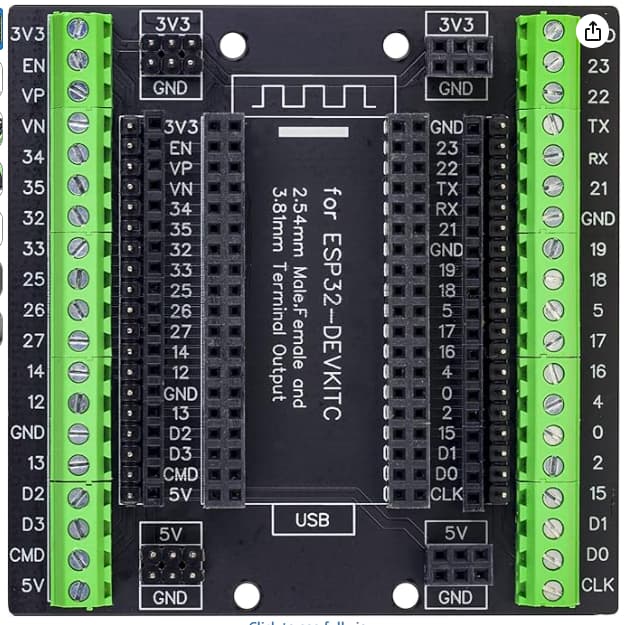
 At the moment, I’m just using ESP32 dev boards.