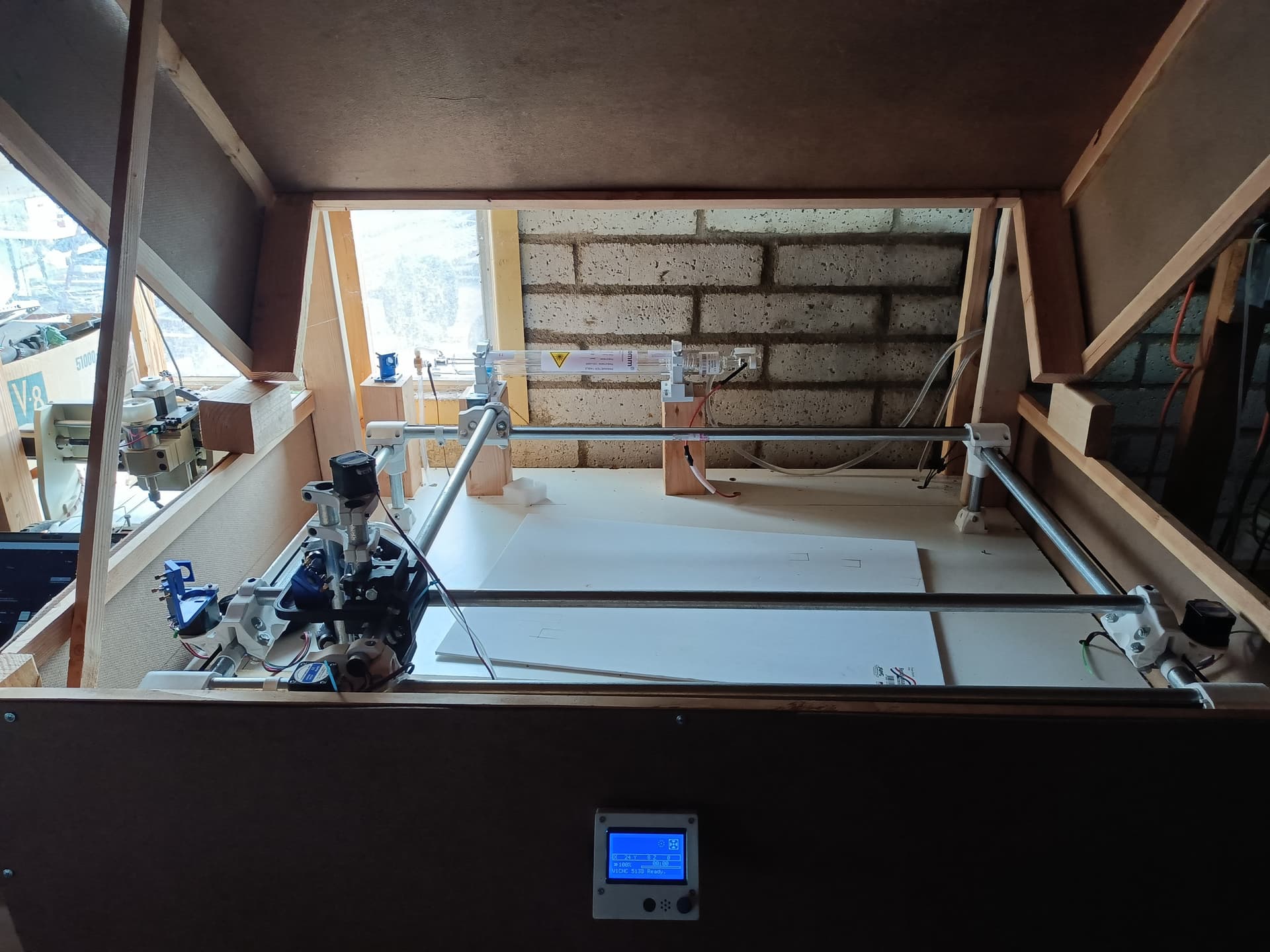
Spent the last few months building myself a laser cutter. I wanted a large format laser (20x30 inch) for making model aircraft. I know it would have been easier to just buy one but it was an interesting challenge to build myself.
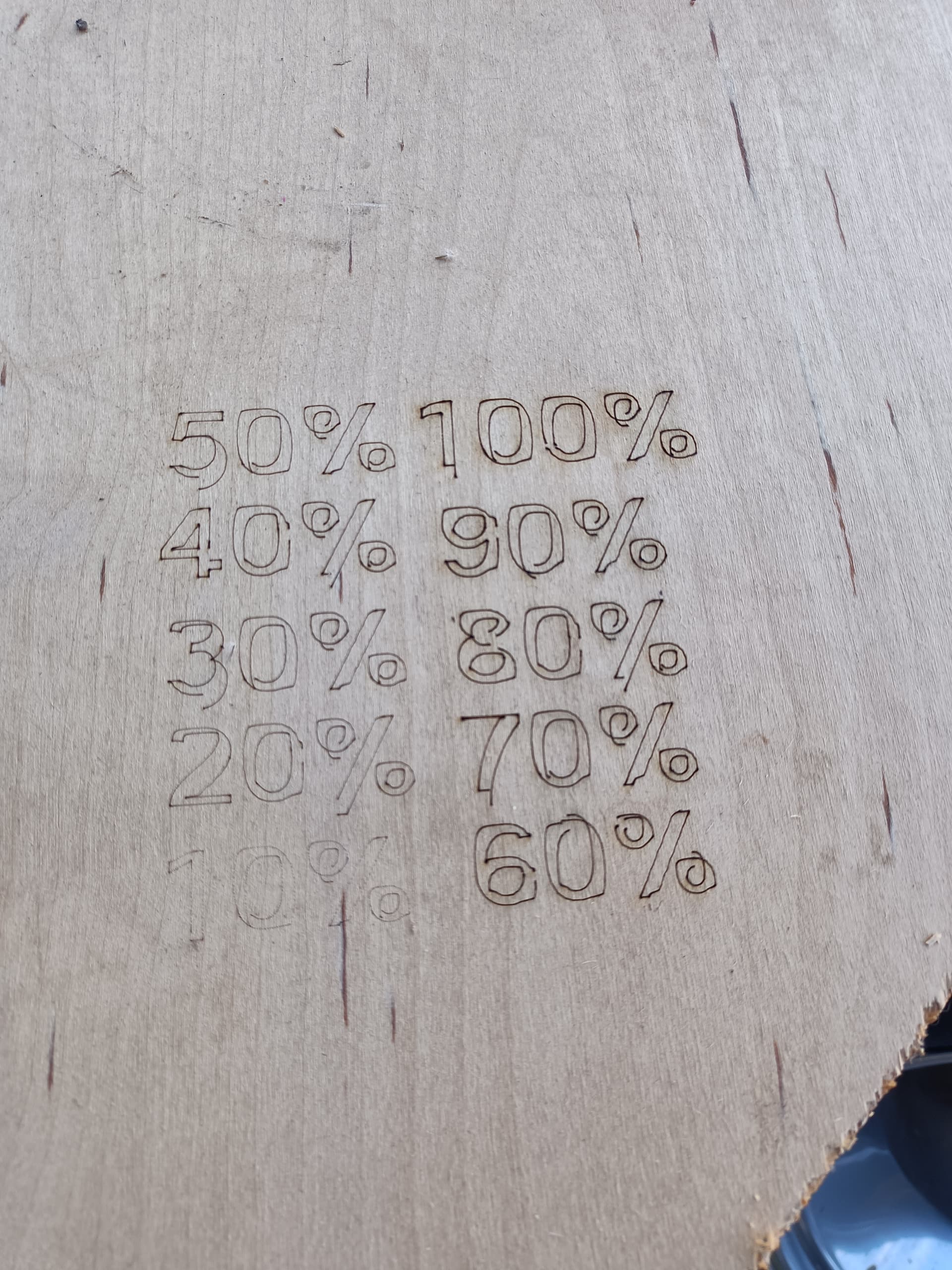
Just made my first test cuts and clearly still need
make some adjustments to the firmware. But it’s finally working almost. Would include photos but my account is new
In before the you’re going to burn your eye out comment from the the arm chair safety officer. I know lasers are dangerous, I use proper PPE, and you’re not gonna convince me to not experiment at my own risk.
I’d love to see your build. It takes very little time before you can post pictures, or if you give a link, someone can add the picture as a post. So what materials are you cutting? I use a diode laser on my 24 x 30 build and have cut some things that approach the limits of the build size.
Two notes: 1) We prefer the term Safety Monkeys. 2) The goal is usually not to prevent people from experimenting, but rather to understand that some experiments are well beyond the design parameters of the MPCNC as stated, and that all due care and diligence should be exercised when coloring outside the lines.
Really, we all want to see pictures of your rig, and the projects you complete with it (them?), and you can’t very well do that if you cause wanton destruction to yourself or your property, now can you?
I just got started with a 10w diode, and having found myself a victim of some very over-zealous marketing claims- am looking to do a major upgrade to a 100-150w CO2 .
As one of the usual gang of safety monkeys, i just want to make sure you understand your risk factors better.
I do think a LowRider is a better fit for a laser, with the risk choices being that you can put the laser tube on the gantry (fixed and controllable angles from the tube to the laser head, fewer overall mirrors) but then the hazards of a moving laser tube, or fix the laser tube and do something to shut it down of the gantry goes out of square.
A Primo almost necessarily means a loss of Z control, though maybe that is less important with a long focal length head. The scary part there is that the machine can go out of square on 2 axes, either one of which can harm you in ways that PPE might not help, or it could just set your garage on fire. Most likely it will just ruin your machine, but is definitely a risk to be aware of.
Other than things where there is no way to do it safely, I try not to say “Don’t do that!” Instead, it’s more a matter of be aware of what the risks are.
Novice (but not utter noob) in CO2 lasers here, but it seems to me that the offerings out there- and the DIY builds on open builds etc- all have the same essential design, which is a fixed laser tube, and a frame design like the primo. None have a configuration like the lowrider.
Wouldn’t it be easier to add the necessary safety points to the primo- squaring with endstop switches (the way the lowrider self-squares), as opposed to configure a moving gantry supporting a water filled, extremely high voltage glass tube?
Like I said- novice, know the fundamentals and the principles- but not familiar with all the possible failure modes.
You are probably correct there, I decided for my purposes that a CO2 laser on either is too large a risk for me. Though I may never intend to turn the laser on without squaring the machine, I might forget.
Anything that causes a motor to skip steps will cause the alignment to go off. I’ve had that happen with regular milling, sometimes just a bit of scrap that jams one motor, and in one case a falling broom handle. Any one of these incidents could have caused a fire with a CO2 laser tube, or destroyed the machine.
Or maybe not. I didn’t do the math, but I can’t see it being good. In my case, the chances of an accident are too high to risk with such a setup.
I would probably trust a coreXY mechanism, because it would require the belt slipping or stripping (or the adjustment nut) to go out of square. These might have more size limitations, at least practically since each of the 2 belt paths must span 2X + 2Y (approximately) of your machine size, rather than single span of X or Y.
Adapting the ZenXY almost seems a better idea. A simpler mechanic, capable of faster motion with less moving mass, coreXY to maintain squareness even if something impedes the mechanism and makes a motor skip. This might be the path I take if I ever do a CO2 laser.
As you have already built your machine the mechanical side is sorted. As for the firmware, you don’t need all the complications Marlin adds which are irrelevant for a laser application, but usage on something else will depend on your controller hardware. ‘Tweaking’ the firmware will depend on which firmware you have selected. I would think it much more likely what you are asking is how do I tweak the hardware to get that dot in the right place.
We have had self proclaimed laser exerts tell us that the MPCNC is too dangerous because it can easily be misaligned (if one motor skips). And someone else said they were designing it to fit on the LR gantry because it can’t become misaligned if it is on the gantry. But that second build was never completed (that I saw).
I have no experience with CO2 and I bet Dan is repeating some of the tribal knowledge that comes from soms of these conversations. I have a degree in physics, but no practical experience.
The beam isn’t focused while bouncing around on the gantry (what size is the beam before it fets focused?). If that is something you don’t want to hit your arm or a piece of scrap in the shop, then it is going to be very hard to make it safe without a complete enclosure. Or at least, something on the edge where it might miss and keep going.
I don’t know what other precautions or dangers there are, in a practical sense. Everyone here has to accept their own level of risk. The only time I feel really compelled to talk safety is when I feel someone doesn’t understand the risk they are signing up for.
You’d never build a co2 without a full enclosure. I mean- that’s a basic safety requirement, right?
I have seen one open frame design, on YouTube, but I would t even consider replicating it.
You have a good point about the beam not being focused as it bounces around the mirrors- that reduces the risk of burning through someone’s face if it becomes misaligned, but doesn’t completely remove the risk
When I do it, I probably won’t be adding it to a spindle gantry/ it’ll be a completely independent unit. At that point, it’s 2020 rail, and slider carriage. I wouldn’t even put the laser head on a Z- the bed would move for material thickness. I think this is the way most commercial units do it.
Basically replicate a K40, but with a much better laser tube
Mostly, this is true. I have though seen my own machines become misaligned.
No, I’m not an expert, but I’ve seen where an “unfocused” beam has hit a bench, could probably take the calipers to it, but it’s roughly 10mm diameter. As I understand that’s the size of the end of the tube, and the coherent laser light is collimated, so it remains that size until focused down to a small dot. Or hits something neither reflective nor transparent to IR light. So on that I have some actual experience. The bench was some 30 feet away from the 60W CO2 laser tube, and across a path that people walk through. It etched about 2mm into solid oak in a couple of seconds before someone saw the smoke, and shut the tube down. This was doing maintenance on an Epilog laser, with the steel covers off.
At a guess, I’d think you might have a second or so before that laser burned straight through polycarbonate safety goggles and burned your eye out, and average human reflexes will allow you to duck out of the way before you lose an eye. hmmm, meant that to be light hearted… please take it more as a “be sure you are wearing your PPE.”
That looks like backlash. Probably a loose grub screw on one of your motor shafts. Or maybe one of your motors isn’t working at all, and the axis is being driven by only one motor.
This test pattern generator by Jamie draws a ruler in each direction to measure backlash. IDK if it can be used with a laser though:
I’ll keep my safety monkey comments to myself as it seems the OP knows the risks, and other monkeys have spoken up already. I will say though, that this safety monkey has less luck than the average monkey in general. So would not attempt this myself as it would guarantee loss of vision in my case.
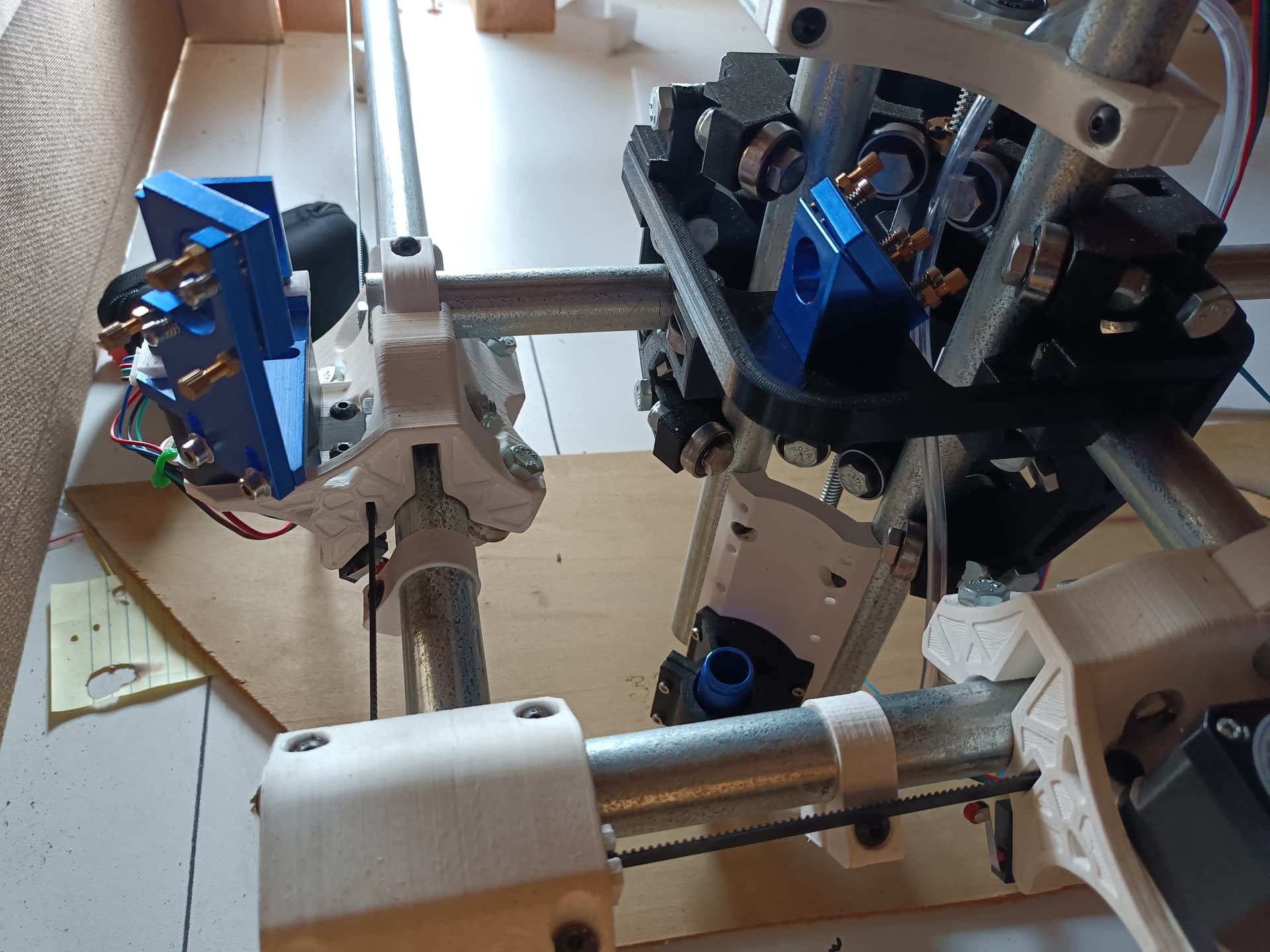
That said, those are some wonky looking letters for sure. It does look like some backlash at play, but looking at it I have a feeling it’s not going to be that simple. When I mentally visualize all of the flexing that happens throughout the frame as it moves, and how that may affect alignment of mirrors… I’m thinking there’s going to also be more complex interaction with mirror alignment at play here. For example, we know the gantry generally will take a saddle shape, dipping in the middle. That will make the first moving mirror rotate about the x axis… and the second moving mirror will have that rotation, plus a rotation component on the y axis as well. The angle change isn’t much, but the laser path isn’t that short either… build up of small angle errors could end up looking like that. Compensating for these slight unplanned changes in mirror angle I have a feeling may become a big problem here, especially riding on rough conduit. I think this is why most co2 gantry’s tend to be very lightweight… less mass to bend the gantry, and less momentum to get things swaying when they accelerate.
Could that sagging be removed by replacing that huge core with a simple plate gantry? All it has to hold is the 90 degree mirror block and lens assembly. That just weigh much less than the regular router in there
Edit: I’m a dumba** : should have read the last sentence
My vote as well, super cool to see though. Those mirrors are insanely hard to get ideal What I did not understand when I started with a big laser is the beam is the size of your mirror, not a tiny spot. So any misalignment early on drastically cuts your output power put also compounds the positional error several times over as it hits each mirror.