Is that an encoder on the back of the servo? Seems weird, the source of slop as you say would be mostly from the gearbox. Would almost be better to have an encoder after the gearbox.
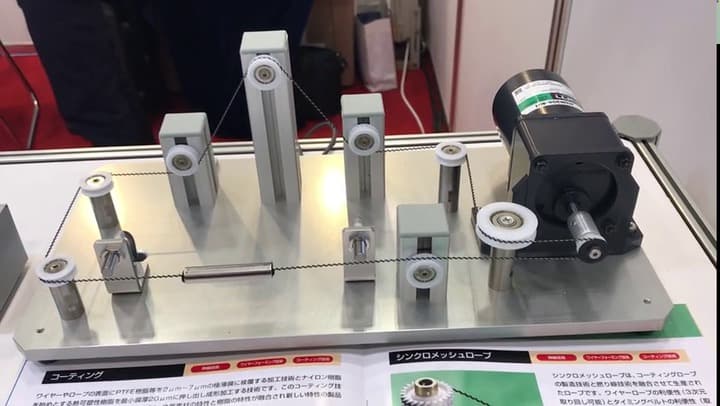
I’ve been told it has backlash issues.
I have always seen that and wondered about twist. Under heavy load will it twist at all? It is great for moving small things very fast, but the longer the run and the heavier the load I assume (could be wrong) that it is more likely to twist (backlash).
Well that explains why the portable/ foldable 3D print Jeff thought was “neat” over a year ago has kind of stalled out.
This video popped up after watching the Synchromesh one.
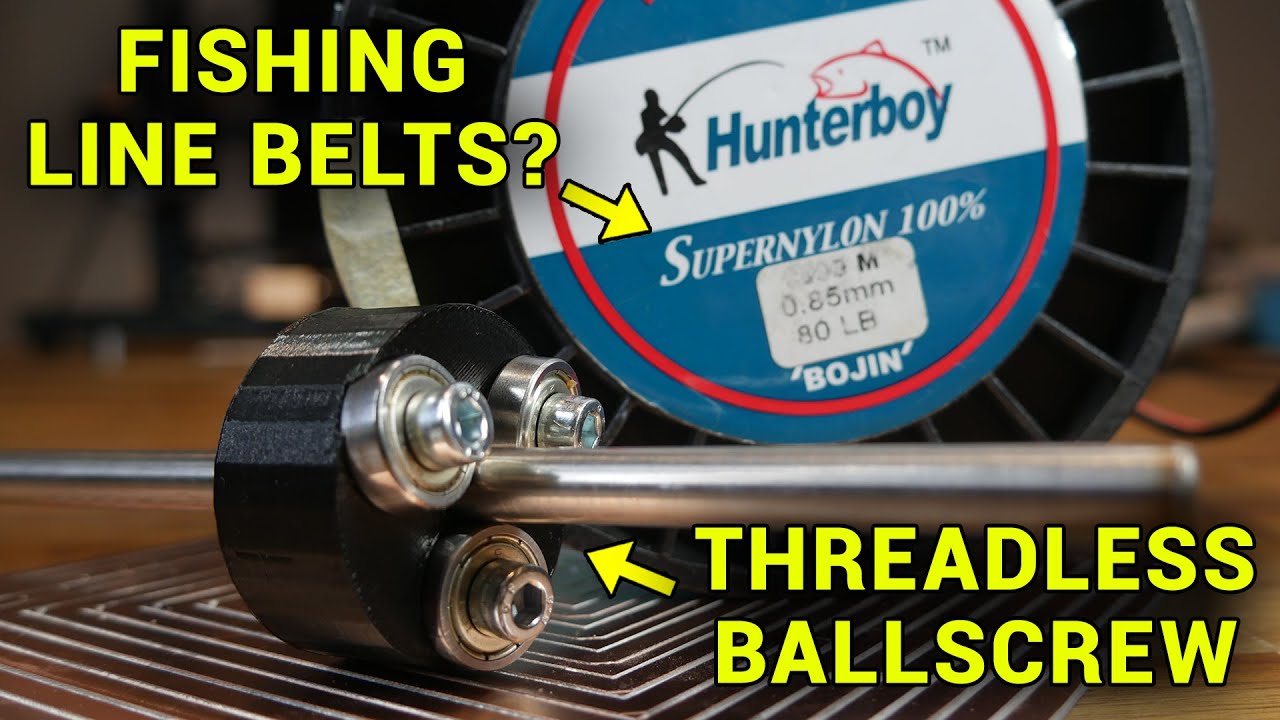
The threadless ballscrew is pretty slick. I worked at a diecasting company straight out of college and we used to make automatic sliding door brackets with this mechanism. You can imagine that it can handle a pretty good load with the weight of the door and safety glass.
It was used as a safety feature in case of power loss. You can manually force/push the doors open causing the bearings to slide on the rod without damaging anything or worrying about losing position. Pretty slick. I always wanted to use it on one of my own machines just never found a good fit.
My very first MPCNC truck-and-rail assembly was a threadless ballscrew, just with an extremely steep pitch. I was just messing around with the linear rail before building the machine. If I had to guess I think it was in the range of 0.01 to 0.05 revolutions per meter.
Cool. I assume you meant mm? How did it work out? I imagine the that pitch was way too steep.
No, I meant the MPCNC truck rolled with a very slight twist as it went along the length of the conduit. I don’t even remember what was wrong, perhaps the bolts were not set properly or something. Not actually a roller screw but technically the bearings would have traced a helix if the conduit were long enough.
I still think it is neat. I saw it at Rocky MRRF. I can’t comment on the backlash.
I thought it was neat as well, and wondered why it’s appearing like it stalled out. I was waiting to learn more, but was already thinking about getting one, and yet still waiting….
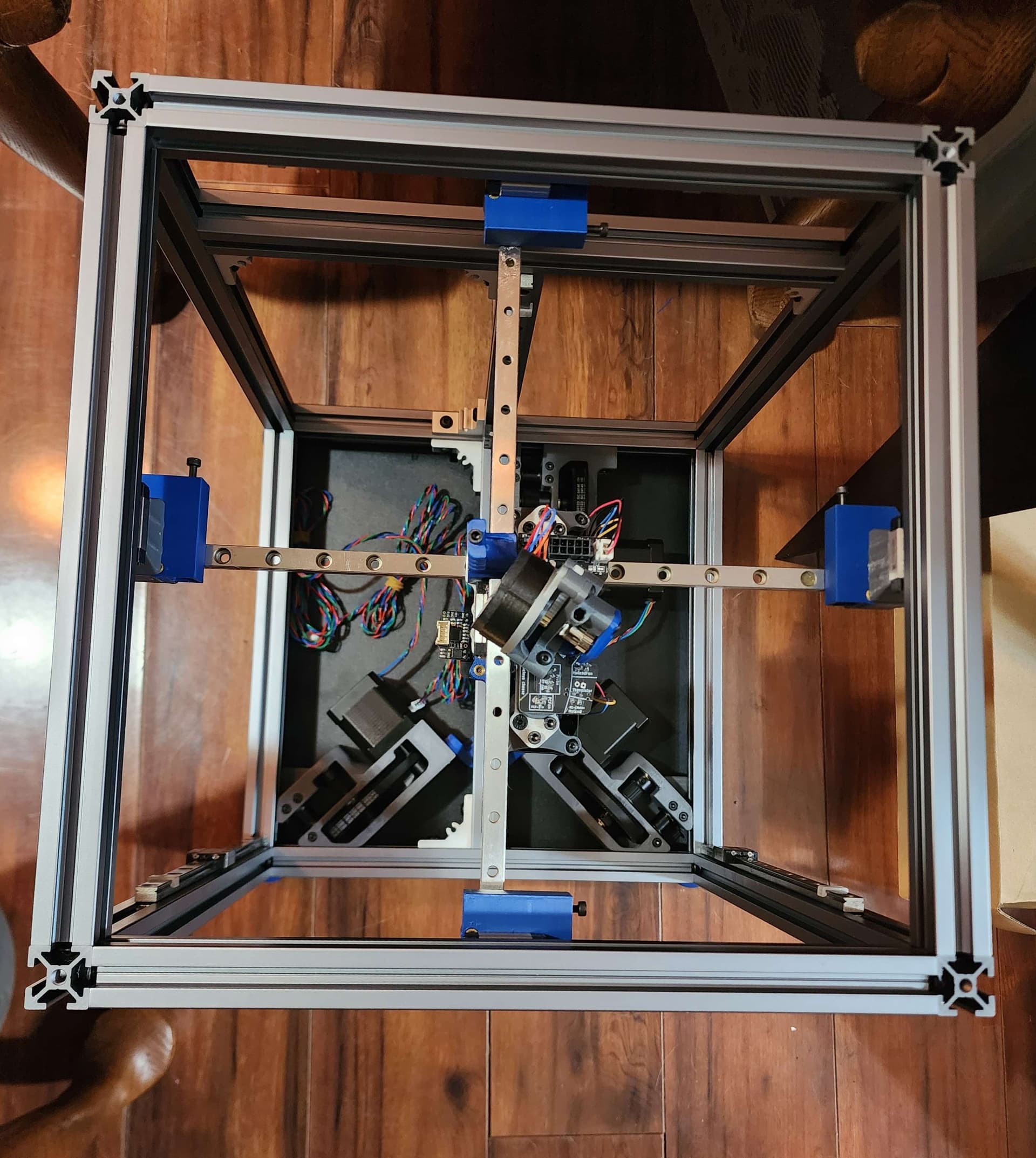

For sure, that config, while being a lot more massive, is a lot more rigid. I think that is the path to ultra-fast print speeds. It is also a balanced X and Y, where a CoreXY is 1/2 the weigh t in X it is 2x the weight in Y. So tuning each axis should come into play.
The airwolf printers have been made that way for a while and they do the XY travel sooooo good, Just the rest of the design choices are a bit funky.
I still have an extruderless direct drive idea no one has done yet. I need to CAD it up to see if someone will make it, or at least source the parts cheaper.

The price is actually come down significantly, McMaster-Carr
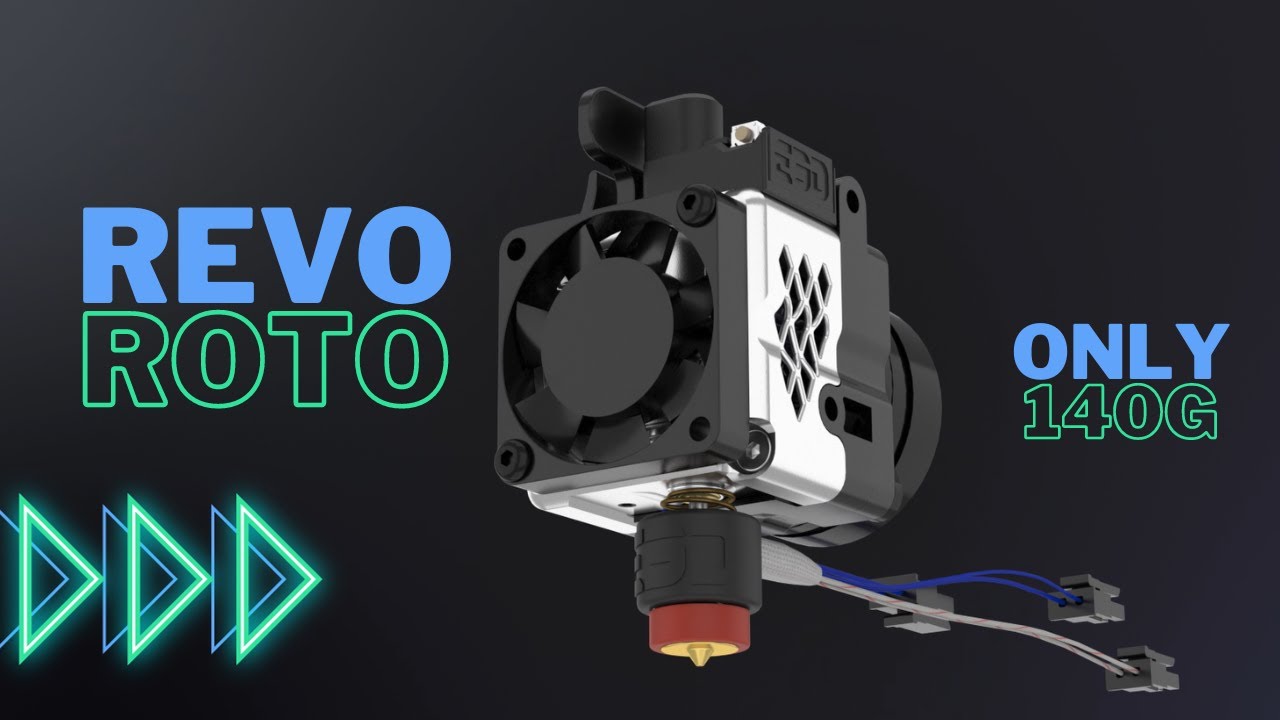
140g (entire package 1/2 weight of stock nema 17), 3D printed alu body-heatsink, 0.9deg stepper, one hand filament change, revo compatible, up to 40c ambient, filament monitor, and more…
Revo High flow obsidian nozzle looks useful for carbon fiber filaments.
I was very excited about it and was starting to add it to my cart.
Roto (+sensor?) + revo + Canbus card with special connectors + board to run said custom card…nah, That is nearly as much as a full printer build. The part that is really throwing me, that stall instead of strip function (use driver stall detection to indicate a jam), and no tension adjustments.
I want to love it but that is a very pricey ecosystem.
I think and orbiter with a hardened nozzle (or REvo), with a btt v2 sensor, gets you more than 90% the way there for a really low price and very near the same mass.
Regarding extruder stalling, I don’t know enough to have an opinion.
Just saw Tom’s interesting review, the extruder stalled at low speeds relative to Hemera and others, so it didn’t look good in the video. However… Looking through the video comments looks like given the 0.9deg angle and 3:1 gearing he/others might get better overall extrusion speed/through-put if “SpreadCycle” is used instead of “StealthChop”. 