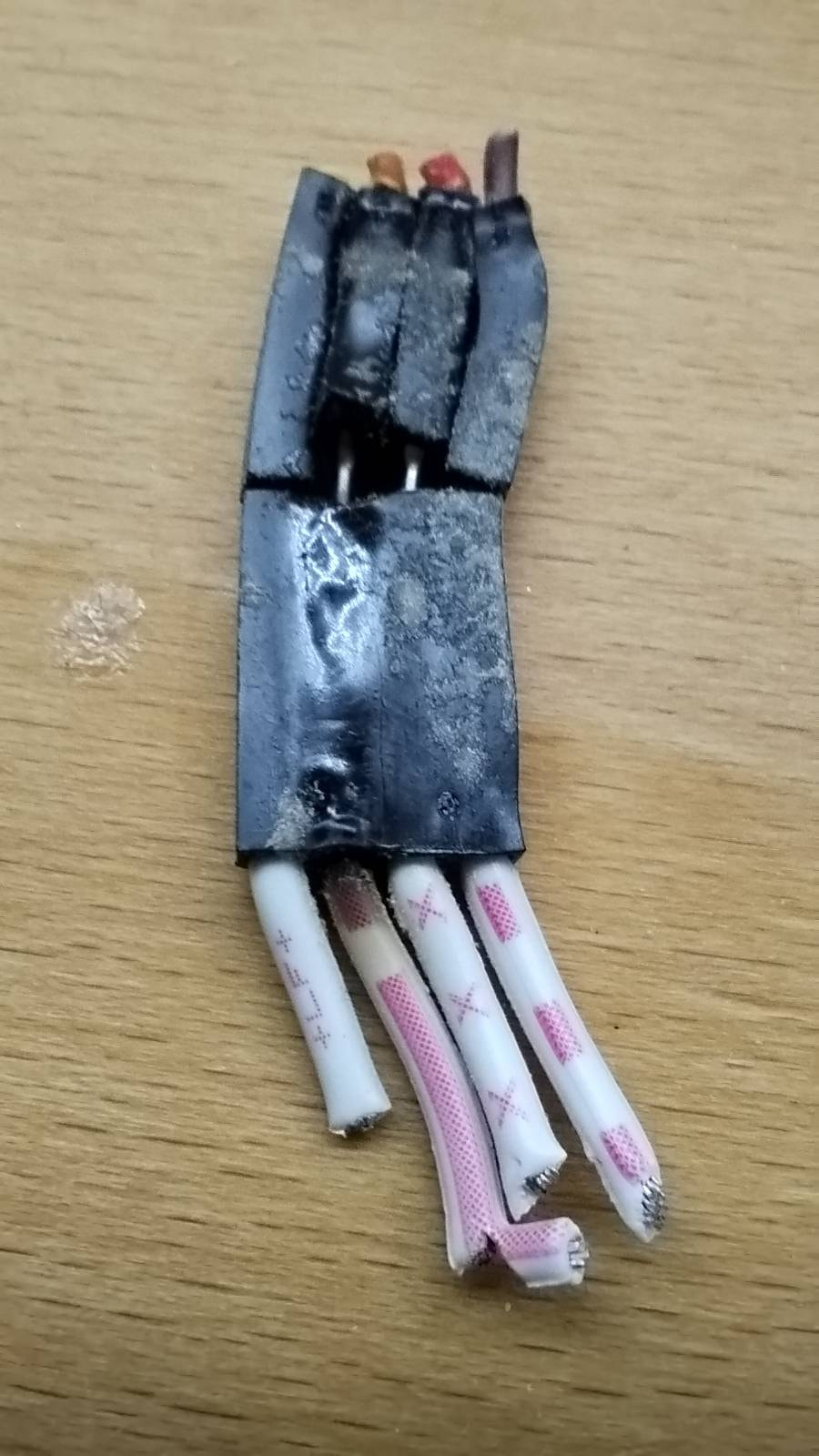
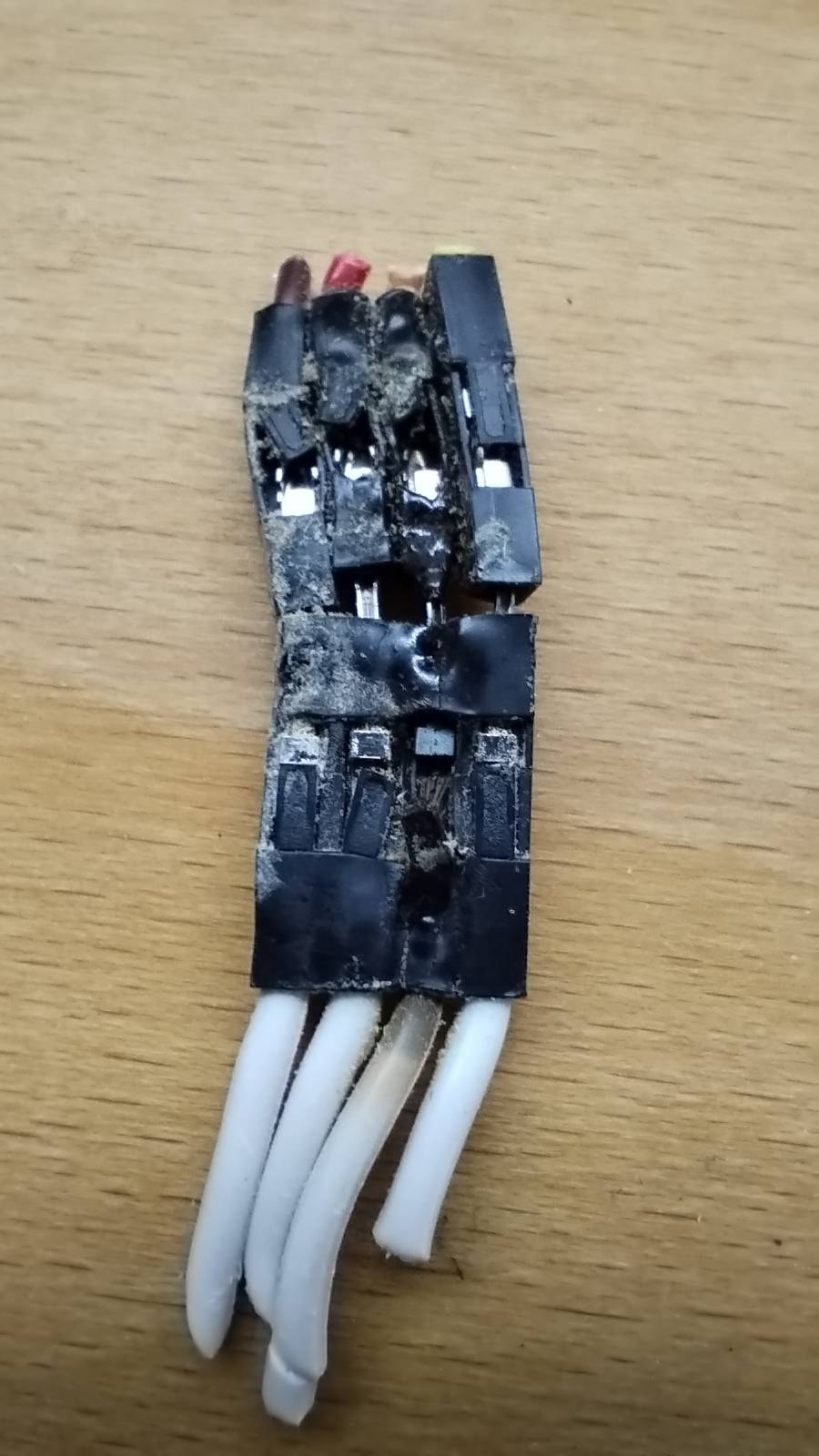
On one x axis stepper the connectors were molten together and now i want to ask which cables i should use to prevent this. Some other connections are getting pretty hot but are not molten.
I soldered directly in one case and used a jst-xh connector set on the other. The jst connector socket side required soldering and a crimper was required for the plug.
i cant get the cable out but if i look closely i see that the white cable was slipping out to the bottom and you see the loose open cable in the picture. Maybe that slippage was the problem. The white cable was the original shipped whith the machine parts.
Interesting.
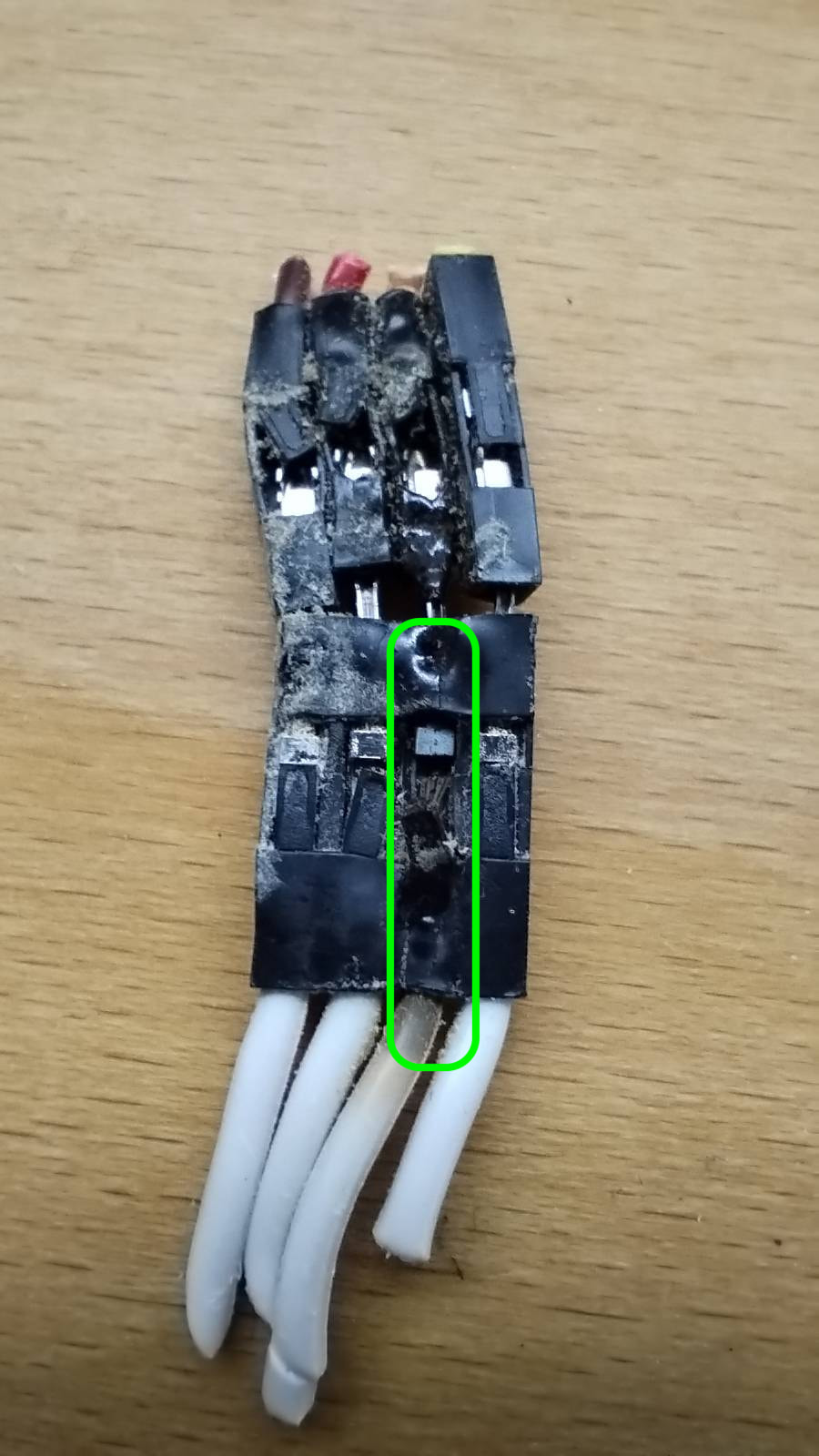
That’s not a pretty crimp, but it appears the source of the intermittent connection was the pin at the top not making good contact with the socket (body).
It does not appear that the crimp on this wire is the source of the problem.
Note the strands of wire in and around the crimp are not so badly discolored at the entry to the crimp. Note that the further up this assembly you look, the higher the temps were and thus the more discoloration/oxidation of the part.
Thank you for being willing to dissect that connector.
24V, 1A drive current. If the contact resistance goes up from a few tens of milliohms to something “crappy connection” You’re now putting like 1A through a 1 Ohm stepper in series with that bad contact.
The power going into that poor contact - depending on the driver settings say 1A or more at 24V - is potentially up near 24+ watts. 24Watts is equivalent to a somewhat low powered 3D printer hotend. No problem burning up a connector and melting plastic with that amount of available power.
The actual drops will vary depending on the specifics of the bad contact and the series resistance of the stepper. At some point a really high contact resistance means little current flowing, but then again a really crappy contact might be intermittent or even arcing.
it works a bit differently
1Amp over 1Ohm is 1Volt voltage drop. then power is I * U and that gives us 1Watt which is still quite a bit for a connectior
Yes, it does… I didn’t mention the actions of the driver or the impacts of that poor contact connection in trying to establish the current we set through the circuit.
I made a mathematically simple but technically flawed explanation that doesn’t match the real world scenario of a “wonky connector” well enough. Odds are that the contact resistance was something other than 1 ohm, and that most of the 24v drop could be at that contact.
I should fix my explanation, but to do so I’d really need to guess about the poor contact, which might have even been so poor that it was intermittent and arcing. That changes it yet again.
The takeaway- that there’s plenty of power available to melt that connector- is correct, though.
Edit: Thank you for calling me out; it was a bad explanation and needed to be corrected.