On my LR3, on the Z2 side of the machine both liner bearings have gone bad, it seems at the same time. I have started having issues with the lowering motion on the Z axis no longer being smooth, it has a stuttering step to it. It would go up ok it seemed. But it turns out the coupling between the motor and the lead screw was hiding the issue and it has problems going either direction. Going up the coupling compresses fully and just drives the Z axis up. Going down the coupler would start unwinding until the metal “stretch” was stronger than the stiffness of the linear bearing and the Z axis would going down a bit and then that process would start over. Thus the stuttering motion.
When these bearing were installed they were very smooth an had no issues. It seems odd to me that they would both go bad at the same time. Makes me wonder if I did something to them or maybe installed them wrong. I have taken that side of the machine apart, but don’t see anything wrong with either of the bearings. They are just very stiff now and it takes both hands to move the bearing block back and forth. Is there anything in them that I might be able to “fix” or are these done for and I just need to get replacements?
Could be some debris caught in the bearings. You could try flushing them with WD40, then reapplying some machine oil (WD40 is actually a solvent, so definitely re-lubricate after using)
It’s also possible that the bearings are toast, especially if they haven’t been cleaned or lubicated for a long time.
Thanks for the tips. I think it was debris in it. I ran this process on the bearing block.
With the end block end screws loose, per step 2, I flushed them with isopropyl alcohol and there was a very quick response to its movement. SO much smoother again.
it is much much better now. Re-lubed it and put it back on the machine. Re-ran the job that failed due to missed steps and it ran clean again.
So glad it is working again, but something to keep an eye on.
Recent video on James Condon’s YouTube channel where he thought he’d need to do a full engine rebuild turned out to be (spoiler alert) the tip of the broken dipstick jamming the compression release.
Even after raising a couple of kids, I still get surprised when stuff gets stuck in places there shouldn’t be any way for it to get.
My daughter once said: “I didn’t put grass in the lock.” Then I knew: She put grass in the lock. A little blade of grass is enough to jam a security lock…
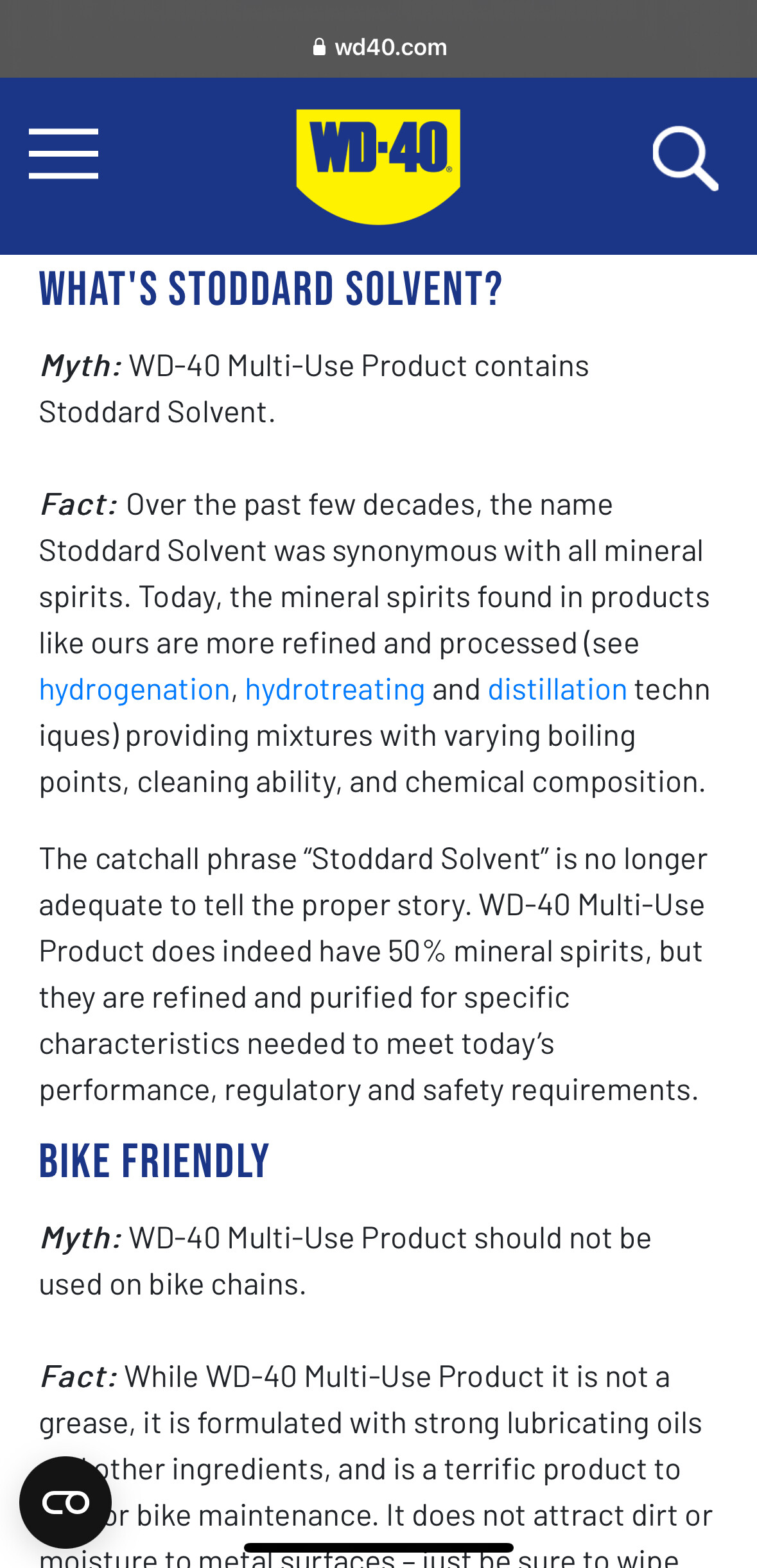
“WD-40 Multi-Use Product is a unique, special blend of lubricants. The product’s formulation also contains anti-corrosion agents and ingredients for penetration, water displacement and soil removal.”
“WD-40 Multi-Use Product does indeed have 50% mineral spirits, but they are refined and purified for specific characteristics needed to meet today’s performance, regulatory and safety requirements.”
“While WD-40 Multi-Use Product it is not a grease, it is formulated with strong lubricating oils and other ingredients,”
I’ve seen other people describe it as a lubricant, dissolved in a solvent…or something like that…maybe they are at least partially right…
“And, if you really need the secret formula, you can find it……written on a single notepad……locked in a vault……somewhere in California……if you can get in.”
I did this on my bicycle, but didn’t use a chain oil afterward. and after the next few rides the chain stretched almost a whole inch. After that (and a new chain) I still use it as a cleaner, but always soak the chain in oil before use.
I’m not making a claim one way or the other, whether it should be considered a lubricant or a solvent. Just linking some information I found related from the company.
I have used it both to clean things off, as well as to make things move…
Unfortunately these kind of linear rails are very sensitive to dust and debris, I use these a lot but I never really trust them. They rarely bind at high speed, but they very often do when moving at very low speed.
Even the Hiwin brand which is supposedly the best of the cheap chinese ones aren’t immune to this phenomenon.
In my opinion their design is inherently flawed because the balls path is composed of three different parts, and there are slight gaps between each part so sometimes the balls get stuck until there is enough pressure coming from the balls behing it to push it back on track. The transitions between each part is the real issue.
I spent a lot of time trying to debug these things on a few of my machines, taking the bearings apart, filing the plastic parts to get them running smoother and then putting back the billion of tiny balls while losing half of them. It’s always a huge pain.
I wish there was a better alternative, they do work for most applications but they aren’t always super reliable.
My experience with WD40 is that you can use it to get things that are stuck to start moving, but if you want them to keep moving afterwards you need to apply the proper longer-term lubricant.
Maybe some shielding is warranted so they don’t get sprayed with wood chips? I don’t have a feel for how common this is. This is the first I’m hearing of it, but that doesn’t mean much.
A decent dust collection system would serve the purpose and even better, so a shield for just the rails is probably the wrong approach.
@ZzingG what kind of dust collection or shroud do you have? Are you running out in the open, making a mess? (I do.)
In the open, making a mess. The rails that had this problem are also on the side of the machine that sees the most dust. It is the point of 0,0 on X,Y and is thus the point I start the most jobs at. As the rails are on the inside of the machine I really think they got fouled with dust. The XZ plate isn’t enough protection.
I need to get dust collection setup, even if cobbled together for now, and I think this would help. I have one of those Harbor Freight units setup with a Thein baffle in front of it for separation of dust before the air flow gets to the unit. I think it is good setup, I just don’t have the ducking in place to get it to my LR3, nor do I have the setup on the machine to hook a hose to. More, and never ending, projects that need done.
Yes, for wood milling I think it is mandatory. I was only talking about 3D printing so I can’t even imagine how this would be problematic for milling…
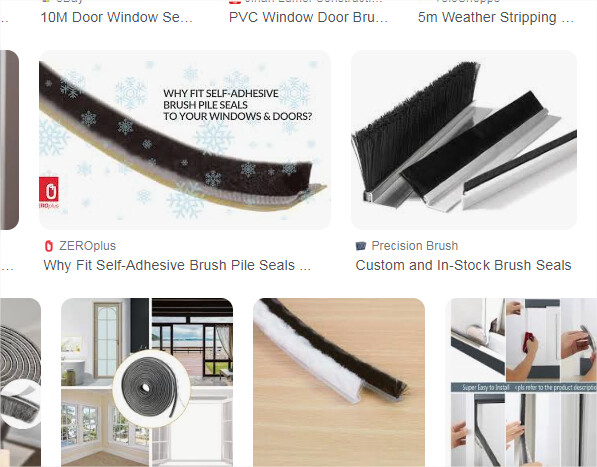
If I were to make something to protect the bearings I’d probably go with a brush system, maybe using some cheap windows seals like this: