I need to cut out pieces for my Adirondack rocker on the LR4. The material will be redwood, 1.5” thick. With this cutting depth, I’ll using a 1/4” bit that has a 2” CL, and is 4” long, which means that more than 2” will be protruding from the router.
With this setup, I’m concerned about excess stress on both the LR4 and the bit, so I’m inclined to take a very conservative approach, at least initially. In particular, I’m thinking of trying a 3 mm DOC and a feedrate of about 500mm/minute.
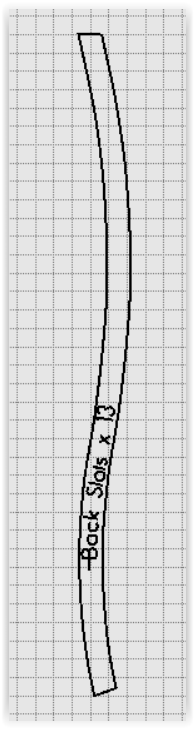
The first pieces (back slats) are not extremely intricate, but as the slot gets deeper, I’m concerned, even for simple rounded turns. Here’s the part. The grid is about 25mm x 25mm.
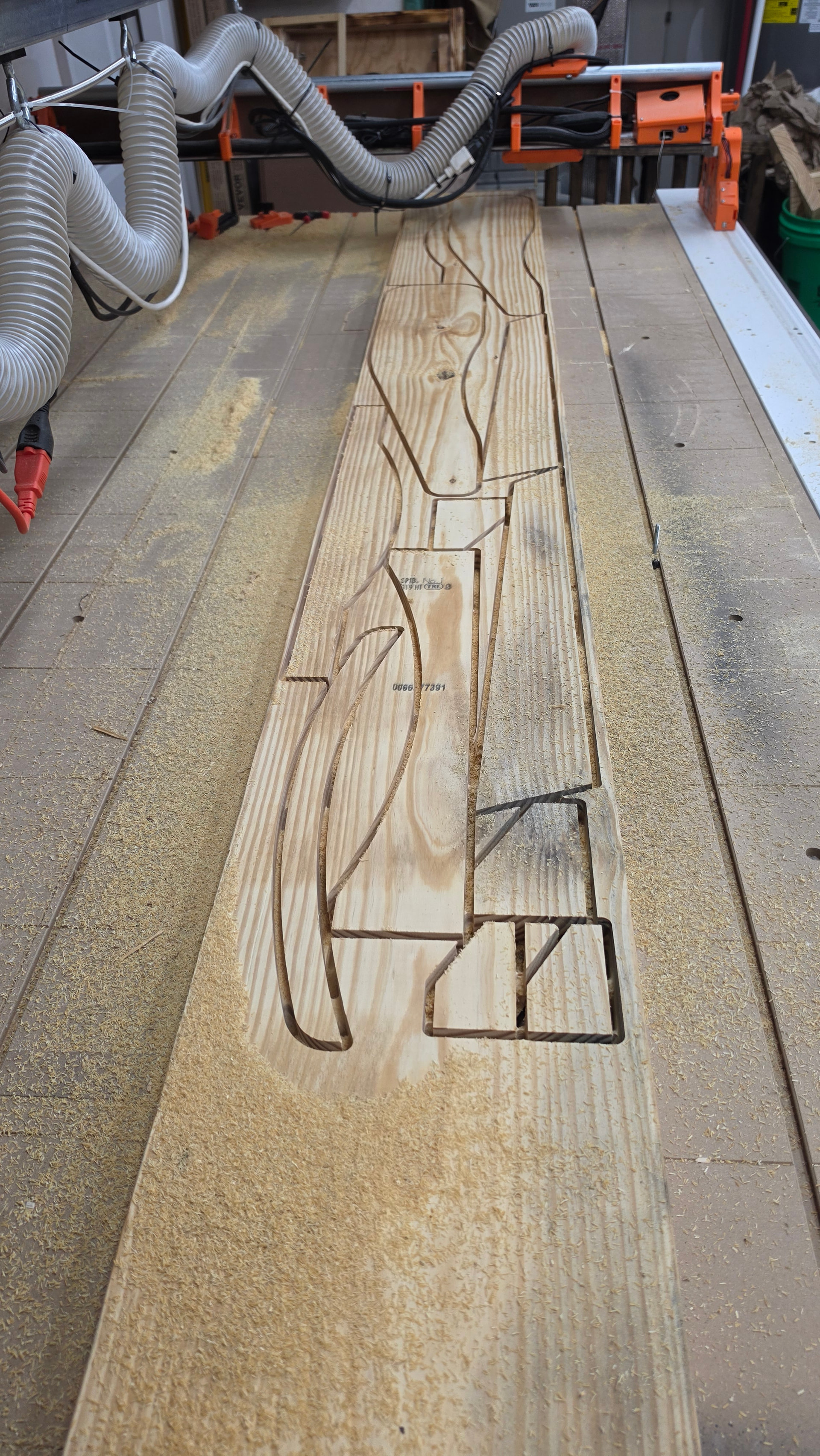
I regularly cut 1.5” pine boards with no issues with more aggressive curves than that. The LR4 has no issues with it at all. I cut at about 50 IPM (1270 mm/m). I use 3/16” (4.7625 mm) DOC.
Have you thought of making a template with cnc, cut wood with either a jig saw or band saw the use template and full depth router bit. Gots to be quicker.
That’s how I use to do it. Quicker? I will say that depends. I can have the CNC cut it while I am doing many other things. So, quicker in time, but since now my time is doubled, is it really quicker? Having to trace the template, cut it with the bandsaw, place the template back, flush it up with the router bit takes a lot of extra work. Also, this isn’t a one off for me. I make these Adirondack parts for multiple chairs that I sale.
Yeah I did some side plates template tests for the LR1…no way am I willing to take that abuse. The CNC was faster in the end, and a heck of a lot less work and mess.
Yes, I’ve thought about it, but decided that the additional steps add risk of errors when the LR4 should be able to do it in a single step. And, as Ryan says, the superior dust collection on the LR4 adds to that attraction. There may be some pieces where template routing is required but for now it’s on the shelf.
First, I’m curious what bit you are using? I didn’t find much choice with at least 1 1/2” cutting length.
And, second, how are you holding your workpiece down to your spoilboard. Looks like you might be using the “blue tape–super glue” method. One challenge for these projects is minimizing waste, so the hold down clamps that I often use can impair that.