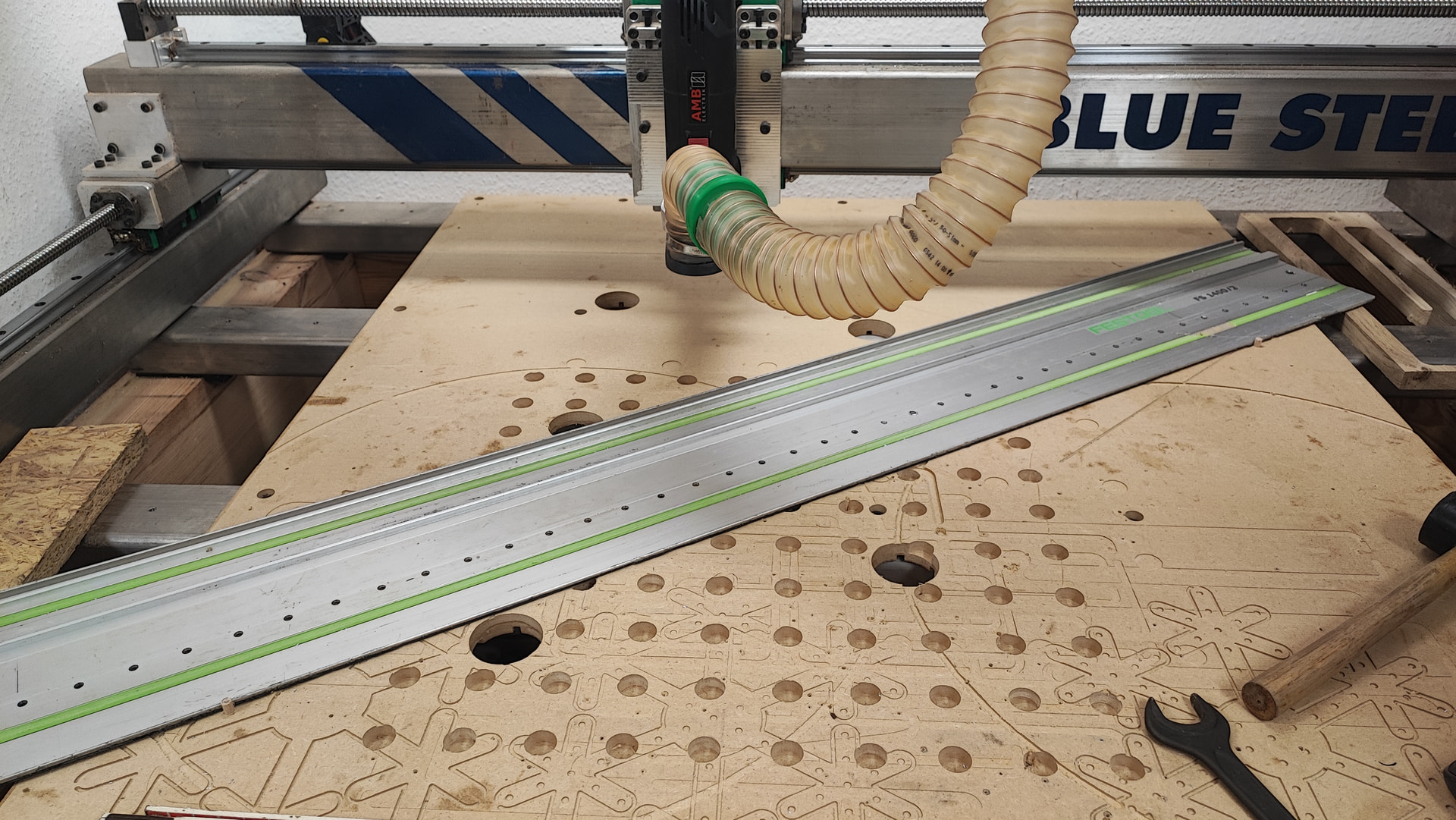
I told you what to do with the piece of foam, you basically do the same with the whole spoilboard. You put a piece of 18mm MDF in the size of your cutting area on your baseboard and then plane it.
After that you have a surface that fits your machine. Don’t move the Z endstops afterwards!
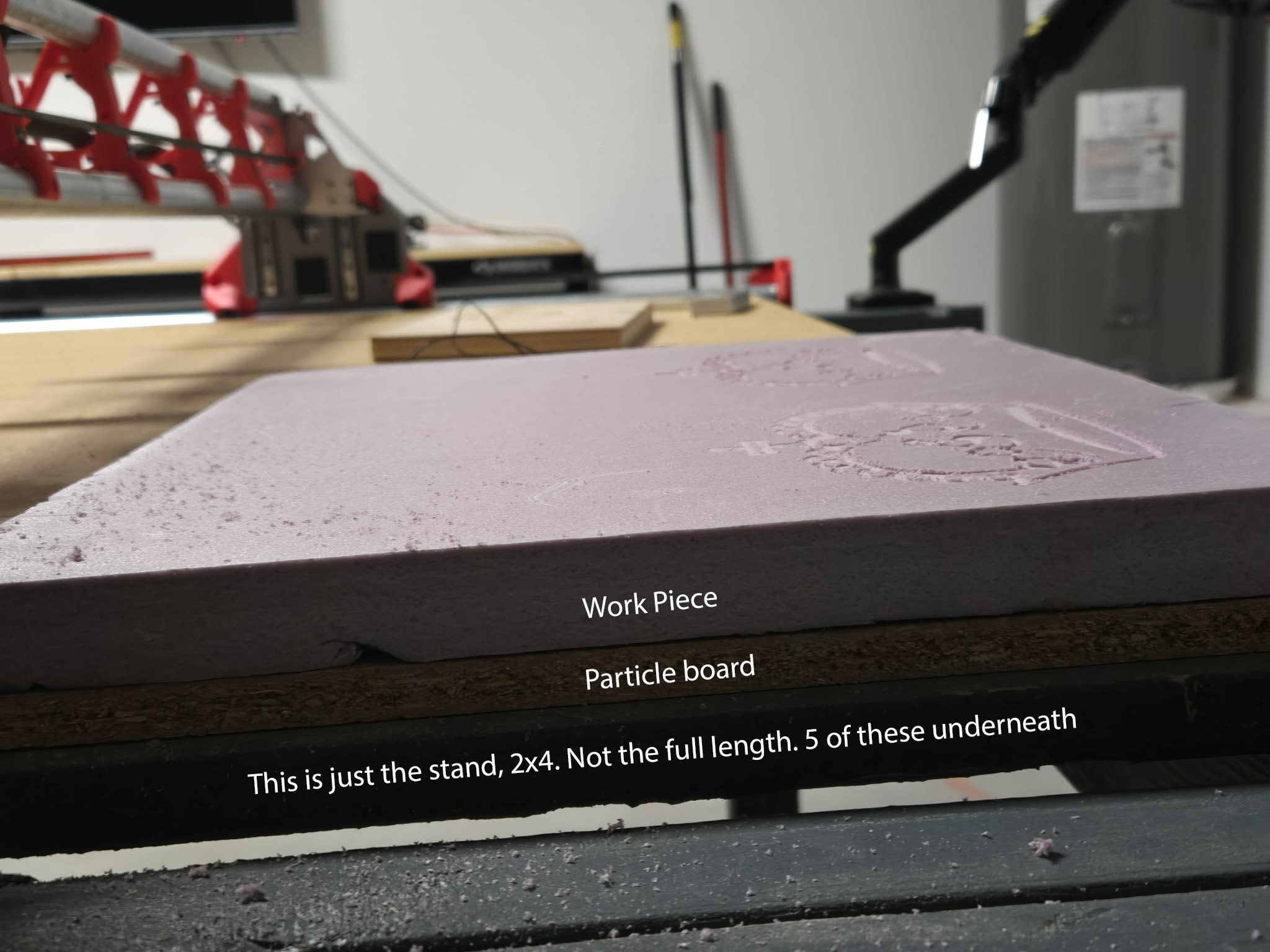
Yep that’s a lot of gap! That’s similar to how mine looked and I also couldn’t carve anything. For my table, the table top sits on top of a frame made from 2x4s. I added shims and cards to any gaps between the table top and the 2x4 frame.
I basically did it for a bit, checked for flatness, and continued until the light gap was less than 1 mm in height. In my experience, I had to be underneath the table and push up against it to give some room for the shims to slide into place. Keep in mind you’re adjusting on a mm scale so you probably won’t even feel the table top flex when you push on it, but you’ll be able to squeeze a couple more playing cards in there.
I’d 110% do this before trying to surface anything. Table needs to be flat for anything else to have a good chance of success IMO.
@Tokoloshe I read this as I put “baseboard” down first, then a 18, MDF on top of it and pane it. Then my work piece on top of the 18mm MDF (that’s just been leveled)
I bought this from 3rd party and they have just some particle board down and I’m putting my work piece on top of it.
If it was me, I would surface (flatten) the particle board, then put the MDF on top of that as a spoil board, with the work piece on top of the spoil board.
But putting the spoil board on top of the particle board and surfacing the MDF would work as well
I think i made progress!! My wife and I removed the particle board and come to find out, there is a base board under it thats part of the frame/table. So, we flipped the board over and squared it up, but did not need to surface it I don’t believe. I checked it in like 20 places and it seems good.
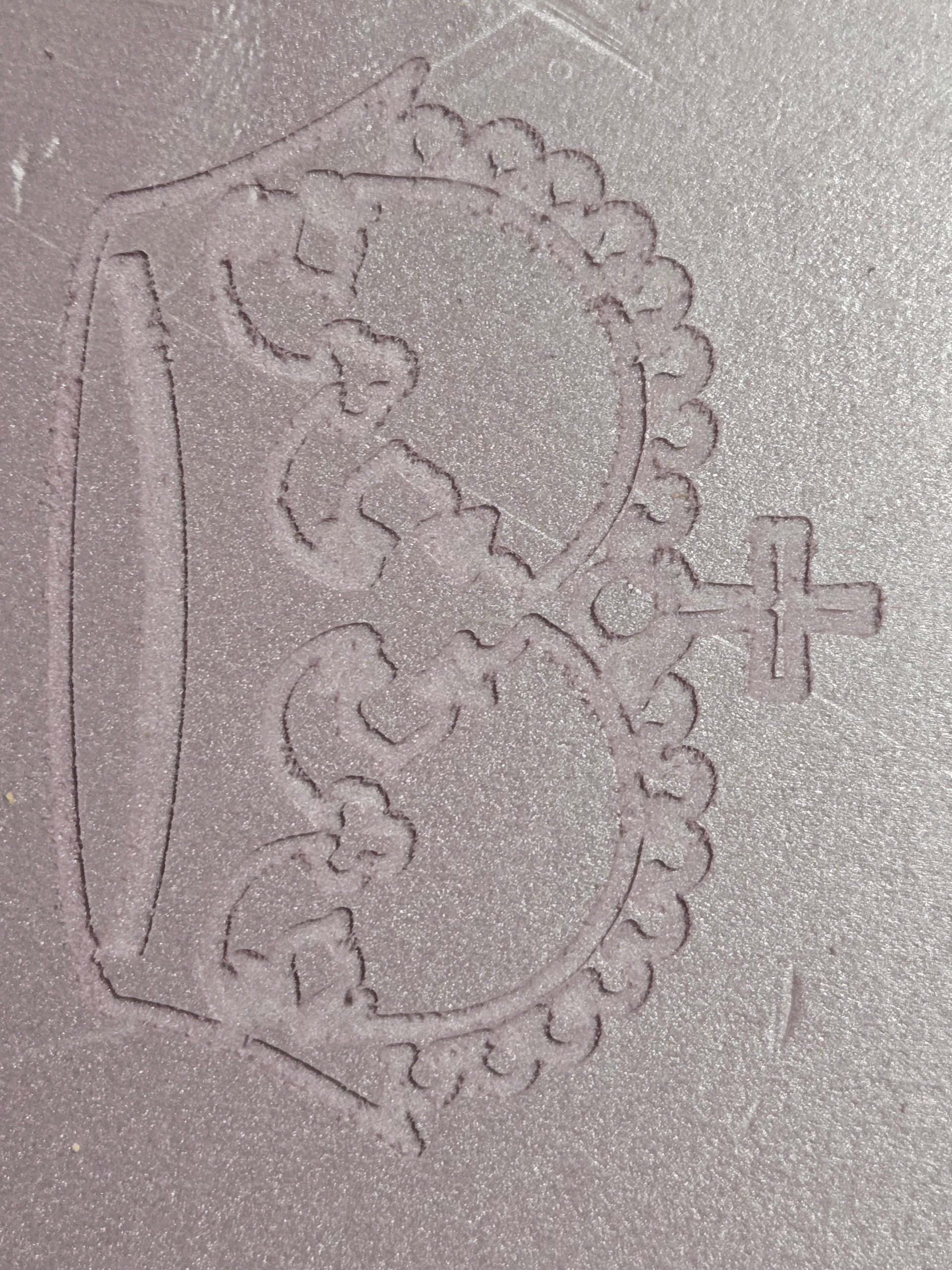
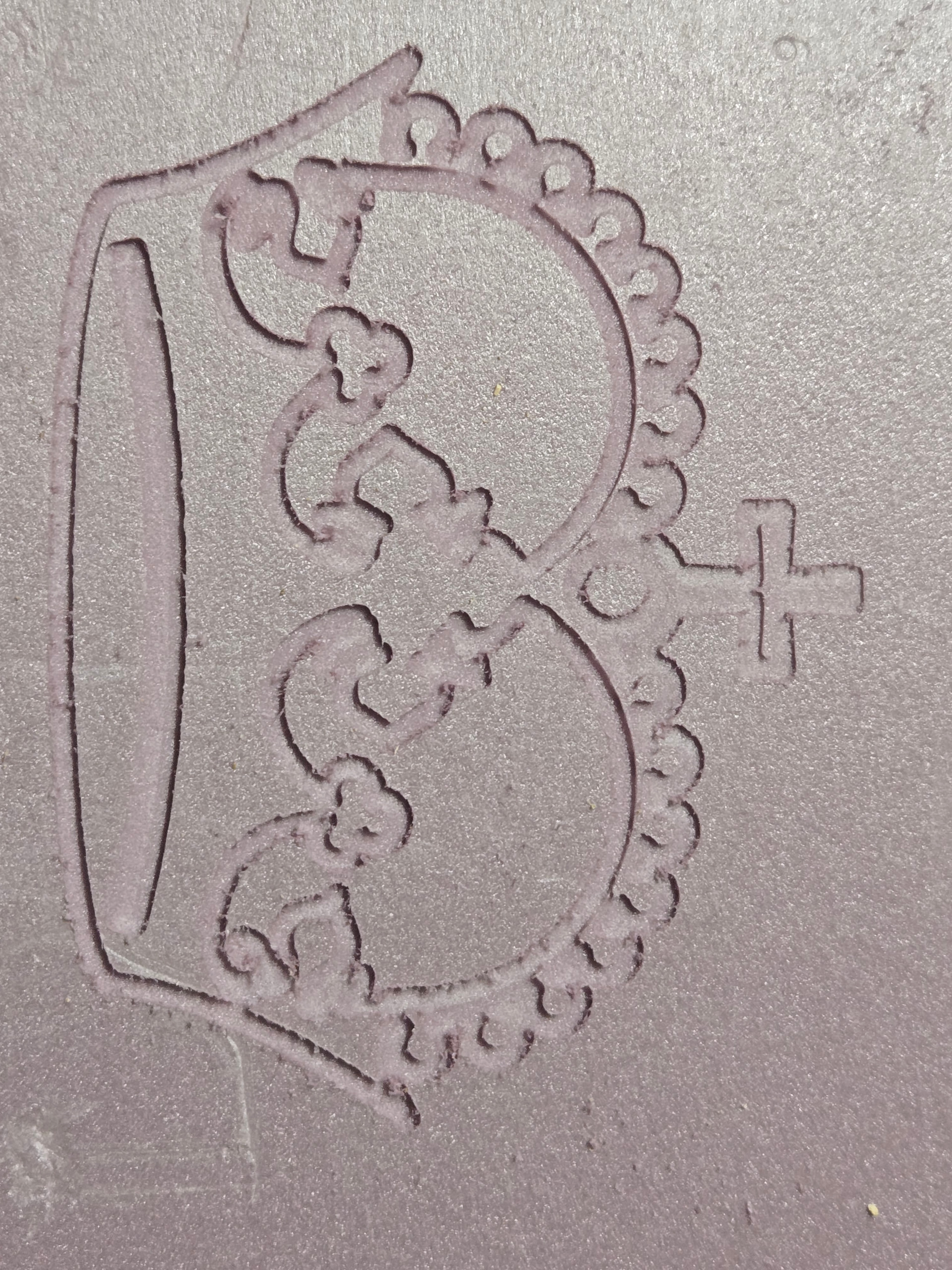
We added the foam back to the home area and did 2 perfect runs,
Sad news, when we put some used wood down to test again, it came back uneven.
I’m going to want to do full sheets at some point, would I have to plane each sheet or is there a better way?
Probably not really necessary. MDF is usually pretty uniform thickness (there may be some variation in thickness, but it should be < 1mm), so if it lays flat on the surfaced particle board, it should be pretty close, especially if you are mostly doing through cuts.
That probably depends a little bit on the thickness of the MDF. It may have a tendency to bow in the middle, or to lift up during cuts if not secured. Screws along the edges (outside the cutting area) every 2-3 feet, and a bit of carpenters glue in the middle (use a weight to add pressure until it dries) should probably be sufficient
You plane your spoilboard (particle board/MDF) once after having it installed. Then you put your workpieces on it until the board is banged up, then you plane the spoilboard again.