This is more for when I move onto it, just planning, but my dust hose arrived today and it’s one with the metal coil running through for grounding.
This is probably a dumb question, but I’ve no experience grounding anything so I’m kinda clueless.
I see typically you’d attach that to something connected to a ground in the wall (like the metal on a shop vac?) - some kind of way to connect to a grounded socket basically, but what if your house doesn’t have grounded sockets like mine? How else do you ground things?
I’ll check tomorrow but I’m pretty sure no. I’m in Thailand and a lot of houses here have no ground/earth unfortunately.
Fairly sure ours hasn’t got it as I remember being annoyed having bought a Rega turntable a few years ago that had a constant buzz I couldn’t get rid of which I put down to no way to properly ground it (supposed ground was built into the tonearm too rather than being a wire, which was extra annoying)
I’ll get one of those socket tester things this week just to be 100% sure though.
I did a quick google of this, yikes! That sounds interesting.
What is the relative humidity in your shop? If it’s generally above 40% then you will have less problems with static.
I’ll wait to see your details from testing of your outlets before commenting further.
Funnily enough I just got a 3d printer and have been setting up dry boxes for filament so have been using humidity sensors for that and taking note. 60-70% has been average indoors, not seen less than 60 yet, outside shed building possibly higher/lower. Definitely higher than 40 though.
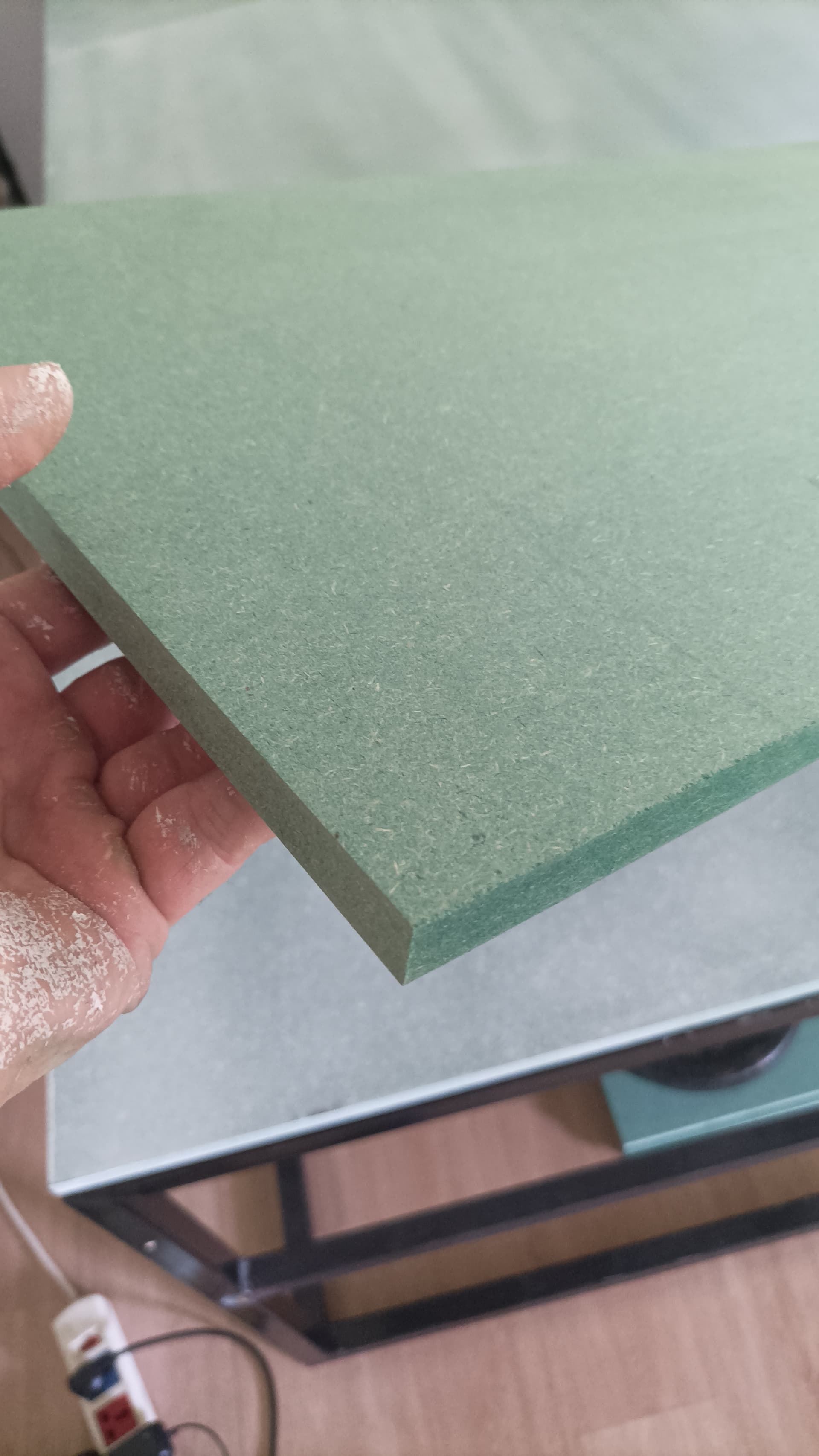
Interestingly, I discovered MDF is a bit of a no-go here due to humidity - it’s sold, but warps and moulds very quickly. Instead HMR board is used, which is a high moisture resistance form of MDF treated with some kind of special glue resulting in a unique green color.
I think I might be ok actually, not sure how accurate AI is but seems that high humidity might remove the need for grounding the dust hose altogether? Great news if so.
We have options for if you do have static issues, but at 60-70% RH, the air itself will act as a (crappy) ground wire. For now, I’d just pick an end of the dust hose where it is convienent to attach a wire and leave that exposed for later use, if you need it.
Most Japanese outlets are also 2 prong, with no ground. The difference is that they’re also all GFCI breakers in the box, so the hazard factor is lower. You can get travel adapters for Japanese outlets that have 3 prints, and they have a green wire with a spade connector for ground, which you can connect to a screw terminal on the outlet facing,. Maybe something like that is available?
Failing that, any piece of metal that goes into the ground, like water pipes will work. If your household plumbing is copper pipe, then that works as a ground point.
That’s interesting, I haven’t heard of anything like that here. I have to use step down converters when using Japanese electronics here due to different voltage but never considered any ground differences.
There are special grounding bolts you can buy in electric shops. IIRC they go as 2m pieces, and you use 2 or 3 and you just use impact drill to put them in the ground (deeper better of course). Then you have proper ground and you can even connect your home electric box to it, and feel safer
(Disclaimer: if you want to connect your home to it, it has to be very deep (few meters) and installed by proper electrician! (who will actually tell you how deep it has to be in your region)
That is counterintuitive. How do you have ground falut circuit interrupters with no ground? Where is the current going if it isn’t going to ground? I guess through the plumbing or something.
Grounds have two main purposes. One is that they provide a stable reference voltage for computers and appliances with computers. If you are pushing a lot of AC current through to the negative, that negative line’s voltage is going to vary. Depending on the phases of things, using that line for a reference voltage would be very wrong. Modern computers use isolation to avoid using the neutral line for reference. But it is more reliable and cheaper to have a good ground. Similarly, large static shocks from a dust collector hose can be grounded before they grow to damaging levels. This is essentially the same as having a good reference voltage.
The second feature is safety. If your refrigerator’s case is grounded, and the hot wire comes loose and touches that case, the hot wire is immediately grounded. A GFCI will pop and even a regular fuse will break (after some theatrics). If you didn’t ground the case, then the next person who wants something from the fridge will find out they are touching a live fridge and hopefully the GFCI will pop before they are dead. A fuse probably wouldn’t save their life. The fridge is the easy to understand case. But anything that plugs into the wall will have a similar safety case. If the connection to the case from the hot wire isn’t good, then you can dump enough current to start a fire or kill a person without having enough current to trip a fuse.
Can you live your entire life without a ground? Sure. But in a population the size of a city, state, or country, you’ll save a measurable amount of lives by forcing new construction to include these safety features.
GFCI tripping doesn’t mean that the current is going to the plug ground. If the current is going to you (Or another human body) it is because there is a path to ground through that body. Probably to plumbing, but maybe to other earthed conductors.
My understanding is that GFCI basically compares current from hot to neutral, and if they’re unequal, the circuit opens. Drop a toaster into the bathtub, and the current is going to go somewhere other than to neutral, and the GFCI opens. (Come to think of it, my toaster only has a 2 prong plug anyway.)
The problem is that the breaker might not pop. If there is resistance in that short, current might not be high enough to trip the breaker, but still charge the refrigerator door handle to dangerous levels. You come along to get a drink, say with wet hands and bad things. The ungrounded GFCI will pop immediately, but North American kitchens don’t mandate GFCI for the appliance plugs, only countertop ones.
Edit: I’m not saying that grounded plugs are in any way bad. Just that the electrical code in Japan seems to work, and they don’t seem to cause problems for their technology…
 How else do you ground things?