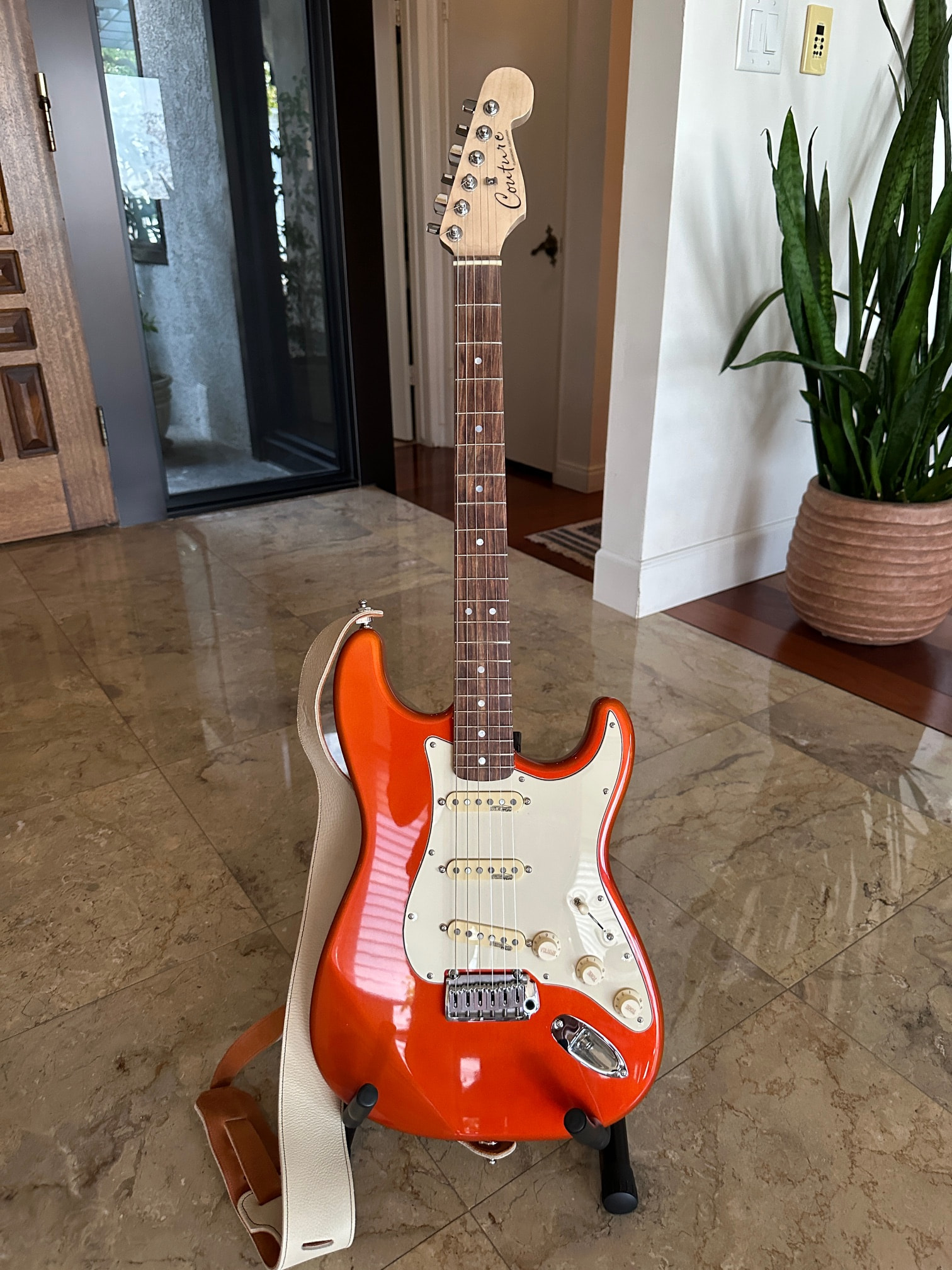
I recently completed another guitar build (I’ve made 2 others) but this is the first one I used my LR4 for the neck, body, cavities, pickguard, and fretboard and fret slots. The only jig I used was to deepen the fretboard fret slots. The neck was then hand profiled (I haven’t figured out 3D CNC yet) and the body tapers. The edge roundovers were with a router.
I happen to enjoy carving necks so I’m not in any particular hurry to figure out 3D CNC and the same goes for the tapers on the body.
The color is StewMac Candy Tangerine Orange - an old Fender color from the 60’s, I think.
That’s is absolutely fantastic!!
The finish is so perfect. This is literally on my bucket list. Met a friend that does it professionally.
I’m suggesting he build a LR4 but going to try on my LR4.
Guitar is one hobby I really stink at but just love try. My adult son took his Peavy Strat so I’m on the fence to buy a used Squire, or another, Peavy?
All over FaceBook market place. I do like Yamaha and they make a Srat copy.
You can buy a good to excellent playing guitar, and probably better, for less than it cost to build your own, but you can’t buy the feeling you get when you plug in the guitar you made yourself, or the relief you feel when you plug it in for the first time and it works! Even better if it sounds and plays well.
I have about a dozen guitars, including the 3 I made (this Strat, a ‘57 LP Jr. and a custom bass), but one of the guitars I play the most is a Squire 70’s Classic Vibe from around 2014, I think, that I got off Offer-Up in 2019 for $225.
Thanks. It did come out really well. What you don’t see are the “oops” that I had to fix.
They say if you want to be a proper luthier, you should assume the first 10 guitars you build will go to the woodpile before you can confidently claim to be able to build guitars. I’ll be working on #4 in the next few months. But, no more copies, I’m working on designing my own.
I played it for the first time over the weekend and it sounds fantastic and is very playable. I have a friend in a band who will bring it on a gig in a week or two. That will be the test.
The original plans came from an Etsy vendor that sells PDFs of various guitars. Once I figured out how to convert PDFs to SVG of DFX and remove detail I didn’t need, and imported sections (i.e. top, bottom, neck, fretboard) into EstlCAM, all the detail I needed was there. I made a number of edits to the plans (using Inkscape, Librecad or EstlCAM) to fix, resize, modify or move (e.g. control and Jack cavities and neck pocket were not correct, or at least not ideal) and cutout mods for the GoToh bridge/trem I used. It took a few scaling iterations to get the fretboard to the exact length, width and spacing before it was ready for the LR4, but it came out perfectly. I tested the files with MDF blanks to confirm fret spacing (and many other aspects of the project) before cutting the actual body/neck and FB. Same for the pickguard.
I used a 15 degree - 1/8” V-bit (from a cheap Amazon set of V-bits) to cut the frets. I cut them to depth conservatively to serve more as guides for my fret saw and jig. Next time, I plan to be more aggressive with the LR4 cuts to eliminate the fret jig step. I also cut the fretboard to shape on the LR4 at the same time which meant I had to make a tapered spacer so the fret marks would be perpendicular to the fret cutting jig.
I spent a lot of time learning the various apps mentioned above and making iterations of the EstlCAM files just right, plus test cuts on the LR4 before I was happy with everything. It was worth the time investment because I now have working and validated CNC plans that I can use as the base for future projects.
100%. Once you have the .E12 plans and bits sorted out, it takes only a couple of hours at most to generate a body, neck, FB and pickguard.
I used steel pins and carefully set holes in the top and bottom of the body to be able to cut the outline and some cavities on one side, flip it over and cut the other side’s cavities in perfect alignment.
The neck was CNC’d as an outlined blank but I also cut the headstock recessed flat tuners portion on the CNC, but hand filed the fillet. The back was hand shaped and profiled with Dragon rasps.
Yes. And after gluing it to the neck with truss rod in place.
CNC the fret slots, top dot holes, nut slot, and FB profile, hand saw on the jig to deepen the fret slots, align and glue FB to the neck, sand radius, hand drill side dot holes.
I didn’t mention, but I also cut the heel-adjust truss rod slot on the LR4, but drilled the heel-access hole by hand.
Love it! I’ve built a few cigar box guitars over the years and have been slowly collecting parts to build a full 6 string one of these days (no time and still haven’t decided on exactly what I want.)
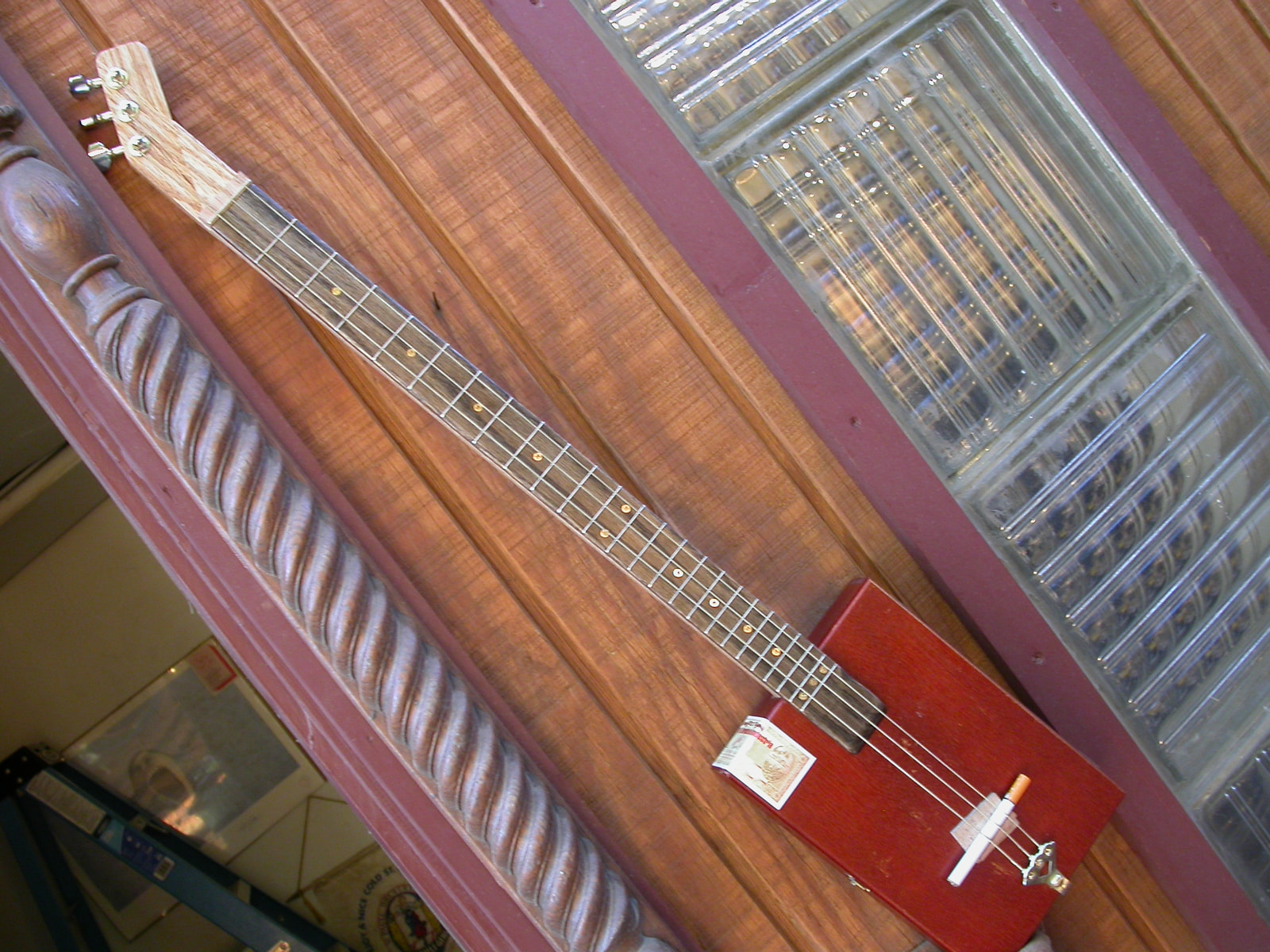
I built this one 16 years ago just before my daughter was born:
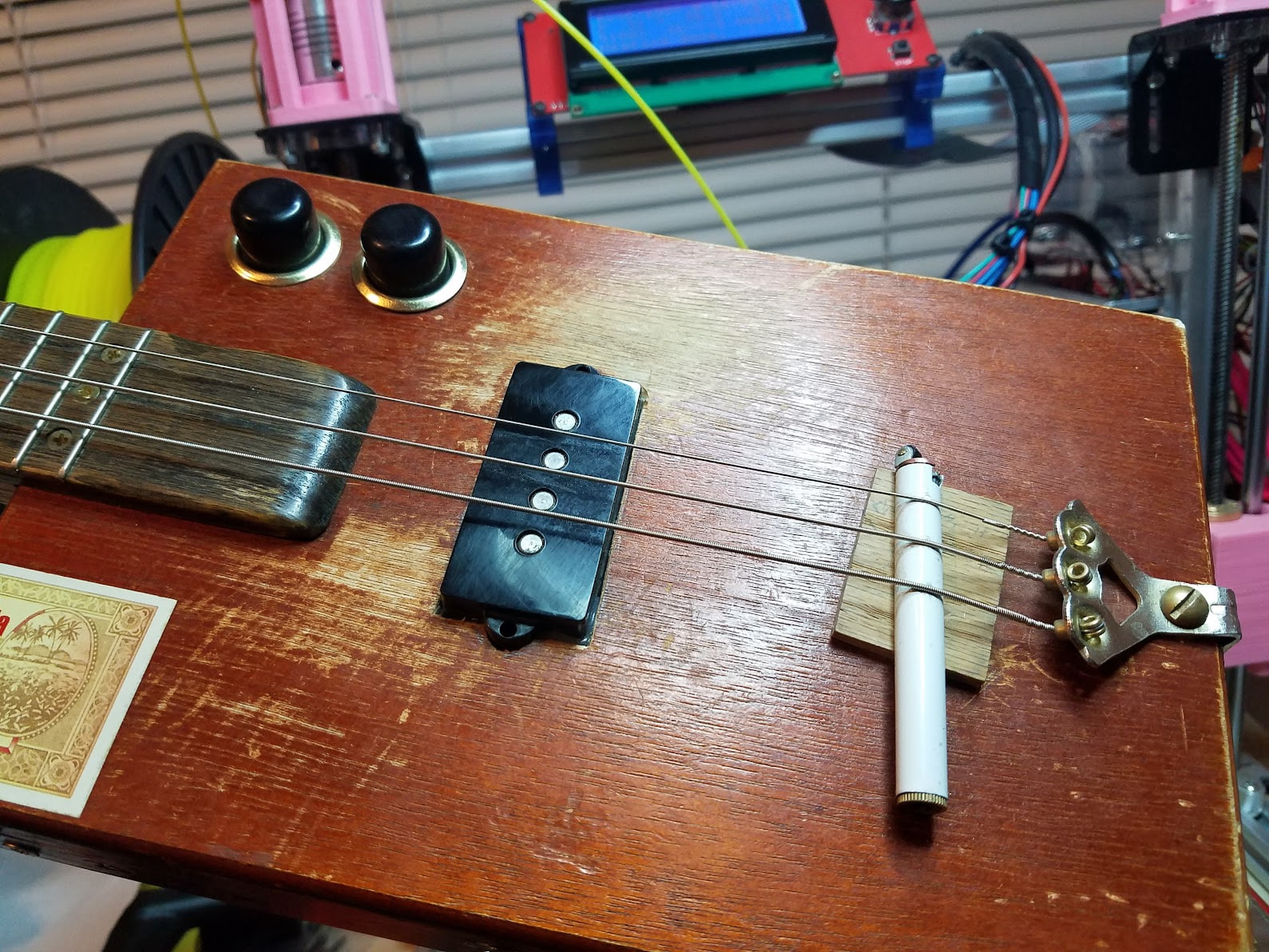
It’s enjoyed many a campfire and music festival and has gone through some changes over the years. The bridge is still the same cheap aliexpress lighter in the shape of a cigarette…but the top of it fell off and it stopped actually functioning years ago:
Even that was about 10 years ago…shortly after I added half a precision bass pickup to replace the original piezo. it’s looking a lot more worn now but I still love picking it up and messing around with it whenever I get the time.
Love the SewMac red - I actually lived across the street from their factory/warehouse for a year in college. When the weather was nice most Fridays some of the employees and visiting customers would have jam sessions on the loading dock and we could listen from our porch.
I was actually thinking just last week about trying to cut fret slots with the CNC and debating the best way to do it since I don’t think i’ve seen any endmills narrow enough. Hadn’t thought of just using an engraving bit to cut a guide to help cut them by hand…I may have to steal that idea!
 is one hobby I really stink at but just love try. My adult son took his Peavy Strat so I’m on the fence to buy a used Squire, or another, Peavy?