I am looking at doing some contract manufacturing of assemblies that I have 3-D printed. It will be a lot of repetition and I am trying to automate as much as I can with jigs and fixturing. I’m thinking about using a MPCNC like the Primo to create an automated heat, insert machine.
My thought is to attach the soldering iron to the gantry with the heat insert tip and then program the moves needed. I have seen semi automatic heat insert machines with vibratory bowls that load the inserts in, but I’m thinking more about manually populating the part with the heat inserts resting on a small shoulder of the hole. Then using a tapered tip to center the insert as it gets installed.
My question is what am I not thinking about? Do you think this could be done? Or can you think of better ways to do this?
I’m also a little skeptical but I would love to see how it’s done in a bi commercial setup- with it automated as you suggest, what is the weak point? I think it’s keeping alignment after you’ve placed them, and keeping the object properly located.
I’ve just done another batch of 100 inserts with my very cheap iron and drill press adapter. It’s a joy to see how smoothly that goes- depth is set by the press and the part is held precisely by a negative print of the part. I use a 1.2mm deep recess to place the inserts in, but one in three still falls a litt askew.
My cheap adapters do a good job of straightening them, but I wouldn’t like to trust a machine. I am following this thread with interest!
It seems like getting the right insertion speed will be tricky. As well as not having crooked pins inserted.
I would not expect it to save you any time or energy at first. But you’re solving one step in the process. After you learned a bunch about that problem, you can work on adjacent issues and then make it more useful. It needs to be worth it on its own as a problem you are interested in poking at.
Might be worth checking out this Chris Borge video (not sure how to link to a section, the Conclusion shows the feature in action). He’s added a gripper that lets him pick up an insert for one-handed placement. The overall torque arm is probably overkill for your use case, but being able to pick up the insert may be useful.
You would want to be able to define a predictable location from which to pick up the inserts. You could have pins along the edge of the work area where you could load the number of inserts for one job cycle, or get fancy with some sort of feeder (like they use in pick-and-place machines) so the insert is always picked up from the same place.
I had never seen that video, I am always amazed by the ingenuity of makers so thank you for showing me that.
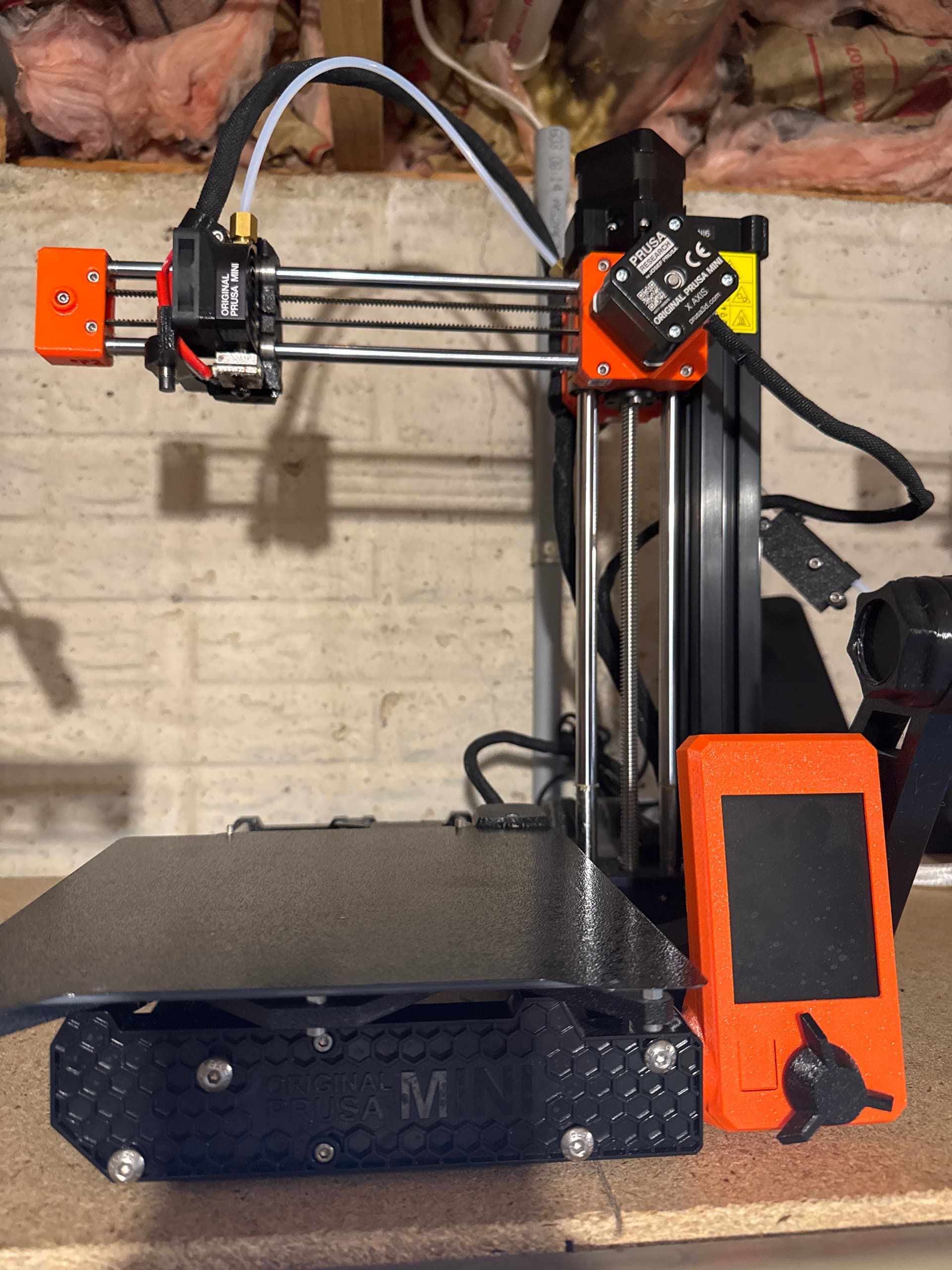
I have also been looking at some old prusa minis that I am about ready to decommission and it dawned on me that the hot end already has a heater and it might be a good platform?
I’d spring-load the soldering iron. Set the z height to the final depth you want the insert to go and let the insert’s initial height push the soldering iron up on the springs. Then as the insert heats up the springs will force it into the part.
You’ll have to test to see how long you need to dwell at the final z height for the insert to get seated all the way. And you’ll probably have to try a few different spring sizes to get the right force.
I am thinking about a leveling plate that presses on the insert for the last mm to level it out if allignment is a problem. it would have to swing away or actuate down with an offset when the iron is being used.
I don’t have a very powerful soldering iron, but the inserts heat up almost instantaneously. I’ve found that temperature regulation is the most reliable way of regulating pressure, and before I made the press I used a bolt head to level them.
The internet is full of theories on what is the strongest/best temperature or even inset depth, but if you look objectively none of that matters - it only has to be strong enough to do the job. To that end I’ve had a lot of success (and look at the rails on the LowRiders as an example) with screwing directly into printed holes which I’ve tapped first.
Of late I’ve been using Tom (what’s his name?)'s self threading holes - all methods are great if you aren’t testing them to destruction.
I guess what I’m saying is in terms of strength, there’s an awful lot of leeway, so just work out a method that suits the job and go for it without the need to overthink too much.
I like the looks of that. But designing the hotend seems like a tricky task. Early repraps were doing wild things to make that work. But E3D saved our butts.
Computer controlled heat is a great idea. I just wonder if it would be better to use something already designed to heat up an insert.