Makes sense, if it’s self-oxidizing. If you try to fully contain it, all you’ll end up doing is creating a pressurized vessel full of self-oxidized burning embers. When it blows, you end up spraying them all over. If you allow venting, the pressure is released, but you contain the combustion. Hence the SS scrubby filter (you want something hefty enough NOT to catch fire itself, I’ll wait while you go light some steel wool to prove my point). Heck, probably, just some overlapping, offset plates would probably do. Something to prevent the combustion (or I suppose chunks) from having a direct path out, while allowing the hot air/gasses to escape.
To Tim’s question: It would depend on how quickly the volume of air could be heated to the point of vessel failure vs the rate at which the gasses could be vented. We’re not talking about oily rags, so you’re not trying to prevent oxidation (these things are self-oxidizing), so you’re not trying to prevent airflow. You’re trying to prevent flame spread and chunk mobility. Both of which are actually enhanced in the case of unplanned vessel over-pressurization and failure.
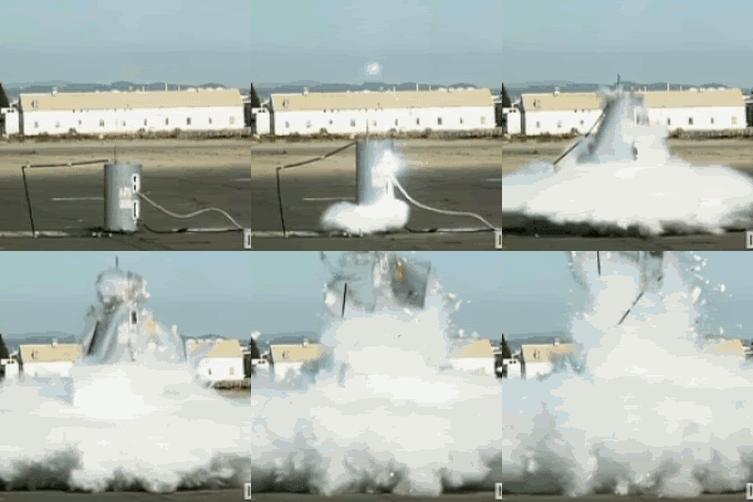
Yes, that’s actually a hot water heater, but it exemplifies the effects of unplanned over-pressurization of a vessel.