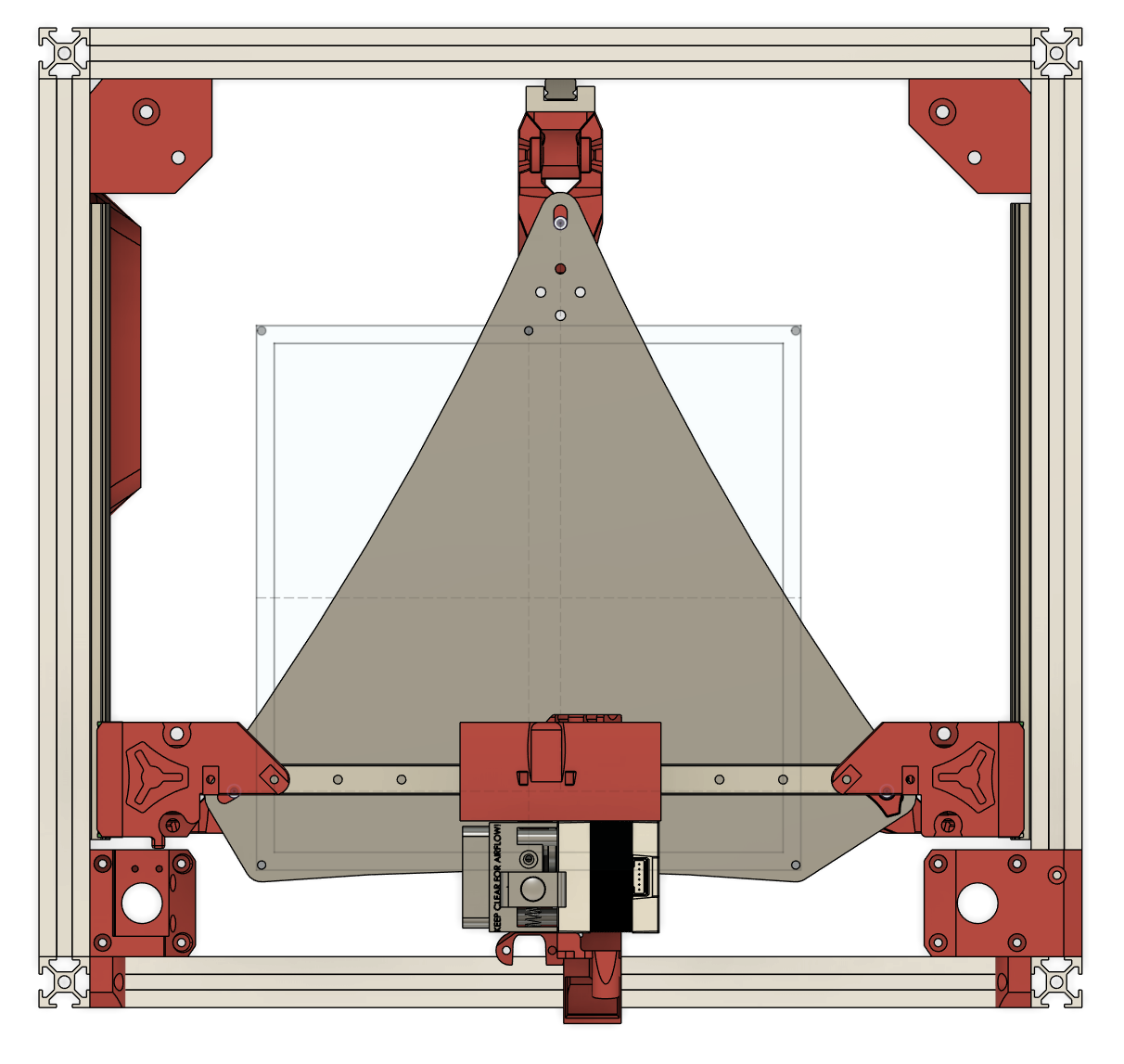
This is my end goal. You can go look at my build where I added a heater to help heat the enclosure. I’m 3 steps away from getting to my goal.
Step 1) reprint the Core in Petg or rebuild the core using a home-brew Aluminum design
Step 2) reprint all the parts in ASA to take the higher temps
Step 3) Rebuild machine using the ASA parts.
However, this entire project is on hold until after I finish the Kayak build and then build a new dining room table for the wife. So… Next fall maybe?
Yeah I went and skimmed your build after @Michael_Melancon suggested it looking for the heater. Found the pics but didn’t see a link to it. Went on amazon and found some close to it but settled on just getting a small $20 space heater for now. This is all a very temporary setup. Thinking more and more that when this current discussion turns into a printer I will build one fully enclosed and all out of ASA parts from the get go.
My v4 is all PETg printed plastic. I chose for material capability over max rigidity. It might mean leaving so.e speed on the table, but it doesn’t preclude some hot air.
Weird. My laser is all 6mm belt, as was my CoreXY before it and all of the idlers used 5mm centered bearings for the 20T diameters, same as the 10mm belt stuff, just narrower. I have many 6mm idlers (planning a new CoreXY vinyl cutter based on my old laser design. I just need new 8mm smooth rod.)
Definitely finding this from my own machine designs. Every mm wider you make the core is another mm you lose from your linear motion solution, and bigger footprint your machine needs for a given work area. But it needs at least a certain amount in order to be stable on that linear motion. Mass is pure trade-off for rigidity/price.
All of the current machines can be printed out of anything. I choose PLA for ease of printing, and a few parts might gain a few percent rigidity where it counts. Really only the first LR and the early MPCNC’s were the only ones that mattered. Back then printing was very slow and adding material meant adding another 50 hours or so print time. You can still see it now. I print a core in ~7 hours some people it takes 48+ hours.
If they make 5mm bore 6mm hardware, should we use it? Why or why not? Both the machines you mention are light core machines so not much inertia, do you think that plays into the decision to use 6mm?
You have to figure, you have the size of the bearing block to work with. Anything over that is waste. The current Z and Y axis are that exact size, The X though…bigger to fit the old hemera. I do not want to ditch a old hemera, but that is the only reason it is that wide. I think we can do better with any other extruder.
My original plan was to mount the hemera on top of the bearing block. That did not work out. Whoops we will get there. Let’s finish up with belts first.
My only thought about going with smaller belts were to make the height needed for them lower and possibly allow you to tuck them in tighter somewhere? I really wasn’t even sure if that was a possibility or not. Thinking about this E5+ conversion they have the belts all up above the frame. And they all 4 meet on the same side of the toolhead. But I see the tradeoff to that as well. That brings the footprint higher in Z and also makes enclosure more difficult. If there is nothing to gain other than just doing something a little different then to me it makes no sense to change the belt size. More stuff you have to stock and keep up with for nothing other than to say, here we changed this.
I want to but Im going to add it to my list to talk about when it comes up
It could be, I am more concerned about the current speeds and accelerations everyone expects. Will a smaller belt handle them the same? It is less to move and change direction, but is the stretch more or less? We are aiming for 300-500 build size.
For that style, I always worry about the Idlers on the Yrails. They are under a lot of tension and accel forces. If we went over like that I would beef up the connections. A lot tend to just use long 3m screws directly in to the bearing blocks (small bearings) and seems like a slightly flimsy connection to me.
What are the specs in a 6-15mm range? I always assumed 2x 6mm belts would be the ideal way to run all the machines. None of the 4 would ever have the exact same tension, so harmonics would get cut drastically.
Just looked it up for curiosity sake. Voron uses 6mm belt for corexy and 9mm for the gantry. Now i know that doesn’t meant that its the right way, just saying what they use. And I see plenty vorons north of 10K accelerations
Yes but they run the wider 9mm belt there… No idea why
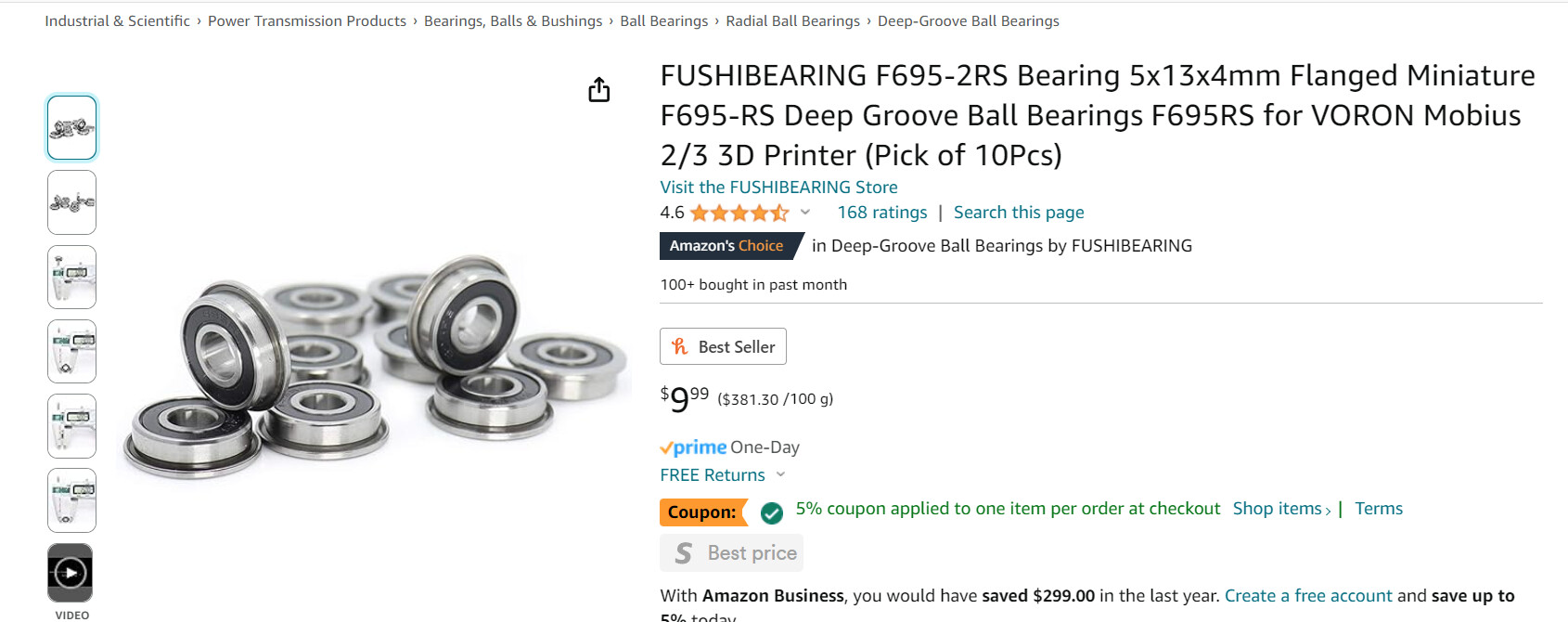
I think the big thing now is can we find bearings worth having in the 6/9mm range. They all run the flanged bearings but that will only work for the smooth side, what about the toothed side?
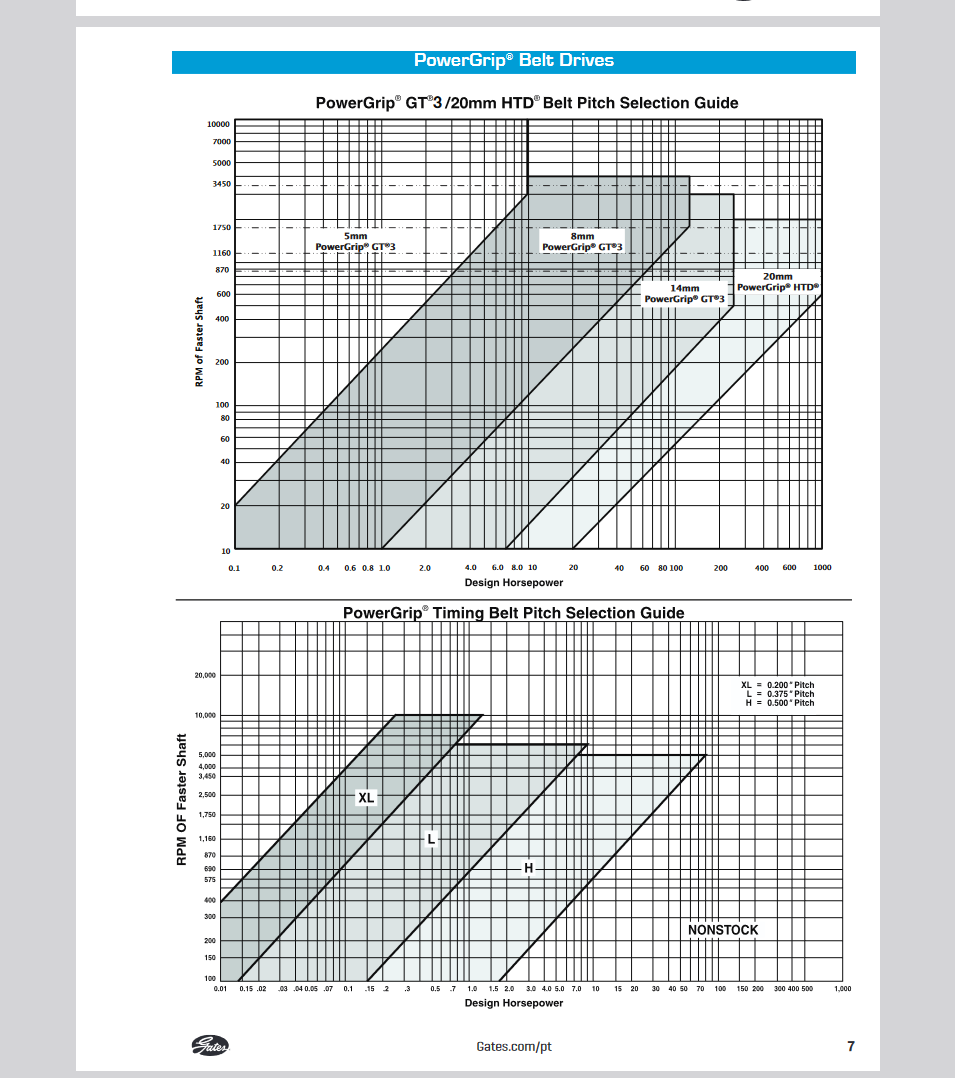
Lets just say we are aiming for 225rpm (120mm/s), that puts us at 1hp rating that takes us from 5mm, to 8mm.
Since that is a different chart and we are not using real gates belts we should derate that a bit. In my mind we are nowhere near 1hp but with all the accelerations I would assume we actually do hit it at some point so 9mm plays it safe, meaning longer life since we do not drive it to the end of it rated constantly.
Am not mechanically minded/trained. Am mostly here to learn about the thought process and tradeoffs being considered during design, very cool.
Was originally ASSuming thicker belt means can move mass faster with less ringing. Wider belt easier to tension up and fasten/secure? Less maintenance (because less stretch).
I am not a fan of split bearings. We can easily source purpose built idlers and not have the no load zone on the center. Can you think of a reason to use them.
Remember because someone else uses them does not mean they are right. Picking apart others design choices will not look good for me in the end if one of those designers ever sees this. So I think it would be best to present something like that anonymously so I doen’t sound like an ass critiquing their choices.
Any idea why you would want to use a split bearing and not a purpose built idler? They seem really expensive to boot.
I think, Assume, wider belt requires slightly more tension to run well. That means harder on the constraining parts. In my mind it makes more sense, you have to bend more material around more parts. Since the belt are rated for a specific tension, no matter the width, that means you can handle a higher load but have to move is slower. If you look at that table for a given load and increase the speed you decrease the belt width. So because tension is set to equal for all widths, narrower delivers more pulley contact (bends further around and makes slightly more contact with more teeth) so you can maintain contact at a higher speed as the forces are trying to fling the belt away from the drive teeth.
 It’s been working really well. It’s a 300 watt heater core with an 80mm fan pushing air across it.