I fight my Kindle Fire all the time as well!
1 Like
Don’t, that’s bad for the electronics, duh! 
1 Like
Shipping says Monday…Booooo!
3 Likes
Honestly that is insane, they were made in china, right?
1 Like
Yes, manufactured and assembled in China.
1 Like
But from china … that’s pretty fast shipping man!!!
1 Like
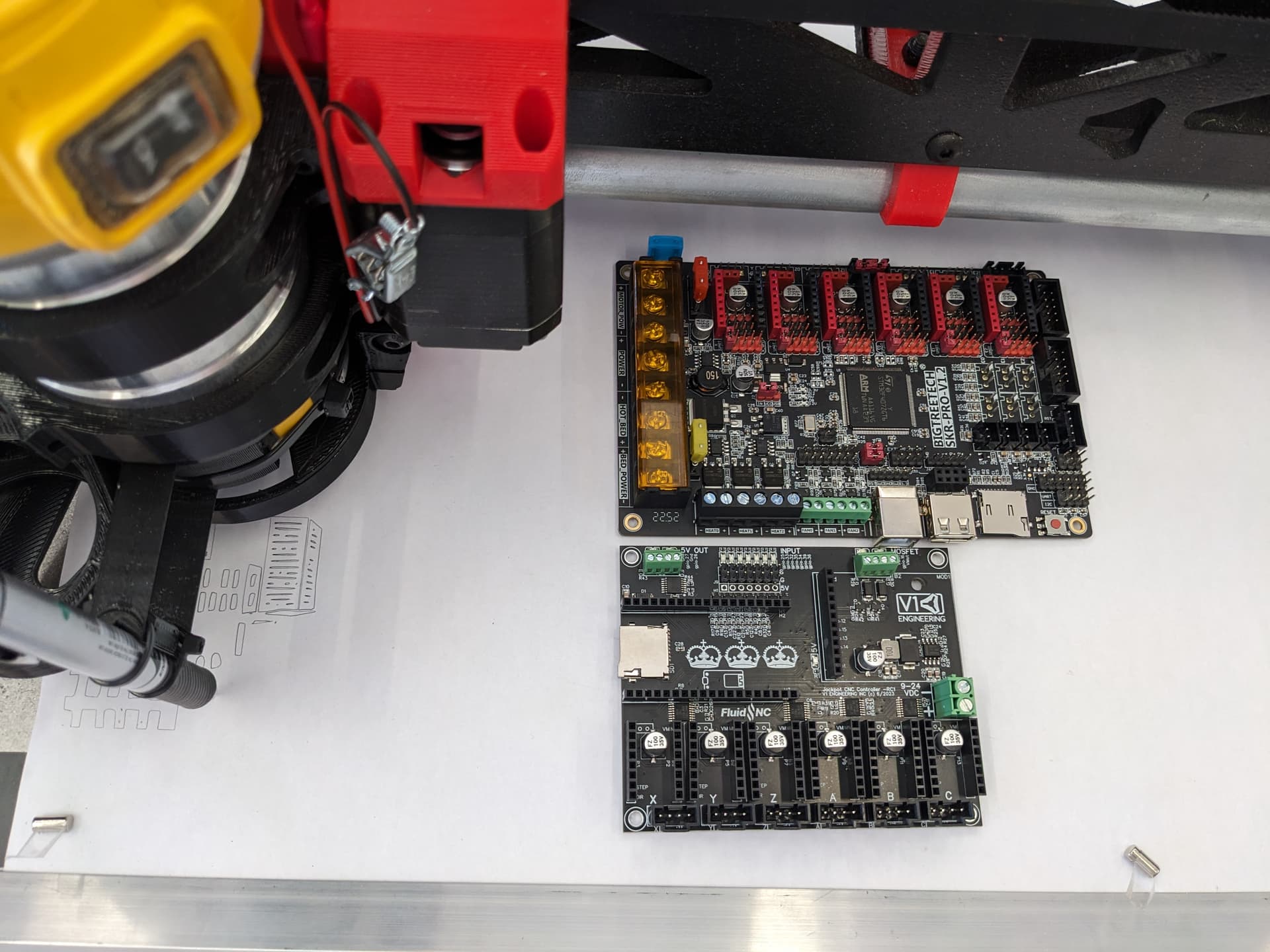
Ohhhhhhhhh
Oooooooohhhhh
I can’t even mess with them, still OS prep. I can drool though!
They came with an extra parts I had to snap off. I guess I didn’t leave enough room for locating pins.
11 Likes
It’s normal for PCB that are going through pick-and-place assembly to be panelized in some way, unless there’s enough space on 2 sides to run the bare board through the conveyor. I guess with the cheaper assembly service they’ve just left it for you to deal with rather than the normal approach of completely routing the board out which leaves nice finished edges or snapping apart the grooved boards and finishing them further.
In high volumes, you’d normally have the boards tiles together when panelized so that each ‘unit’ from an assembly standpoint is an array of boards to suit the size of the pick and place machine. I think the largest I’ve had was a small capacitive sensor that got panelized to a 4x10 array.
There’s also the difference between fully routed out boards and v-grooved boards. V-grooving is what it sounds like and the boards are snapped out. Routed boards use
Usually, I’d be designing the panel layout myself with a ~5mm wide frame around the outside holding the PCB in place with tabs, much like you would for any other flat goods. For the tabs, I typically include ‘mouse bites’ which are holes that give the PCB somewhere to break reliably without bending/stressing the PCB or leaving excess material. The standard way is to have the holes line up with the edge of the board which usually leaves spikes of material that stick out from the edge and may need to be filed/sanded back. I prefer to recess the holes slightly so that when broken off all the points are back inside the board outline.
You’ve probably seen stuff like this on boards before. It’s less common now, especially with cheaper boards because v-grooving is more efficient from a space perspective, with the downside of the poorer edge quality.
4 Likes
Are those the package that was supposed to be monday?
3 Likes
Yessir!
3 Likes
Dang, that is insane!
1 Like
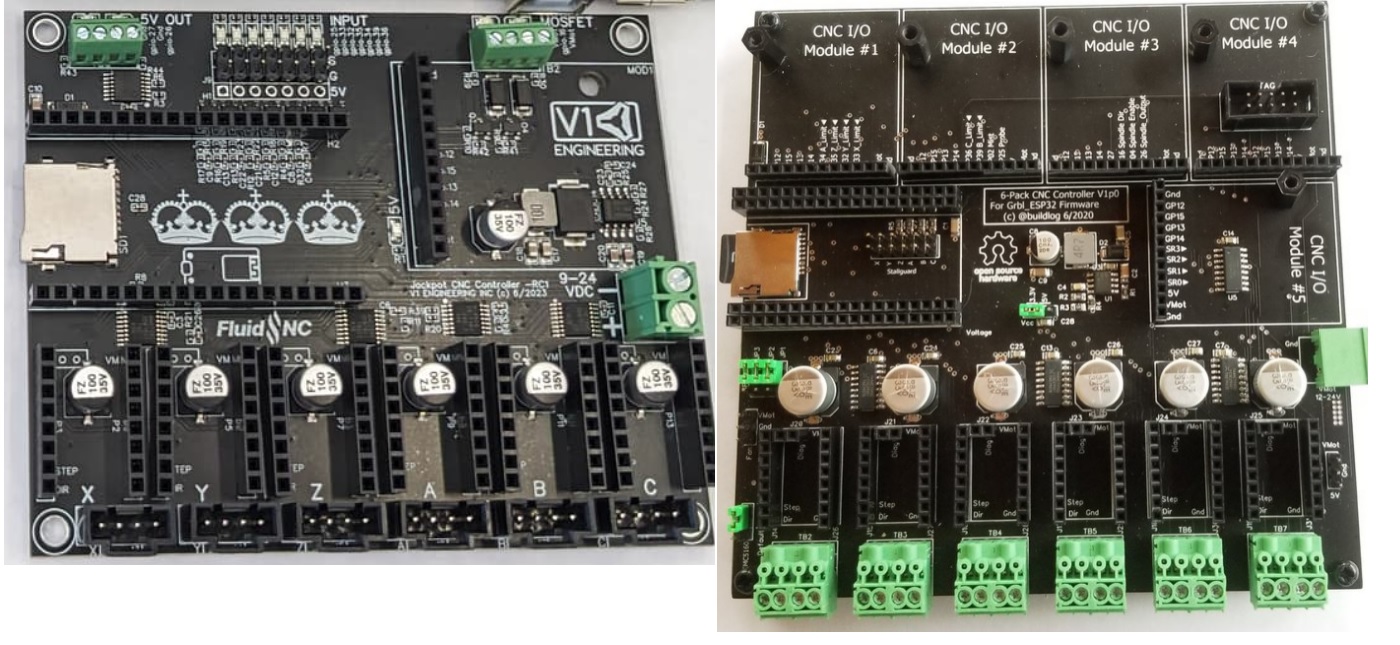
The 6 pack is a dev board so it is showcasing everything a fluidnc board can do…except 2209’s. The main difference is this is designed for 2209 drivers in UART mode (full control other than sensorless homing). From there we permanently added two endstop modules, a 5V out mosfet board, and a full voltage 2.5A mosfet out board. That is 4 modules and leaves one free to expand with things like Jamie’s Pendant module.
So it is basically a decked out 6 pack board with the things we use. That saves a ton of money and space. I hope to get these out fully loaded with everything for less than the naked 6pack board. Worth the effort.
7 Likes
WTH are you doing up so early. I am on the east coast and dont want to be up!
3 Likes
Just chugged some coffee, loaded the truck, now I am eating breakfast at the keyboard. Headed to OpenSauce.live! Super excited, I actually woke up an hour before my alarm.
So I will be leaving early of course.
9 Likes
Enjoy, have fun. Showcase those Boards!
2 Likes
Just out of curiousity, why no sensorless homing - is it not accurate enough?
My understanding is that sensorless homing is fine when you need your 3D printer to be sure it’s printing within the bed, but not accurate/repeatable enough when, for example, changing from a straight cut router bit to a chamfer bit and expecting the cuts from the different bits to line up exactly.
3 Likes
3D printers do pauses too for colour changes and can return to the same XY with sub mm accuracy.
1 Like
I tried to set up sensorless homing on my repeat and was ready to throw everything across the shop after 3 days.
All the advice I got was “yeah, pretty typical, and don’t forget that even when/if you do get it figured out, at some point it will stop working because reasons and you’ll have to do it all over again.”
Maybe that’s not everyone’s experience, but the impression I have is that it’s a lot more common than I thought at the outset.
2 Likes